• 2026.01.03 (Sat)
  • All articles
  • LOGIN
  • JOIN
Global Economic Times
APEC2025KOREA가이드북
  • Synthesis
  • World
  • Business
  • Industry
  • ICT
  • Distribution Economy
  • Well+Being
  • Travel
  • Eco-News
  • Education
  • Korean Wave News
  • Opinion
  • Arts&Culture
  • Sports
  • People & Life
  • Column
    • Cho Kijo Column
    • Lee Yeon-sil Column
    • Ko Yong-chul Column
    • Cherry Garden Story
  • Photo News
  • New Book Guide
MENU
 
Home > Opinion

Outdated Conglomerate Regulations: An Urgent Need for Comprehensive Overhaul

KO YONG-CHUL Reporter / Updated : 2026-01-03 07:55:05
  • -
  • +
  • Print

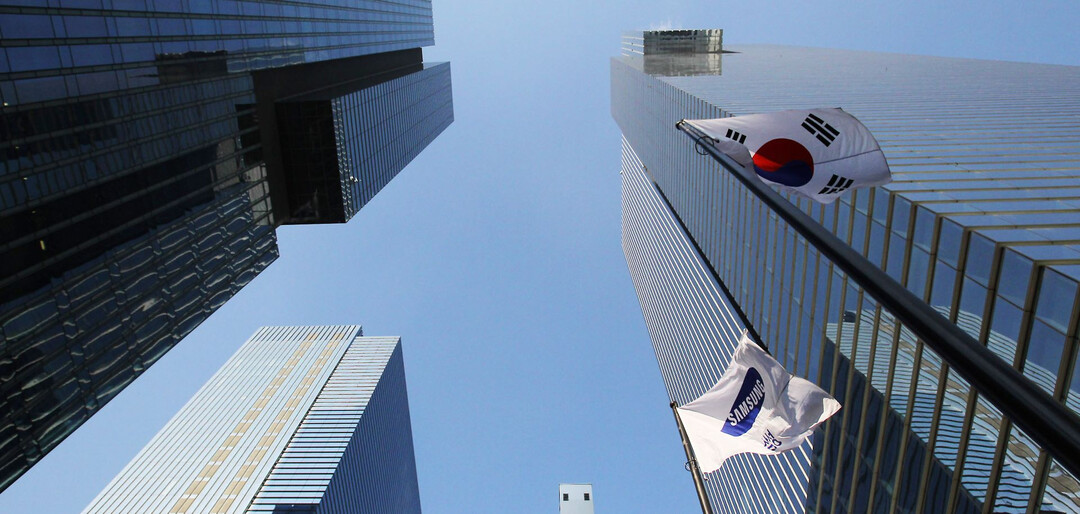
(C) Stratfor

The government has prioritized regulatory rationalization and the reform of the economic penalty system as core national tasks to foster innovative growth. While long-standing issues such as the abolition of the crime of breach of trust have resurfaced, discussions regarding conglomerate regulations—the very culprit behind the "Peter Pan Syndrome" in the Korean economy—remain sluggish. Introduced in the 1980s to curb the concentration of economic power, this system has become a shackle on growth 40 years later, failing to reflect the changed economic environment.

Under the Monopoly Regulation and Fair Trade Act, conglomerate regulations function by binding individuals related by blood to a "Person in Charge" (the "Same Person" or Chairman) into a single economic entity, imposing various obligations and prohibitions. The regulatory web is incredibly dense, ranging from public disclosure requirements to bans on cross-shareholding and debt guarantees, as well as regulations against private interest tunneling. However, while the scale of our economy and corporate governance structures have changed beyond recognition over the past four decades, the regulatory framework remains trapped in the grammar of the past.

The most pressing issue is the excessive expansion of the regulatory scope. Originally, this system was introduced to selectively regulate a small number of top conglomerates. The target group, which initially consisted of only the top 30 groups, has now ballooned to 92 business groups and 3,301 affiliates subject to disclosure requirements. This is a result of designation criteria failing to keep pace with economic growth. Although the criteria for business groups subject to cross-shareholding restrictions were amended to a GDP-linked system, the threshold remains low, undermining the original purpose of "managing mega-corporations."

Even more serious is the lack of realism in defining "related parties." Unlike the 1980s, when the authority of first-generation founders was absolute, the influence of chairmen has weakened through successive management successions. In an era where management disputes between siblings or parents and children are frequent and the influence of private equity funds has grown, it is anachronistic to treat all blood relatives within the fourth degree and relatives by marriage within the third degree as a single economic entity. Regulating them as one unit when relatives are often rivals for management control only serves to stifle normal business activities.

Our legal system already possesses sufficient monitoring mechanisms to check dominant shareholders through the Commercial Act, the Capital Markets Act, and tax laws. Applying a 40-year-old yardstick—created when monitoring tools were nonexistent—to an era of low growth where we must worry about negative growth is a national loss. Without a bold "major surgery" on conglomerate regulations, it will be difficult to restore the dynamism of the Korean economy. The government must focus its efforts on tearing down the framework of outdated regulations and creating an environment where companies can compete freely on the global stage.

[Copyright (c) Global Economic Times. All Rights Reserved.]

  • #Globaleconomictimes
  • #Korea
  • #Seoul
  • #Samsung
  • #LG
  • #Bitcoin
  • #Meta
  • #Business
  • #Economic
  • #The Woori Bank
  • #Elon Musk
KO YONG-CHUL Reporter
Reporter Page

Popular articles

  • K-Consumables Pop-up Strategy Targets Central Japan Distribution Hub, K-Beauty Popularity Spreading

  • Return Home After a Long Wait… 82 Sakhalin Koreans Return for Permanent Settlement via Donghae Port

  • Embassy of the Republic of Korea in Paraguay Successfully Hosts '2025 IGA Korean Cooking Course' in Collaboration with the Gastronomic Institute of the Americas (IGA)

I like it
Share
  • Facebook
  • X
  • Kakaotalk
  • LINE
  • BAND
  • NAVER
  • https://globaleconomictimes.kr/article/1065567228046518 Copy URL copied.
Comments >

Comments 0

Weekly Hot Issue

  • Coupang’s ‘Data Breach Shock’: The Bare Face of ESG Hidden Behind Innovation
  • South Korea Ranks 4th Globally in Nation Brand and 17th in National Competitiveness: National Strength Proven by Rankings
  • HD Hyundai Launches Unified Construction Equipment Entity, Aiming for ₩15 Trillion Revenue by 2030
  • BYD Overtakes Tesla to Claim Top Spot in Global EV Market for 2025
  • Coupang’s $35 Compensation Under Fire: Does It Underestimate the Value of Personal Data?
  • Will Highway Rest Area Food Prices Drop in the New Year?

Most Viewed

1
World Gi-Seon Cup Kicks Off with $300,000 Grand Prize; Shin Jin-seo and Ding Hao to Clash
2
South Korea’s 2026 Economic Paradox: Record Exports Mask Deepening Structural Crises
3
Survey: Half of Pregnant Women Lack Perceived Social Support; 41% Face Workplace Pressure
4
The Siege of Merit: MIT Stands as a Bulwark Against Federal Encroachment
5
Son Heung-min’s Sublime Free Kick Named 2025 KFA Goal of the Year
광고문의
임시1
임시3
임시2

Hot Issue

The Great Space Race of 2026: The U.S. and China Head Back to the Moon

K-Pop Demon Hunters OST Places 5 Tracks in the 2025 UK Year-End Singles Chart... Rosé's "APT." Takes 5th

Mayor Mamdani Takes Oath on Quran, Sparks Immediate Conflict with Israel

Pope Leo XIV Congratulates Daejeon’s Sungsimdang Bakery on 70th Anniversary

Let’s recycle the old blankets in Jeju Island’s closet instead of incinerating them.

Global Economic Times
korocamia@naver.com
CEO : LEE YEON-SIL
Publisher : KO YONG-CHUL
Registration number : Seoul, A55681
Registration Date : 2024-10-24
Youth Protection Manager: KO YONG-CHUL
Singapore Headquarters
5A Woodlands Road #11-34 The Tennery. S'677728
Korean Branch
Phone : +82(0)10 4724 5264
#304, 6 Nonhyeon-ro 111-gil, Gangnam-gu, Seoul
Copyright © Global Economic Times All Rights Reserved
  • 에이펙2025
  • APEC2025가이드북TV
  • 독도는우리땅
Search
Category
  • All articles
  • Synthesis
  • World
  • Business
  • Industry
  • ICT
  • Distribution Economy
  • Well+Being
  • Travel
  • Eco-News
  • Education
  • Korean Wave News
  • Opinion
  • Arts&Culture
  • Sports
  • People & Life
  • Column 
    • 전체
    • Cho Kijo Column
    • Lee Yeon-sil Column
    • Ko Yong-chul Column
    • Cherry Garden Story
  • Photo News
  • New Book Guide
  • Multicultural News
  • Jobs & Workers