![[등록] 2026-09-01 15:48:31](/support/_updata/banner2/tl181982910_6749.png)


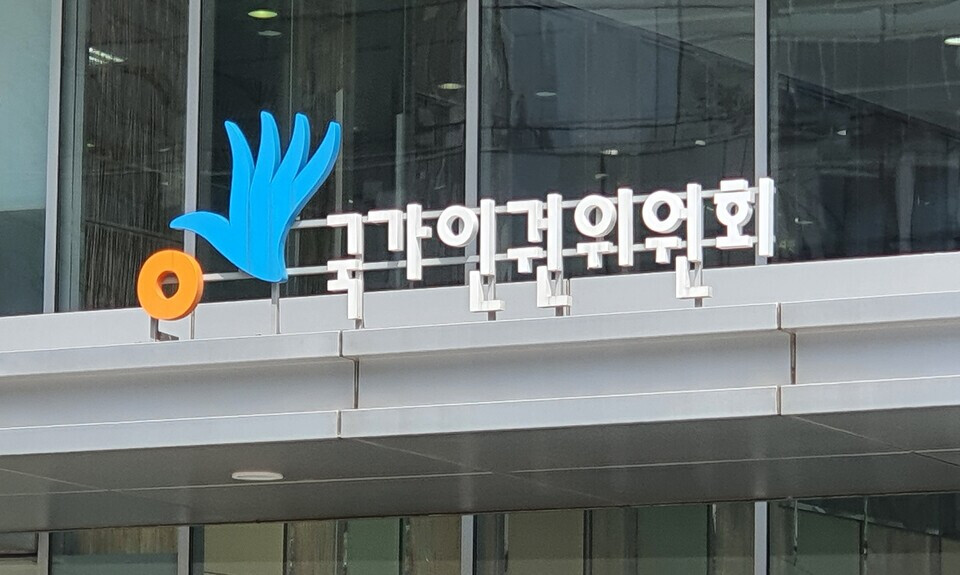
The National Human Rights Commission of Korea (NHRCK), established as an independent watchdog to protect the vulnerable, is currently facing its most severe existential crisis since its inception in 2001. As of early 2026, the institution is mired in allegations of "insurrection incitement," partisan bias, and moral failure among its leadership. With case processing rates hitting an eight-year low and key officials under criminal investigation, experts warn that the "last bastion of human rights" is on the verge of collapse.
Leadership Under Fire: Allegations of Insurrection and Abuse of Power
The crisis reached a tipping point on January 6, 2026, when the Special Investigation Headquarters of the National Police Agency conducted witness interviews regarding a criminal complaint against Chairperson Ahn Chang-ho and four other standing commissioners.
The complaint, filed by a coalition of civic groups known as the "Joint Action to Rectify the NHRCK," levels Grave charges: Insurrection Incitement (내란선동) and Abuse of Authority (직권남용). The core of the controversy stems from the Commission’s recent decisions that critics claim prioritize political defense over human rights advocacy.
Notably, in February 2025, the Commission passed a recommendation asserting that the "defense rights" of former President Yoon Suk-yeol—then facing impeachment proceedings—must be protected. This move sparked national outrage, with civil society groups arguing that an agency meant to protect the marginalized had transformed into a shield for the powerful.
The "Paralysis of Duty": Plummeting Case Processing Rates
The internal turmoil is not merely a political debate; it has tangible consequences for Korean citizens seeking justice. According to data submitted to Representative Shin Jang-sik of the Rebuilding Korea Party, the NHRCK’s efficiency has plummeted.
Current Performance: Between January and December 2025, the Commission processed only 8,814 out of 10,054 filed petitions (an 87.7% rate).
Historical Context: This marks the lowest performance since 2017 (89.2%). For the past three years, the Commission typically maintained a processing rate near 100%, effectively clearing its annual caseload.
The Backlog Crisis: The 12% gap represents thousands of individuals—victims of discrimination, workplace harassment, and institutional abuse—who remain in a state of legal limbo due to the administrative deadlock caused by leadership disputes.
Ethical Decay: The "Guardian of Rights" Accused of Sexual Misconduct
The moral authority of the NHRCK was further dealt a devastating blow by a sex scandal involving a high-ranking official. A Grade-4 Director (Division Chief), identified as "A," who was ironically responsible for investigating sexual harassment and providing remedies for victims, was recently stripped of his duties.
Director A is currently under police investigation for alleged "inappropriate physical contact" with an acquaintance in June 2025. The fact that an official tasked with upholding gender equality and bodily autonomy is himself a suspect in a sex crime has triggered a wave of internal disillusionment and public mockery.
The Call for Radical Reform: Is the NHRCK Law Outdated?
The severity of the situation prompted an unprecedented intervention from the Commission’s predecessors. In late 2025, three former Chairpersons and four former Secretaries-General held a joint press conference at the National Assembly, demanding the immediate resignation of Chairperson Ahn Chang-ho and Standing Commissioner Kim Yong-won.
Legal experts and former officials are now calling for a comprehensive overhaul of the National Human Rights Commission Act. Key proposals include:
Impeachment Provisions: Establishing a legal framework to impeach commissioners who violate their duty of neutrality.
Independent Candidate Recommendation Committee: Removing the President’s unilateral power to appoint the Chairperson to ensure bipartisan independence.
Transparency Mandates: Nam Gyu-seon, a former standing commissioner, emphasized that "except for sensitive personal data, all deliberations and administrative processes must be made transparent to the public to regain lost trust."
Conclusion: A Turning Point
The National Human Rights Commission of Korea stands at a crossroads. As the special police investigation unfolds, the institution must decide whether it will remain a battleground for partisan politics or return to its original mandate of protecting the voiceless. Without immediate structural reform and a restoration of ethical standards, the NHRCK risks becoming a vestigial organ of the state—present in name, but powerless in practice.
[Copyright (c) Global Economic Times. All Rights Reserved.]