![[등록] 2026-09-01 15:48:31](/support/_updata/banner2/tl181982910_6749.png)


(C) Click Oil and Gas
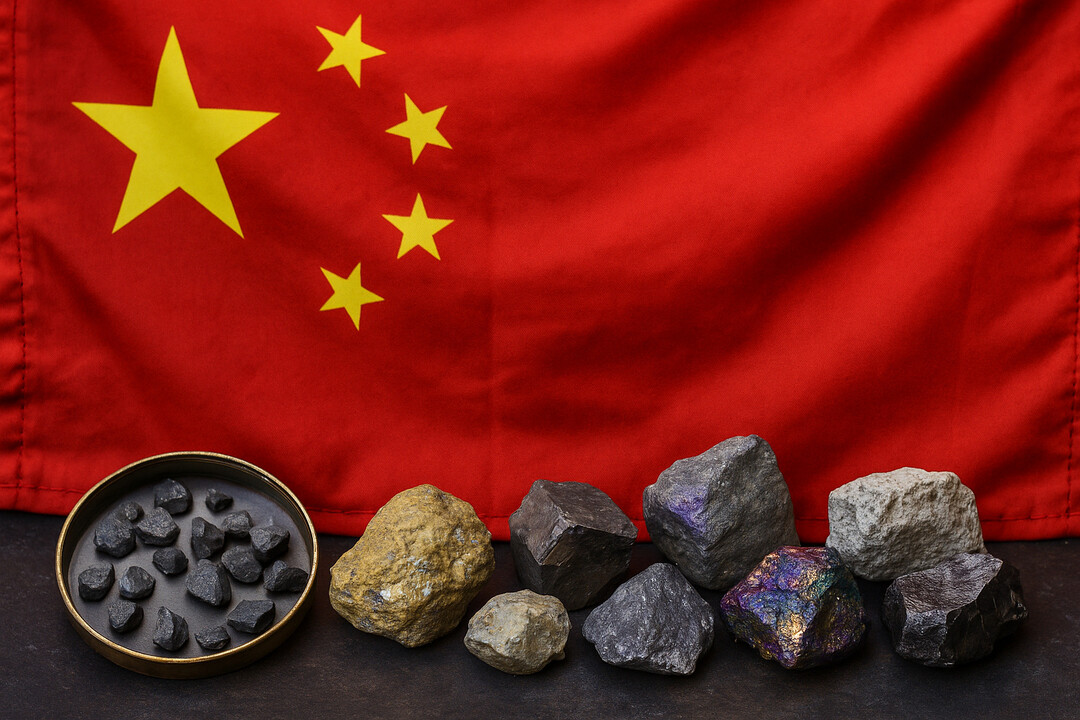
TOKYO — The long-simmering tensions between Asia’s two largest economies have reached a critical flashpoint. As of January 2026, China has weaponized its dominance over the global rare earth supply chain to pressure Tokyo, following Japanese Prime Minister Sanae Takaichi’s recent remarks regarding intervention in a potential Taiwan contingency.
The move, which Tokyo officials have labeled as "economic coercion," threatens to paralyze the Japanese automotive and high-tech sectors, forcing Japan into a desperate race for resource independence.
China’s "Dual-Use" Gambit: A 6-Trillion Yen Threat
On January 7, 2026, the Japanese government expressed "deep regret" after Beijing expanded its export ban on "dual-use" materials—items capable of both civilian and military applications. The list is exhaustive, covering approximately 1,000 items, including drones, telecommunications equipment, and, most critically, seven key rare earth elements.
The restricted elements—Samarium, Gadolinium, Terbium, Dysprosium, Lutetium, Scandium, and Yttrium—are the lifeblood of modern technology. Dysprosium and Terbium, in particular, are indispensable for the permanent magnets used in Electric Vehicle (EV) motors and wind turbines.
Economic analysts are sounding the alarm. "If these restrictions persist for even three months, the disruption to production lines could result in losses exceeding 660 billion yen (approx. $4.5 billion USD)," warned Kiuchi Takahide, an economist at the Nomura Research Institute. The ripple effect is expected to hit Japan’s flagship automakers the hardest, potentially halting assembly lines across the archipelago.
The "Second-Tier" Squeeze
Unlike previous trade spats, Beijing has introduced a "secondary sanction" mechanism. China now claims legal jurisdiction over any third-party organization or individual that transfers Chinese-origin dual-use goods to Japan. This effectively prevents Japan from bypassing the ban by importing Chinese minerals through intermediary countries like Vietnam or Thailand.
Japan’s Counter-Strategy: The Three-Pronged Resistance
Facing an existential threat to its industrial base, the Takaichi administration is executing a high-stakes diversification strategy:
1. Domestic Self-Sufficiency: Deep-Sea Mining Japan is fast-tracking the extraction of rare earth mud from the seabed near Minamitorishima, an uninhabited island in the Pacific. With estimated reserves of 16 million tons, Japan sits on the world’s third-largest deposit. Pilot mining operations are scheduled to begin this year. While technologically challenging, successful extraction would transform Japan from a vulnerable importer into a resource-rich power.
2. Supply Chain Diversification Tokyo is aggressively courting the "China-Plus-One" model. In late 2025, Japan achieved a breakthrough by importing heavy rare earths from Australia. The logistics are complex—mining in Australia, refining in Malaysia, and shipping to Japan—but it has already reduced Japan’s overall rare earth dependence on China from 90% in 2010 to roughly 60% today. The goal is to slash dependence on Chinese heavy rare earths from 100% to 70% by 2027.
3. The "Seoul Model": Counter-Export Restrictions Government circles are debating a "tit-for-tat" response. Japan remains a dominant player in specialized semiconductor and display chemicals. Much like the 2019 restrictions imposed on South Korea, Tokyo is considering curbing exports of high-end manufacturing equipment and chemicals that China’s domestic chip industry desperately needs.
Historical Echoes and Future Outlook
This is not the first time Beijing has used the "Rare Earth Card." In 2010, a maritime clash near the Senkaku (Diaoyu) Islands led to a similar ban, which eventually forced Japan to release a detained Chinese captain. However, the world in 2026 is different.
"Japan has learned from the Australian experience," noted the Yomiuri Shimbun, referring to how Canberra successfully withstood Chinese trade pressure by finding new markets for its coal and wine. "Resilience is built through diversification, not submission."
As the "Dual-Use" regulations take effect, the world watches closely. The outcome of this struggle will determine whether China can continue to use its mineral monopoly as a geopolitical steering wheel, or if Japan’s dash for "resource sovereignty" will provide a blueprint for other nations looking to de-risk from Beijing.
[Copyright (c) Global Economic Times. All Rights Reserved.]