![[등록] 2026-09-01 15:48:31](/support/_updata/banner2/tl181982910_6749.png)


(C) PBS
SEOUL, South Korea – A controversial clause in South Korea's Immigration Control Act, which mandates the detention of undocumented foreigners until forced repatriation, is being fiercely criticized for enabling unscrupulous employers to exploit migrant workers. Recent reports highlight a disturbing trend where employers, seeking to avoid paying overdue wages and severance, leverage this detention risk by threatening to report—or actually reporting—their undocumented employees to immigration authorities. This exploitation, dubbed the 'Imprisonment Law' in its effect, is prompting legislative action to introduce humane and cost-effective alternatives to detention.
Abuse of Detention Regulations to Evade Wage Payments
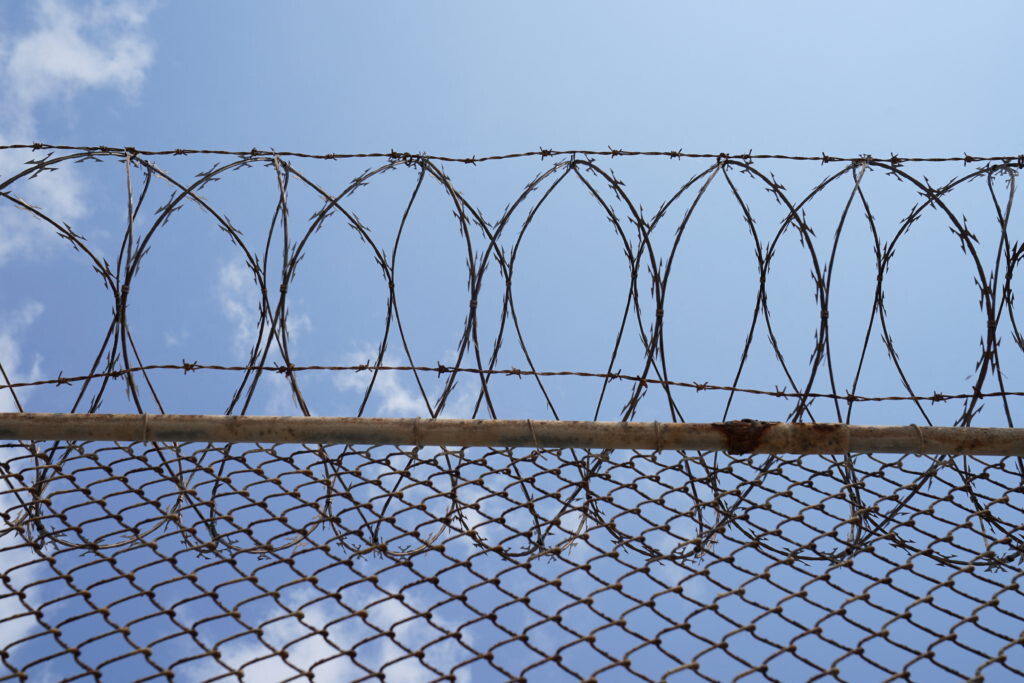
The current law dictates that undocumented foreign nationals, once caught, must be held in foreigner protection facilities (외국인보호소) until their forced deportation. Despite the legal term 'protection,' these facilities are, in practice, detention centers. This mandate creates a coercive environment for migrant workers. Faced with the prospect of prolonged detention, many workers are forced to give up their rightful claims to unpaid wages and severance pay to secure immediate return to their home country.
A striking case involves a Filipino worker, Solomon, who was arrested by police for an Immigration Control Act violation shortly after filing a complaint with the Ministry of Employment and Labor (MOEL) to recover approximately $38,000 (₩50 million) in severance pay owed from ten years of work. Activists suspect the employer filed the report to preempt the wage claim. The National Human Rights Commission of Korea (NHRCK) has repeatedly pointed out that employers frequently threaten to report workers to police or immigration to evade financial liabilities. Another case saw a Cameroonian worker, A, detained after a raid, subsequently have his company refuse to pay his severance, capitalizing on his inability to file a labor complaint while confined.
Massive Wage Theft and Inadequate State Support
Despite the Supreme Court ruling that undocumented foreigners are still protected by the Labor Standards Act and are entitled to wages and severance, the state's protective mechanisms for migrant workers have been severely lacking. According to MOEL data, the total unpaid wages for migrant workers have hovered around $76 million (₩100 billion) annually since 2019. Last year, migrant workers accounted for 8.2% of all wage theft victims (23,254 out of 283,212), a disproportionately high figure considering their estimated 4-5% share of the total workforce (including undocumented persons). A 2021 audit by the Board of Audit and Inspection (BAI) revealed that many detained workers were unaware of support systems and forfeited their claims.
For years, a 2007 agreement between the Ministry of Justice (MOJ) and MOEL to dispatch labor inspectors to detention facilities for regular consultations remained largely dormant. The MOJ cited the COVID-19 pandemic for the suspension, confirming that support was virtually non-existent for 18 years.
The government’s response has been slow and often ineffective. While President Lee Jae-myung publicly condemned the practice in September, calling the exploitation "a national disgrace," the MOJ's use of 'temporary release of protection'—a provision allowing the MOJ to release detainees at its discretion—was rarely used until this year. Furthermore, the MOJ recently exempted public officials from the 'obligation to notify' immigration authorities about migrant workers seeking help for wage theft. However, this measure is limited in effectiveness as employers can still file a report, leading to the worker’s immediate detention under current law.
New 'Alternatives to Detention Act' (Gu-Geum-Dae-An-Beop) Proposed
To address these systemic flaws and align South Korea with international human rights standards, Democratic Party of Korea lawmaker Lee Seong-yoon (이성윤) has introduced the 'Alternatives to Detention Act,' an amendment to the Immigration Control Act. This landmark bill aims to prohibit the detention of migrant workers who are victims of wage theft until the recovery process is complete.
The proposed system mandates that the worker regularly report their residential status and wage claim progress. Simultaneously, the government would provide "case management" and "labor attorney support" to prevent absconding and facilitate the recovery of funds.
Advocates argue that this model is not only more humane but also fiscally responsible. "It costs about $114 (₩150,000) for the state to detain a person for a single day," explained Lee Sang-hyeon, an attorney with the Migrant Detention Response Network. "Providing case management and labor support to workers with a low flight risk is more reasonable both in terms of cost and human rights protection."
Global examples support this approach. Countries like the United States, Germany, France, and the United Kingdom have successfully implemented community-based alternatives, demonstrating high compliance rates. In the US, a case management program for asylum-seeking families in 2016-2017 saw a 99% court appearance rate. A 2015 study of 60 countries by the International Detention Coalition found that "engagement-based" community models achieve compliance rates exceeding 95%.
Rep. Lee stated that the proposed amendment represents a "global standard" that the UN and other international organizations have long recommended. The bill is poised to become a critical test for South Korea to uphold human dignity and safeguard its international reputation.
[Copyright (c) Global Economic Times. All Rights Reserved.]