![[등록] 2026-09-01 15:48:31](/support/_updata/banner2/tl181982910_6749.png)


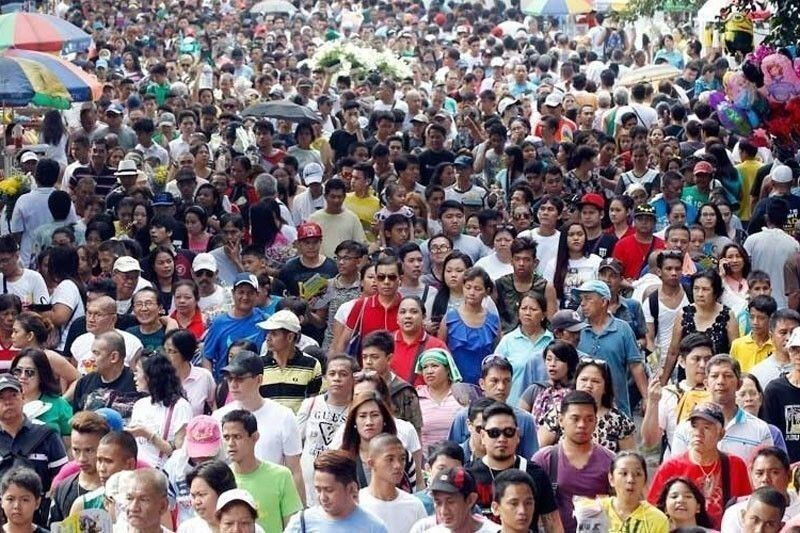
(C) Philstar.com
Those who remember the "Barley Hump" (Borigogae) and the dangers of briquette gas will feel the profound transformation of the world, a change so drastic it's like "mulberry fields turning into the blue sea." It was only thirty to forty years ago, in the 1960s, that family planning (birth control) was encouraged as a national campaign to curb population growth, with free distribution of contraceptives and even free procedures.
In poor rural and fishing villages, many children the age of middle and high schoolers left for city factories to reduce the number of mouths to feed. It is a well-known fact that the sweat of female factory workers in their late teens contributed significantly to economic development through exports. From the slogan "Let's have two and raise them well" to "Let's have just one regardless of gender," the population decline is expected to continue as marriage is delayed due to economic issues, or as more people choose to stay single to escape the constraints of family or traditional in-law relationships.
The Total Fertility Rate (TFR) represents the average number of children a woman can have during her reproductive years. A lower TFR leads to slower population growth and exacerbates the issue of an aging population. If the TFR falls below 2, there is a high possibility of long-term population decline. In South Korea's case, it fell below 2 in 1984 and has never recovered since. In 2001, the TFR was 1.3, and in 2002, it dropped to 1.17. Since the number of births in 2003 decreased by about 30,000 compared to 2002, the TFR likely fell even further.
Statistics Korea predicts that the country's population will begin to decrease in the 2020s. Although the total population has not yet shrunk due to extended lifespans despite low birth rates, if the TFR remains in the 1.1 range, Korea's population is expected to be less than half of its current size in 100 years. As lifespans extend due to medical technology and improved working/living conditions, Korea became an "aging society" in 2000 (over 7% aged 65+), entered an "aged society" in 2019 (over 14%), and is set to become a "super-aged society" in 2026 (over 20%).
Population decline and aging cause many problems simultaneously. Economic growth is likely to fall due to a decrease in the labor force and consumer population. Businesses targeting infants will be hit first. Closed schools in rural areas are old news, and many universities face crises as the number of high school graduates is smaller than university admission quotas. Without foreign workers, there would be no one to perform the so-called "3D" (Dirty, Difficult, Dangerous) jobs.
The number of people receiving retirement pensions is increasing, and the payment period is lengthening due to increased life expectancy. As the retired population outnumbers the working population, pension funds are expected to be depleted. National and social measures are necessary for stable retirement security. Today’s unemployed population—the surplus labor—will face limits in finding jobs unless they possess core competencies for the knowledge and information age. Companies struggle with hiring, while the unemployed struggle with job hunting, because there is a shortage of labor with advanced knowledge and IT skills. The unemployment problem, which might resolve itself in a generation due to population decline, is a major social issue now because of a "time lag." National consensus is needed to solve this structural phenomenon.
In about 10 years, when the main axis of socio-economic activity shifts from those in their 20s-30s to those in their 40s-50s due to population distribution, Korea's economy will enter a period of maturity rather than growth, transitioning from a developing to a developed nation. However, it is regrettable that we lack the total effort needed to push through these 10 years and set the country on the right orbit.
[Copyright (c) Global Economic Times. All Rights Reserved.]