• 2026.02.01 (Sun)
  • All articles
  • LOGIN
  • JOIN
Global Economic Times
APEC2025KOREA가이드북
  • Synthesis
  • World
  • Business
  • Industry
  • ICT
  • Distribution Economy
  • Well+Being
  • Travel
  • Eco-News
  • Education
  • Korean Wave News
  • Opinion
  • Arts&Culture
  • Sports
  • People & Life
  • Column
    • Cho Kijo Column
    • Lee Yeon-sil Column
    • Ko Yong-chul Column
    • Cherry Garden Story
  • Photo News
  • New Book Guide
MENU
 
Home > Industry

South Korea’s First Mass-Produced Micro-Satellite Successfully Launched and Linked

Global Economic Times Reporter / Updated : 2026-01-30 17:48:55
  • -
  • +
  • Print


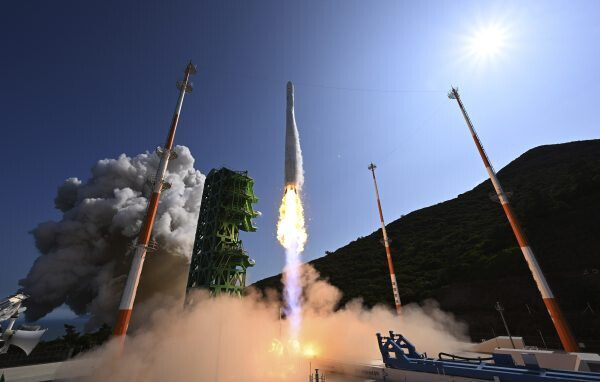
(C) The Diplomat


South Korea has successfully launched and established communication with its first mass-produced Micro-Satellite Cluster Verifier. This milestone, achieved after two previous delays, is expected to accelerate the development of the domestic space industry, particularly in the realm of Space Data Centers.

Successful Liftoff in New Zealand
According to the Korea AeroSpace Administration (KASA), the verifier satellite was launched at 10:21 AM on January 30 (local time 2:21 PM) from the Mahia Launch Complex in New Zealand. It was carried by the "Electron" launch vehicle, operated by the American space company Rocket Lab.

The journey to orbit wasn't without hurdles:

Previous Attempts: Two launches were aborted last December due to communication and engine ignition issues with the launch vehicle.
Launch Day Delay: On the day of the final launch, the liftoff was pushed back by 26 minutes (from 9:55 AM to 10:21 AM) to re-verify data during the preparation process.

Successful Communication and Mission Plan
At approximately 1:12 PM, KASA confirmed that the satellite successfully established initial communication with the Korea Aerospace Research Institute (KARI) ground station.

Status: The satellite is in good condition, with its solar panels deployed normally.
Next Steps: The verifier will undergo six months of trial operations.
Main Mission: Starting in July, it will begin precision Earth observation, monitoring the Korean Peninsula and surrounding waters to provide rapid responses to national security issues and natural disasters.

Laying the Groundwork for "Space Data Centers"
The success of this micro-satellite cluster is seen as a vital step toward building Space Data Centers. These centers rely on clusters of satellites to process data in orbit, making Inter-Satellite Link (ISL) technology a critical requirement.

"While South Korea is still in the early stages of the Space Data Center sector, we are steadily securing the foundational technologies required," noted a domestic space expert.
The government plans to deploy a total of 11 satellites in this cluster to ensure high-frequency, high-precision monitoring.

[Copyright (c) Global Economic Times. All Rights Reserved.]

  • #Globaleconomictimes
  • #Korea
  • #Seoul
  • #Samsung
  • #LG
  • #Bitcoin
  • #Meta
  • #Business
  • #Economic
  • #The Woori Bank
  • #Elon Musk
  • #C
Global Economic Times Reporter
Reporter Page

Popular articles

  • Hyundai Motor Challenges World's First 'Solid-State Battery Vehicle'

  • Eastar Jet Achieves IATA Operational Safety Audit (IOSA) Certification

  • Bain Capital to Acquire Andar Parent Echo Marketing, Launching Tender Offer for Delisting

I like it
Share
  • Facebook
  • X
  • Kakaotalk
  • LINE
  • BAND
  • NAVER
  • https://globaleconomictimes.kr/article/1065602862385644 Copy URL copied.
Comments >

Comments 0

Weekly Hot Issue

  • "Bitter Valentine": Japan’s Chocolate Prices Double, Crushing Sales and Traditions
  • Indonesia’s JCI Plummets 8% Amid MSCI Downgrade Warning; IDX CEO Resigns
  • Taiwan’s Economy Surges 8.6% in 2025: A 15-Year High Fueled by AI Boom
  • Fitch Affirms South Korea’s ‘AA-’ Rating, Cites Robust Semiconductor Exports and External Resilience
  • Police Launch Investigation into Data Breach of Seoul’s ‘Ttareungyi’ Bike-Sharing Service
  • The 'Dujjonku' War: Major Food Brands Clash Over Dubai-Style Desserts

Most Viewed

1
From Serene Tables to Absolute Chaos: Lee Hee-jun’s ‘Rectangle, Triangle’
2
Secretary General Oh Jin-Ki: “2026 Taean International Horticultural Healing Expo will deliver ‘Mental Recovery’ beyond spectacular sights”
3
Top Japanese Actress Ryoko Yonekura Referred to Prosecutors Over Drug Use Allegations
4
The Cruelty Behind the Mask of the Rule of Law: Condemning Unconstitutional Crackdowns by U.S. State Governments and ICE
5
Jeju Air Implements Total Ban on In-Flight Power Bank Usage Amid Fire Concerns
광고문의
임시1
임시3
임시2

Hot Issue

S. Korea Braces for Influx of Chinese Tourists as Lunar New Year Approaches

"Bitter Valentine": Japan’s Chocolate Prices Double, Crushing Sales and Traditions

Indonesia’s JCI Plummets 8% Amid MSCI Downgrade Warning; IDX CEO Resigns

Police Launch Investigation into Data Breach of Seoul’s ‘Ttareungyi’ Bike-Sharing Service

Let’s recycle the old blankets in Jeju Island’s closet instead of incinerating them.

Global Economic Times
korocamia@naver.com
CEO : LEE YEON-SIL
Publisher : KO YONG-CHUL
Registration number : Seoul, A55681
Registration Date : 2024-10-24
Youth Protection Manager: KO YONG-CHUL
Singapore Headquarters
5A Woodlands Road #11-34 The Tennery. S'677728
Korean Branch
Phone : +82(0)10 4724 5264
#304, 6 Nonhyeon-ro 111-gil, Gangnam-gu, Seoul
Copyright © Global Economic Times All Rights Reserved
  • 에이펙2025
  • APEC2025가이드북TV
  • 독도는우리땅
Search
Category
  • All articles
  • Synthesis
  • World
  • Business
  • Industry
  • ICT
  • Distribution Economy
  • Well+Being
  • Travel
  • Eco-News
  • Education
  • Korean Wave News
  • Opinion
  • Arts&Culture
  • Sports
  • People & Life
  • Column 
    • 전체
    • Cho Kijo Column
    • Lee Yeon-sil Column
    • Ko Yong-chul Column
    • Cherry Garden Story
  • Photo News
  • New Book Guide
  • Multicultural News
  • Jobs & Workers