![[등록] 2026-09-01 15:48:31](/support/_updata/banner2/tl181982910_6749.png)


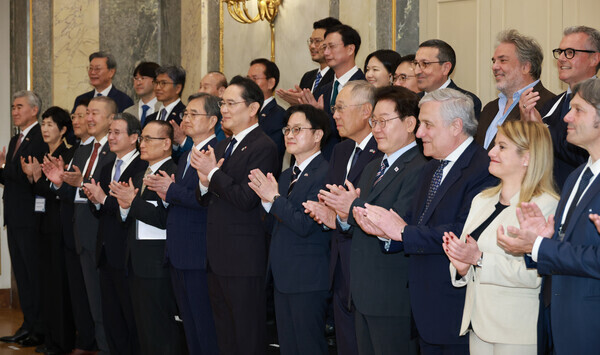
SEOUL — President Lee Jae-myung is set to hold a series of high-level meetings with the leaders of South Korea’s semiconductor giants, Samsung Electronics and SK Group, to finalize an ambitious roadmap for balanced regional development. This strategic push aims to decentralize the nation’s industrial power, currently concentrated in the Seoul metropolitan area, by leveraging the semiconductor industry’s historic boom to revitalize local economies.
Finalizing the "Growth Transformation" Strategy
President Lee is scheduled to meet with Samsung Electronics Chairman Jay Y. Lee on June 25 at the presidential office. This follows his recent meeting with SK Group Chairman Chey Tae-won on June 19. These individual consultations are considered critical preparatory steps for the "Major Business Leaders' Briefing" scheduled for June 29, where the government plans to unveil a comprehensive national transformation project.
The administration is framing this initiative as a "fundamental transformation" of South Korea’s growth strategy. During his first-anniversary press conference earlier this month, President Lee emphasized that the "fruits of growth must not remain confined to a select few corporations, regions, or sectors".
Semiconductors and AI: The New Engines for Regional Revitalization
According to government and business sources, the core of this new strategy involves shifting investment toward non-capital regions by fostering industrial ecosystems centered on Artificial Intelligence (AI) and semiconductors. The government envisions a "local production, local consumption" model, particularly in power-intensive industries, by aligning new production facilities with regions that have strong renewable energy infrastructure.
Key components of the upcoming investment plan include:
Semiconductor Clusters: Potential construction of front-end memory chip fabrication plants and advanced back-end packaging facilities in regions like Gwangju and the Honam area.
AI Infrastructure: Deployment of AI data centers across the Chungcheong and Gangwon provinces to support local digital transformation.
Comprehensive Support: To ensure the success of these regional projects, the government is preparing a package of incentives, including tax benefits, regulatory reforms, and the expansion of water, power, and transport infrastructure.
Addressing Economic Polarization
The administration’s urgency stems from the dual challenge of declining potential growth and widening regional inequality. While the semiconductor sector has driven significant stock market gains, President Lee has warned that this success has created a "dark shadow of wealth polarization".
Prime Minister Kim Min-seok and Chief of Staff Kang Hoon-sik have both recently echoed the President’s vision, signaling that the government intends to utilize excess tax revenues generated by the semiconductor boom to invest in "future generations" and create high-quality, long-term jobs in local communities.
Future Outlook and Challenges
While the plan marks a bold shift toward "balanced growth," industry experts note several hurdles. Successful implementation will require not only government support but also sustained corporate commitment, even during potential market downturns. The government’s ability to secure reliable infrastructure and prevent speculative real estate activities during the selection of new industrial sites will be crucial to the plan's viability.
As the June 29 briefing approaches, all eyes are on whether this "major transformation" can effectively transition South Korea from a capital-centric economy to a more equitable and innovation-driven landscape.
[Copyright (c) Global Economic Times. All Rights Reserved.]