![[등록] 2026-09-01 15:48:31](/support/_updata/banner2/tl181982910_6749.png)


(C) Medium
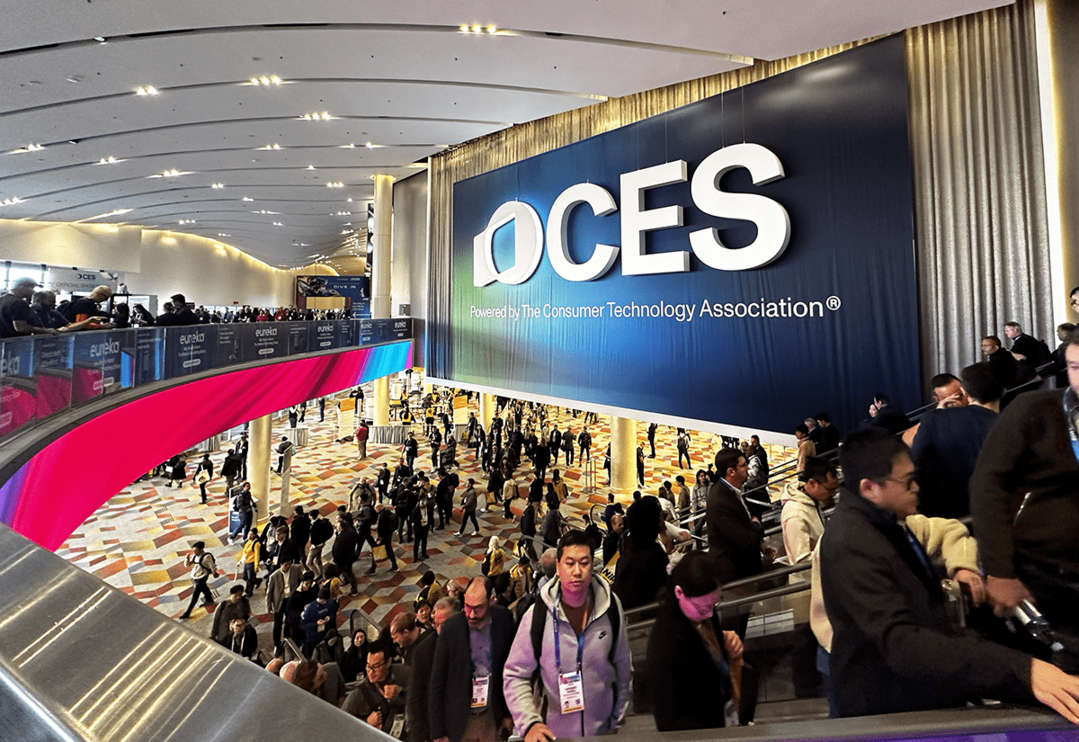
LAS VEGAS — For years, the Consumer Electronics Show (CES) was a stage where Chinese companies were often relegated to the periphery, showcased as purveyors of "affordable alternatives" or hardware accessories. That era has officially ended. At CES 2026, held this week at the Las Vegas Convention Center (LVCC), the narrative shifted from "Made in China" to "Innovated in China," as Chinese firms dominated the most advanced sectors, including humanoid robotics, AI-integrated mobility, and premium display technologies.
The sentiment among industry veterans was one of visible unease. "To be honest, I'm not sure we can keep up with China anymore," remarked one high-level executive from a competing firm, echoing a sentiment that rippled through the North Hall.
The Rise of the Humanoid: China’s Robotic Hegemony
The most striking display of Chinese technological prowess was found in the robotics sector. Out of 38 humanoid robot manufacturers participating in CES 2026, a staggering 21 companies (55%) were of Chinese origin.
Unitree Robotics stole the spotlight with its Unitree G1, a humanoid robot that engaged in live boxing matches with attendees. Clad in red gloves, the G1 demonstrated unprecedented agility, dodging punches and recovering from falls with human-like fluidity. Unlike the experimental prototypes of previous years, the G1 and its Chinese counterparts—such as those from Unix AI and Agibot—showcased a level of commercial readiness that suggests humanoid robots are moving from laboratories to factory floors and homes.
Domestically, South Korean experts are sounding the alarm. "Chinese companies are now significantly ahead of Korea in the robotics sector," noted Han Jae-kwon, CTO of A-Robot. This lead is not limited to heavy machinery but extends to domestic life. Roborock’s 'Saros Rover', a vacuum cleaner equipped with two-wheeled legs capable of climbing stairs, and Dreame’s latest AI-guided models, represent a leap in home automation that competitors are struggling to match.
Mobility and the "Central Brain" Strategy
In the West Hall, traditionally dominated by legacy automakers and Hyundai Motor Group, Chinese presence was equally formidable. Great Wall Motor (GWM) occupied a massive pavilion adjacent to Hyundai, showcasing high-performance engines and mass-produced EVs designed for the global market.
The strategic highlight of the mobility sector, however, came from Geely, which unveiled its "Full-Domain AI 2.0" architecture. This system moves away from the traditional model of distributed electronic control units (ECUs). Instead, it utilizes a singular "Central Brain" to manage everything from autonomous driving and safety protocols to in-cabin infotainment. By centralizing AI processing, Geely aims to reduce latency and allow for seamless, over-the-air (OTA) updates that treat the vehicle as a unified, evolving software entity.
"I had a prejudice against Chinese cars, but seeing them in person, they are remarkably sophisticated," said Atay, a visitor from Israel. "If the performance is there, there’s no reason not to buy one."
Displacing Leaders in Mobile and Display
The shift in power was perhaps most symbolic in the Central Hall, the "heart" of CES. The prime exhibition space, historically occupied by Samsung Electronics, was taken over by TCL. Hisense moved into TCL’s former slot, signaling a geographical expansion of Chinese influence within the venue itself.
TCL showcased its SAD Mini LED TV, focusing on uniform picture quality across massive screens, while Hisense debuted the world’s largest RGB Mini LED TV. These products target the premium market, challenging the long-standing dominance of Korean and Japanese brands not just on price, but on technical specifications and color reproduction.
In the mobile sector, Lenovo utilized the Las Vegas Sphere to announce its AI-first strategy. Its new foldable smartphone, the Motorola Razr Fold, powered by the Qualcomm Snapdragon 8 Elite 5th Gen, aims to disrupt the premium segment dominated by the Galaxy Z series. Lenovo’s vision extends beyond the device, proposing an integrated AI assistant ecosystem that links PCs, smartphones, and wearables into a singular user experience.
Analysis: A New World Order in Tech
The dominance observed at CES 2026 is the result of a concerted, long-term investment by the Chinese government and private sector in "New Quality Productive Forces." While Western and Korean firms have focused on incremental improvements to existing ecosystems, Chinese firms have aggressively pursued high-risk, high-reward sectors like humanoid robotics and centralized AI architectures for vehicles.
Industry analysts suggest that the "imitation" phase of Chinese tech is entirely over. The sheer volume of Chinese startups (21 out of 38 in robotics alone) creates a hyper-competitive domestic environment that "stress-tests" innovation before it reaches the global stage.
As CES 2026 draws to a close, the global tech industry faces a sobering reality: China is no longer just a participant in the digital revolution—it is increasingly the one setting the pace. For global competitors, the challenge is no longer about maintaining a lead, but about closing a rapidly widening gap.
[Copyright (c) Global Economic Times. All Rights Reserved.]