![[등록] 2026-09-01 15:48:31](/support/_updata/banner2/tl181982910_6749.png)


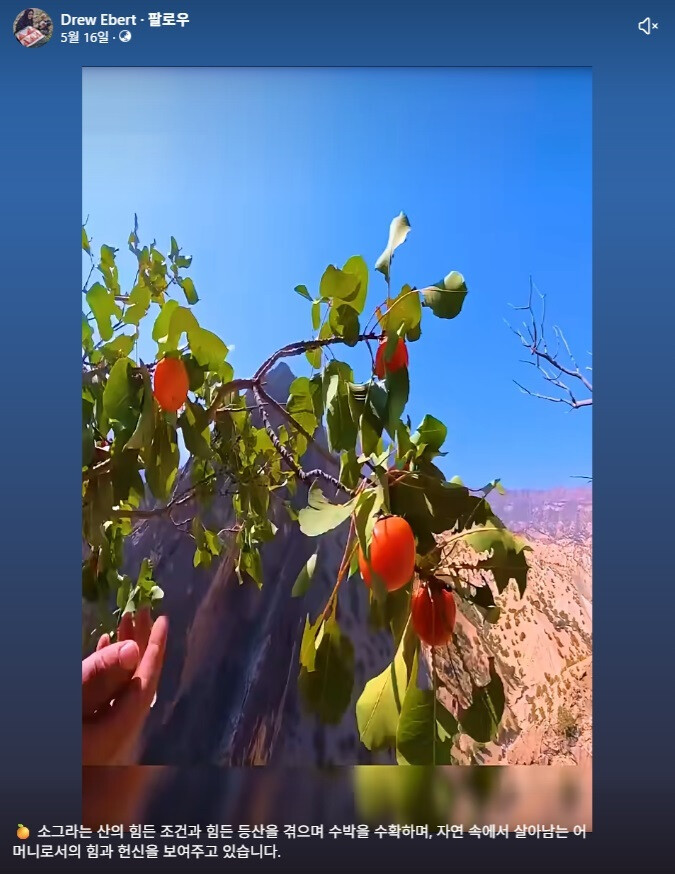
Wild persimmons also grow in southern Iran. Seeing poor people harvesting wild persimmons in such a barren region brings a lot of thoughts to mind.
As the birthplace of the persimmon, China produces the largest amount of persimmons, and South Korea also cultivates them widely. Korea has a unique persimmon culture, such as making gotgam (dried persimmons). When it comes to sweet persimmons, Israel's sweet persimmons have the highest sugar content. Though small in size, they are truly "honey persimmons."
Only about 5% of countries around the globe produce persimmons. Nowadays, Korean sweet persimmons are popular, so they are even exported abroad. New Zealand and Central Asia also produce some persimmons.
It is a pity that people in China's major persimmon-producing regions do not know how to make gotgam. I once watched a foreign documentary and saw an incredible amount of soft persimmons rotting away. The scale was beyond imagination. Recently, they have been making soft persimmons as well, but using a method different from Korea's.
To our global neighbors, Korea's persimmon trees and persimmons are quite fascinating things. Planting persimmon trees as street trees along Seoul's streets or the Cheonggyecheon stream would yield a huge tourism effect. Whenever I look at Cheonggyecheon, there are two things I regret: not planting rows of persimmon trees, and the lack of restrooms that foreigners frequently plead for.
[Copyright (c) Global Economic Times. All Rights Reserved.]