![[등록] 2026-09-01 15:48:31](/support/_updata/banner2/tl181982910_6749.png)


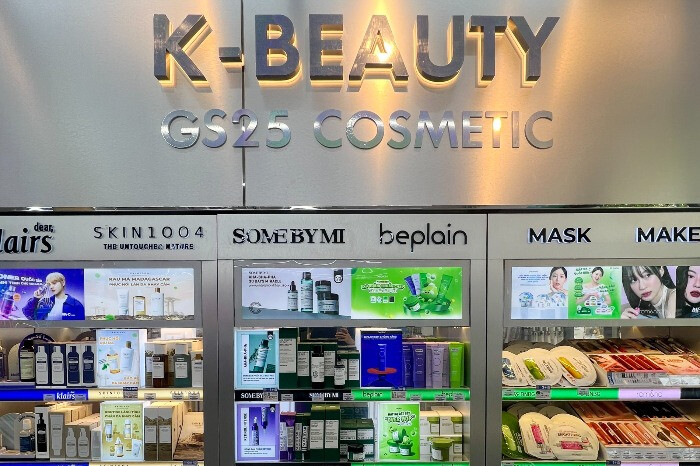
As the United States emerges as K-beauty’s largest export market, the burden of complying with local regulations is also growing for domestic cosmetic companies. The number of domestic cosmetic manufacturing and processing facilities registered with the U.S. Food and Drug Administration (FDA) has surged by over 50% in just a year and a half, approaching 1,000. With exports to the U.S. growing rapidly, responding to FDA regulations—ranging from product classification, ingredients, and labeling to registration renewals and post-market safety management—has surfaced as a major variable for U.S. business operations.
According to the FDA and the Ministry of Food and Drug Safety on the 28th, South Korea's cosmetics exports in the first half of this year reached $7.0 billion, a 27.3% increase compared to the same period last year, marking a record high for the first half of a year. Exports to the U.S. amounted to $1.45 billion, accounting for 20.7% of the total and ranking first by country. China followed with $1.01 billion, taking up 14.4%.
As of the end of June, the number of cosmetics manufacturing and processing facilities located in South Korea and registered with the FDA stood at 947, up 330 (53.5%) from 617 in January of last year. This is the second highest number among overseas registered facilities, following China’s 8,138.
This means that meeting local regulations properly has become a prerequisite for market expansion now that the U.S. has surpassed China as K-beauty’s largest export destination.
171 Rejected Product Lines… Top 5 Manufacturers Account for 64.9% of Names Listed
Along with the expansion into the U.S. market, instances of import rejections due to a failure to meet local regulations continue to occur. Compilations of raw data from the FDA Import Refusal Report show that from October of last year—when the 2026 fiscal year began—until August 6 of this year, 171 Korean cosmetics product lines faced import rejections. This is 13 (8.2%) more than the 158 product lines recorded for the entire 2025 fiscal year.
The U.S. federal government's fiscal year runs from October 1 to September 30 of the following year, meaning the 2026 fiscal year concludes today.
Looking at the rejected product lines by manufacturer, Seoul Cosmetics accounted for 33, or 19.3% of the total. Kolmar Korea followed with 23 (13.5%), Cosmecca Korea with 21 (12.3%), GDK Cosmetics with 20 (11.7%), and NowCos with 14 (8.2%). Products under the names of the top 5 manufacturers totaled 111, accounting for 64.9% of the whole.
However, these figures cannot be interpreted as the "customs rejection rate" of each manufacturer. This is because the percentage is not calculated based on each company's total exports to the U.S., but rather represents the proportion of products under specific manufacturer names among those subjected to import rejections.
The production structure of the domestic cosmetics industry must also be taken into consideration. In South Korea, the ODM and OEM systems—where brand owners outsource production to specialized manufacturers—are well-developed. Since a single manufacturer produces products for multiple brands, issues arising during the export process of different brands can be aggregated under the same manufacturer’s name.
Because the FDA report records manufacturer information, cases where brand owners or distributors fail to meet local standards regarding labeling or product classification during the export process may still be recorded under the manufacturer's name. This is why a high frequency of a manufacturer's name cannot simply be linked to production quality issues.
The reasons for import rejections are also not limited to safety concerns. The FDA checks for compliance with regulations regarding colorant usage, labeling, and product classification. Using unauthorized colorants, utilizing colorants that require certification without obtaining it, or failing to align label markings with regulations also trigger regulatory targets.
FDA import rejections are measures finalized after companies go through explanation or corrective procedures for detained products and a determination is made that U.S. laws have been violated. Products ultimately rejected must, in principle, be destroyed or re-exported outside the U.S. within 90 days from the date of notification.
Nor can the 171 product lines be interpreted as the overall customs rejection rate for Korean cosmetics. This is because cosmetics exports to the U.S. are growing rapidly, and the figures are not calculated using the total number of imported Korean cosmetics product lines as the denominator.
An Olive Young store located in LA, U.S. Local customers are looking around products. The photo is not directly related to the article. Reporter Shim Ha-yeon An Olive Young store located in LA, U.S. Local customers are looking around products. The photo is not directly related to the article. Reporter Shim Ha-yeon
FDA Registrations Up 54%… But ‘Registration Does Not Equal Approval’
Although FDA-registered facilities are rapidly increasing, facility registration or product listing does not mean product approval. On the 9th, the FDA reiterated that being assigned a registration number or product listing number does not imply that the FDA has approved the facility or the product.
Cosmetics manufacturing and processing facilities sold in the U.S. must register with the FDA pursuant to the Modernization of Cosmetics Regulation Act (MoCRA), and responsible persons must also list information on the products sold and their ingredients. Aside from certain colorants, the U.S. does not generally mandate prior FDA approval for individual cosmetic products.
Management is also required following registration. Manufacturing and processing facilities must renew their registrations every two years based on the initial registration date, and responsible persons must update product and ingredient information annually.
In February, the FDA added registration status and renewal date fields to its cosmetics electronic registration system, "Cosmetics Direct," and introduced a feature that automatically sends alerts to facilities and U.S. agents as renewal deadlines approach. With domestic registered facilities surging from 617 to 947, the scope of post-registration management targets—such as facility registration renewals, product information updates, and safety data management—has also expanded.
Different Product Classifications in South Korea and the U.S.… Sunscreens Are Over-the-Counter Drugs in the U.S.
South Korea and the U.S. also differ in their product classification criteria. In the U.S., products can be subject to pharmaceutical regulations depending on the efficacy claims they make, not just their ingredients. Products promoting acne or dandruff treatments are prime examples.
Sunscreens are functional cosmetics in South Korea, but they are regulated as over-the-counter (OTC) drugs in the U.S. In June, the FDA added the UV-blocking ingredient "bemotrizinol" as an active ingredient for OTC sunscreens, and on the 10th of this month, it excluded aminobenzoic acid (PABA) and trolamine salicylate from the permitted list.
With the enforcement of MoCRA, post-market management obligations have also been strengthened. Responsible persons must retain safety data and report serious adverse events to the FDA within 15 business days upon becoming aware of them. The FDA may also execute mandatory recalls or suspend facility registrations under certain conditions.
Industry insiders expect that as the U.S. market grows, the importance of complying with FDA regulations will increase accordingly. A domestic cosmetics industry official analyzed, "With exports to the U.S. soaring to 20.7% of total cosmetics exports, failures to respond to local regulations will not just end as customs issues for a few companies, but could lead to costs and risks arising during the expansion of K-beauty's largest growth market."
The official added, "As registered facilities have increased by 53.5% from 617 to 947 and import rejection cases continue to emerge, domestic companies' U.S. businesses are entering a phase where post-registration management is more crucial than FDA registration itself. The capacity to continuously respond to changing local regulations—ranging from product classification, ingredients, and labeling to registration renewals and post-market safety management—is emerging as a major variable for expanding into the U.S. market."
[Copyright (c) Global Economic Times. All Rights Reserved.]