![[등록] 2026-09-01 15:48:31](/support/_updata/banner2/tl181982910_6749.png)


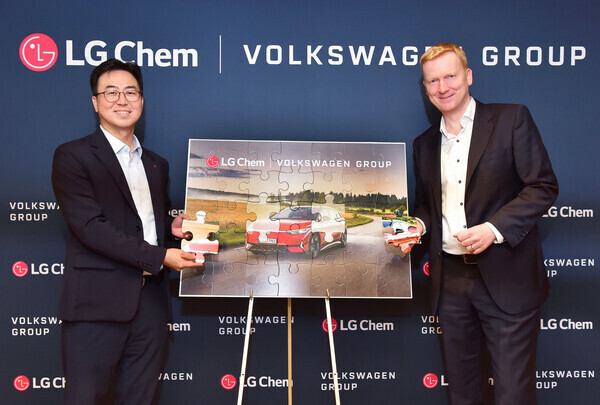
LG Chem is joining forces with the Volkswagen Group to jointly develop next-generation materials for future vehicle lightweighting and eco-friendliness.
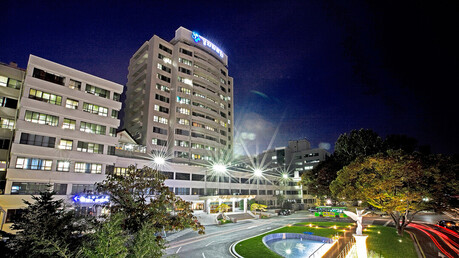
LG Chem announced on the 28th that it recently signed a Memorandum of Understanding (MOU) with the Volkswagen Group at the LG Twin Towers in Yeouido, Seoul, for the "Development and Expanded Application of Next-Generation and Eco-Friendly Mobility Materials."
Under this agreement, both companies will review the development of next-generation plastics and composite materials to enhance vehicle lightweighting and performance, utilizing LG Chem's ABS (Acrylonitrile Butadiene Styrene) and EP (Engineering Plastics).
ABS and EP are high-performance plastics with high impact strength, durability, and processability, used in automotive interior and exterior parts as well as home appliance exteriors.
The application of eco-friendly materials will also be expanded. The companies plan to review the application of LG Chem's PCR (Post-Consumer Recycle) materials and cost-competitive materials to the interior and exterior parts of major Volkswagen Group vehicle brands.
This is a response to the strengthening cooperation between automakers and material companies as the demand for vehicle lightweighting and carbon emission reduction centered on electric vehicles grows.
In particular, as increasing the use of recycled plastics in the automobile manufacturing process while simultaneously securing durability, performance, and price competitiveness emerges as a major challenge, the importance of high-performance and recycled materials is growing.
The two companies have also decided to expand R&D cooperation, such as sharing next-generation mobility material technologies and global market trends, and reviewing the feasibility of applying specific materials to actual vehicles.
Volkswagen Group executives visited the LG Chem Osan Customer Solution (CS) campus to examine PCR-based circular economy, electrification, high-performance materials, and cost-competitiveness reinforcement solutions.
They also visited LG Science Park in Magok, Seoul, to discuss LG Group's R&D capabilities related to future mobility and ways to expand future cooperation.
With this cooperation, LG Chem plans to expand its high-value-added plastics and eco-friendly material business for automobiles.
LG Chem currently has a total annual ABS production capacity of 2.35 million tons at home and abroad. It has also secured automotive material portfolios such as high-gloss and high-heat-resistant ABS applicable to side mirrors and radiator grilles, and paintless products that can reduce separate painting processes.
In 2020, it became the first in the industry to successfully produce recycled PCR ABS in white, and has since been expanding its PCR material product line for automotive interior and exterior parts.
It is also promoting the development of materials aimed at vehicle lightweighting and manufacturing cost reduction, such as paintless ASA and high-gloss, high-heat-resistant ABS.
Kim Sang-min, Senior Vice President and Head of LG Chem's Petrochemicals Business Division, stated, "We expect this to be a meaningful starting point where global automakers and material companies create future mobility material innovation together. Based on our technological prowess and competitiveness in the high-value-added and eco-friendly materials sector, we will create sustainable growth opportunities."
[Copyright (c) Global Economic Times. All Rights Reserved.]