• 2026.01.09 (Fri)
  • All articles
  • LOGIN
  • JOIN
Global Economic Times
APEC2025KOREA가이드북
  • Synthesis
  • World
  • Business
  • Industry
  • ICT
  • Distribution Economy
  • Well+Being
  • Travel
  • Eco-News
  • Education
  • Korean Wave News
  • Opinion
  • Arts&Culture
  • Sports
  • People & Life
  • Column
    • Cho Kijo Column
    • Lee Yeon-sil Column
    • Ko Yong-chul Column
    • Cherry Garden Story
  • Photo News
  • New Book Guide
MENU
 
Home > Business

Jensen Huang at CES 2026: "AI to Trigger Storage Revolution and Exploding CPU Demand"

Global Economic Times Reporter / Updated : 2026-01-07 07:05:55
  • -
  • +
  • Print

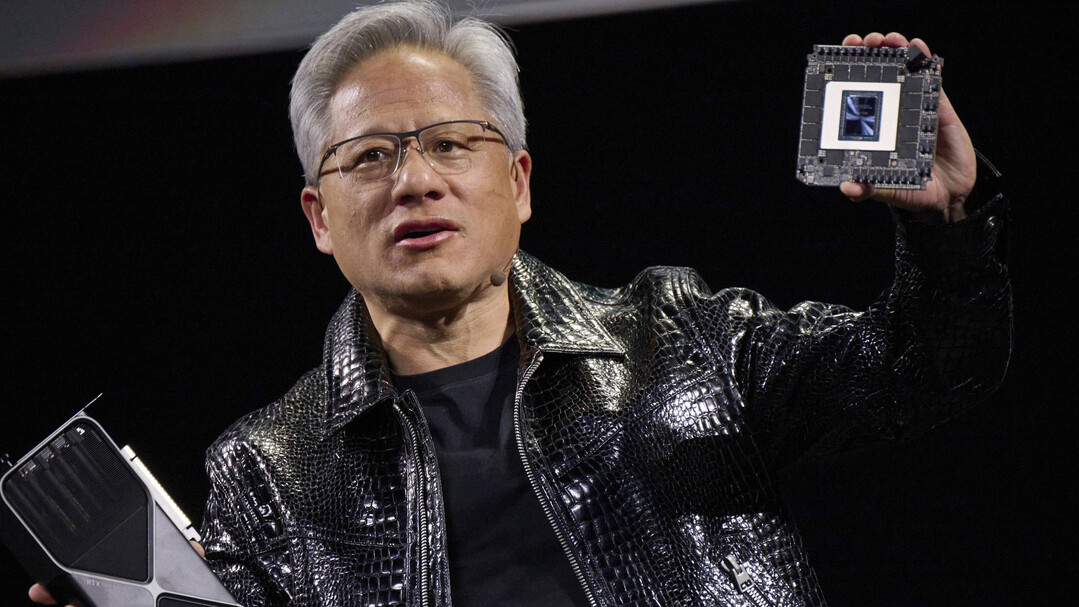
(C) PC Gamer

LAS VEGAS — Jensen Huang, CEO of NVIDIA, declared that Artificial Intelligence is set to ignite a fundamental revolution in storage technology, driven by a radical departure in how data is processed and remembered.

Speaking at a global press conference at the Fontainebleau Hotel in Las Vegas on January 6 (local time), Huang highlighted the critical role of the Key-Value (KV) Cache—a specialized form of short-term memory that stores context from previously processed data.

"AI utilizes memory in a way that is entirely different from traditional IT industries," Huang explained. "Because of how KV Cache is managed, the demand for high-performance Central Processing Units (CPUs) that oversee these storage processes is exploding."

NVIDIA’s Ascent in the CPU Market
Huang signaled NVIDIA's ambition to dominate the CPU landscape, much as it has with GPUs. In NVIDIA’s "Grace" CPU architecture, 16 Low-Power Double Data Rate (LPDDR) DRAM units are integrated to store essential context and task information, allowing AI to maintain coherent conversations and workflows.

"CPUs will be utilized in countless applications," Huang noted. "It would not be surprising at all if NVIDIA becomes the world’s number one CPU company."

A "Big Spender" for Memory Giants
The CEO emphasized that NVIDIA has become one of the most significant buyers in the global semiconductor market. Beyond High Bandwidth Memory (HBM), which is essential for AI training, NVIDIA is also a massive consumer of Graphics DRAM (GDDR) and LPDDR.

"We are a significant consumer of GDDR," Huang stated, confirming that the company continues to source HBM, GDDR, and LPDDR from the "Big Three" memory suppliers: Samsung Electronics, SK Hynix, and Micron.

The Era of the "AI Factory"
Looking ahead, Huang predicted a global surge in the construction of "AI Factories"—dedicated data centers designed to produce intelligence at scale. This trend, he suggested, creates an incredibly favorable environment for memory manufacturers.

"The world will need many more AI Factories," Huang concluded. "In this era, it is a very good time to be a memory supplier."

[Copyright (c) Global Economic Times. All Rights Reserved.]

  • #Globaleconomictimes
  • #Korea
  • #Seoul
  • #Samsung
  • #LG
  • #Bitcoin
  • #Meta
  • #Business
  • #Economic
  • #The Woori Bank
  • #Elon Musk
  • #C
Global Economic Times Reporter
Reporter Page

Popular articles

  • South Korea Launches $115 Million Export Voucher Program to Boost SME Global Reach

  • The Siege of Merit: MIT Stands as a Bulwark Against Federal Encroachment

  • South Korea's Foreign Workforce Hits 1.1 Million Milestone

I like it
Share
  • Facebook
  • X
  • Kakaotalk
  • LINE
  • BAND
  • NAVER
  • https://globaleconomictimes.kr/article/1065564220938794 Copy URL copied.
Comments >

Comments 0

Weekly Hot Issue

  • ROK Air Force to Recruit High Schoolers as "Pre-NCO Candidates" to Combat Personnel Shortage
  • Hyundai’s ‘Physical AI’ Metamorphosis: Chung Euisun Leads 130 Executives to CES 2026
  • U.S. To Open Floodgates for Venezuelan Crude; Commodity Markets Braced for "Rebalancing Shock"
  • Samsung Electronics Rewrites History: Quarterly Operating Profit Hits 20 Trillion Won Amid "AI Super-Cycle"
  • Crisis of Credibility: South Korea’s Human Rights Commission Paralized by Political Strife and Internal Scandals
  • The Great Resource War: Japan Scrambles for Survival Amid China’s Rare Earth "Chokehold"

Most Viewed

1
The Era of Private Space Stations: Voyager, Airbus, and Mitsubishi Join Forces for 'Starlab'
2
Samsung Electronics Signals Comeback in Robot Vacuum Market, Overtaking Chinese Rival Roborock in Online Buzz
3
Musk’s Ambition for ‘AI Compute Dominance’: Securing the World’s Most Powerful Infrastructure
4
S. Korean Insurers to Raise Auto Insurance Premiums by 1% Amid Ballooning Deficits
5
SoftBank to Acquire AI Infrastructure Giant DigitalBridge in $4 Billion Deal
광고문의
임시1
임시3
임시2

Hot Issue

The Great Tech Shift: China’s Dominance at CES 2026 Leaves Global Rivals in the Dust

The Algorithmic Abyss: How Digital Echo Chambers are Fracturing Modern Politics

SpaceX IPO Looms: Strategies and Cautionary Tales for Retail Investors

South Korean Rebar Defies 50% Tariffs: A Strategic Pivot to the U.S. Amid Domestic Stagnation

Let’s recycle the old blankets in Jeju Island’s closet instead of incinerating them.

Global Economic Times
korocamia@naver.com
CEO : LEE YEON-SIL
Publisher : KO YONG-CHUL
Registration number : Seoul, A55681
Registration Date : 2024-10-24
Youth Protection Manager: KO YONG-CHUL
Singapore Headquarters
5A Woodlands Road #11-34 The Tennery. S'677728
Korean Branch
Phone : +82(0)10 4724 5264
#304, 6 Nonhyeon-ro 111-gil, Gangnam-gu, Seoul
Copyright © Global Economic Times All Rights Reserved
  • 에이펙2025
  • APEC2025가이드북TV
  • 독도는우리땅
Search
Category
  • All articles
  • Synthesis
  • World
  • Business
  • Industry
  • ICT
  • Distribution Economy
  • Well+Being
  • Travel
  • Eco-News
  • Education
  • Korean Wave News
  • Opinion
  • Arts&Culture
  • Sports
  • People & Life
  • Column 
    • 전체
    • Cho Kijo Column
    • Lee Yeon-sil Column
    • Ko Yong-chul Column
    • Cherry Garden Story
  • Photo News
  • New Book Guide
  • Multicultural News
  • Jobs & Workers