• 2026.03.08 (Sun)
  • All articles
  • LOGIN
  • JOIN
Global Economic Times
fashionrunwayshow2026
  • Synthesis
  • World
  • Business
  • Industry
  • ICT
  • Distribution Economy
  • Well+Being
  • Travel
  • Eco-News
  • Education
  • Korean Wave News
  • Opinion
  • Arts&Culture
  • Sports
  • People & Life
    • International Student Report
    • With Ambassador
  • Column
    • Cho Kijo Column
    • Cherry Garden Story
    • Ko Yong-chul Column
    • Kim Seul-Ong Column
    • Lee Yeon-sil Column
  • Photo News
  • New Book Guide
MENU
 
Home > Distribution Economy

Soaring Gas Prices Threaten Paraguay's Humble Eateries, Sparking Inflation Domino Effect Fears

Yim Kwangsoo Correspondent / Updated : 2025-05-13 07:04:03
  • -
  • +
  • Print

Despite a recent price reduction of 270 guaraníes (approximately 4 US cents) in fuel by Paraguay's state-owned oil company Petropar, a surge of around 500 guaraníes (approximately 7.5 US cents) in liquefied petroleum gas (LPG) prices is causing alarm among the working class, particularly for the popular public markets and small eateries (copetines) that serve as their primary dining options. Concerns are mounting over potential food price hikes.

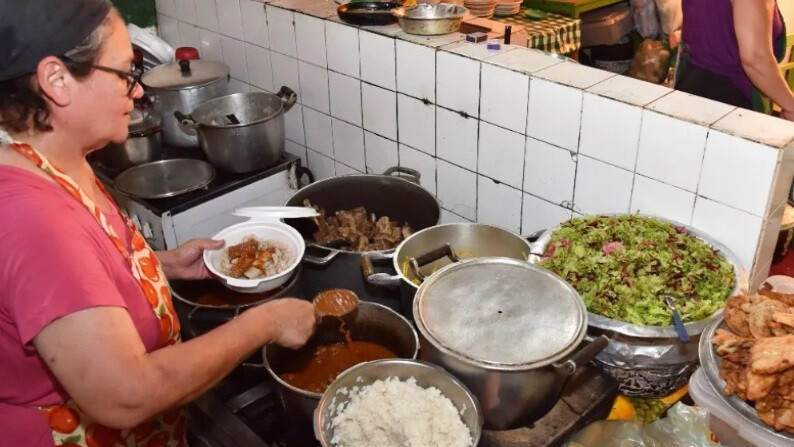
According to a report by the local newspaper Última Hora, a female cook operating a food stall in a public market lamented, "The price of a 13kg gas cylinder has risen from 110,000 guaraníes a month ago to 120,000 guaraníes now." She added, "The gas supplier informed us about the price increase, but I didn't follow the news closely enough and only realized the price had already gone up belatedly."

Regarding the prices of the food sold at her eatery, she stated, "Although the cost of ingredients has increased, we can't significantly raise prices." She continued, "We are considering increasing the price per plate by around 1,000 to 2,000 guaraníes, but if we raise prices too much when salaries aren't increasing, I worry that customers will stop coming. Customers ask me, 'Mrs. Mari, what are we going to do now?' Everything is going up, and we've barely been managing so far," she expressed, highlighting the difficulties.

Another restaurant owner stated that they currently use gas as their main fuel source. While they have an electric fryer and an induction range, they explained, "We have no choice but to use gas due to its heating power," emphasizing the limited fuel options available.

They also voiced concerns about the burden of raising food prices. "We recently increased the prices of purée and milanesa once, and raising prices again would be too much of a blow to our customers," the owner worried.

Consequently, public markets and small eateries are reportedly seeking survival by absorbing the increased costs themselves or reducing food portions instead of raising prices. One restaurant owner shared, "Instead of suddenly raising prices, I'm thinking of trying to manage by gradually reducing the portion sizes."

This LPG price hike, occurring despite Petropar's fuel price reduction, is expected to have a considerable negative impact on the working-class economy. It will particularly burden those who rely on affordable meals.

Experts warn that this gas price increase could lead to a "price inflation domino effect," where rising food prices contribute to an overall increase in the cost of living. With existing high inflationary pressures due to international oil price volatility and exchange rate fluctuations, the fuel price increase could further exacerbate the financial hardship faced by ordinary citizens.

The Paraguayan government is reportedly grappling with measures to address this gas price increase. Options such as additional fuel price stabilization policies or energy voucher support for low-income households may be discussed to ensure the stability of citizens' livelihoods.

Meanwhile, Petropar has yet to issue an official statement regarding the gas price increase. The lack of information about the reasons behind the increase and future price outlook is further amplifying market uncertainty.

Ultimately, this gas price increase is likely to directly impact the cost of food for the working class and act as a factor exacerbating inflationary pressures across the Paraguayan economy. Swift and effective countermeasures from the government are urgently needed.

[Copyright (c) Global Economic Times. All Rights Reserved.]

  • #NATO
  • #OTAN
  • #OECD
  • #G20
  • #globaleconomictimes
  • #Korea
  • #UNPEACEKOR
  • #micorea
  • #mykorea
  • #newsk
  • #UN
  • #UNESCO
  • #nammidongane
Yim Kwangsoo Correspondent

Popular articles

  • South Korea Secures First Win in Women’s Curling, Defeating Host Italy

  • The "Betrayal" of US Beef: Record-High Prices Hit South Korean Dinner Tables

  • Power Struggle Looming in Pyongyang: The Rising Star vs. The Iron Lady

I like it
Share
  • Facebook
  • X
  • Kakaotalk
  • LINE
  • BAND
  • NAVER
  • https://globaleconomictimes.kr/article/1065564216072477 Copy URL copied.
Comments >

Comments 0

Weekly Hot Issue

  • The Death of the Architect's Draft? New AI Engine 'Nano Banana 2' Turns Rough Sketches into Professional 3D Walk-throughs
  • President Lee Celebrates Milestone for ‘The Man Living with the King,’ Pledges to Bolster Cultural Pride
  • Namyangju Targets Gwacheon Racecourse Relocation: A Vision for a "Blue-Green" Mega-Complex Linked to GTX and 3rd Generation New Towns
  • Korean Air Extends Suspension of Incheon–Dubai Route Through March 15 Amid Ongoing Disruptions
  • Genetic 'Molecular Mirror': Blood Tests Challenge Biopsy Limits in Ovarian Cancer Diagnosis
  • Samsung to Revolutionize Health Tracking: Galaxy Watch to Adopt Contact-Based Temperature Sensors for Enhanced Precision

Most Viewed

1
Adwa’s Echo in Korea: A Shared Story of Dignity and Freedom
2
2026, The Grand Year of Hangeul Celebration — The River of History Where Five Streams Converge
3
A New Milestone for Ukraine’s Post-War Reconstruction: The Birth of ISVP
4
Mexican currency and the powerful history behind its designs
5
Revised and Expanded Edition of ‘Failure of Negotiations with North Korea: Truth and Solutions’ Published
광고문의
임시1
임시3
임시2

Hot Issue

The $100 Oil Threshold: Wall Street Braces for a Paradigm Shift as Middle East Conflict Drags On

The Death of the Architect's Draft? New AI Engine 'Nano Banana 2' Turns Rough Sketches into Professional 3D Walk-throughs

Oppo Bridges the Great Divide: Find X9 to Support AirDrop Connectivity

China’s Strategic Gold Rush: Beijing Amasses Reserves for 16th Straight Month Amid Dollar Uncertainty

Let’s recycle the old blankets in Jeju Island’s closet instead of incinerating them.

Global Economic Times
korocamia@naver.com
CEO : LEE YEON-SIL
Publisher : KO YONG-CHUL
Registration number : Seoul, A55681
Registration Date : 2024-10-24
Youth Protection Manager: KO YONG-CHUL
Singapore Headquarters
5A Woodlands Road #11-34 The Tennery. S'677728
Korean Branch
Phone : +82(0)10 4724 5264
#304, 6 Nonhyeon-ro 111-gil, Gangnam-gu, Seoul
Copyright © Global Economic Times All Rights Reserved
  • 에이펙2025
  • APEC2025가이드북TV
  • 독도는우리땅
Search
Category
  • All articles
  • Synthesis
  • World
  • Business
  • Industry
  • ICT
  • Distribution Economy
  • Well+Being
  • Travel
  • Eco-News
  • Education
  • Korean Wave News
  • Opinion
  • Arts&Culture
  • Sports
  • People & Life 
    • 전체
    • International Student Report
    • With Ambassador
  • Column 
    • 전체
    • Cho Kijo Column
    • Cherry Garden Story
    • Ko Yong-chul Column
    • Kim Seul-Ong Column
    • Lee Yeon-sil Column
  • Photo News
  • New Book Guide
  • Multicultural News
  • Jobs & Workers