• 2026.11.23 (Mon)
  • All articles
  • LOGIN
  • JOIN
Global Economic Times
한인동포뉴스(상단)
  • Synthesis
  • World
  • Business
  • Industry
  • ICT
  • Distribution Economy
  • Well+Being
    • Pet Life
    • Halal Horizon
  • Travel
  • Eco-News
  • Education
  • Korean Wave News
  • Opinion
  • Arts&Culture
  • Sports
  • People & Life
    • International Student Report
    • With Ambassador
  • Column
    • Cho Kijo Column
    • Cherry Garden Story
    • Ko Yong-chul Column
    • Kim Bong-seon's Photo Column
    • Kim Seul-Ong Column
    • Lee Yeon-sil Column
    • Professor Lee Soo-young’s Life Essays
  • Photo News
  • New Book Guide
MENU
 
Home > Opinion

How Voters and Global Markets Outlasted the Tariff Shock

KO YONG-CHUL Reporter / Updated : 2026-11-23 07:01:00
  • -
  • +
  • Print
A midterm rebuke at home and restraint abroad suggest that economic pragmatism is surviving a wave of protectionism.

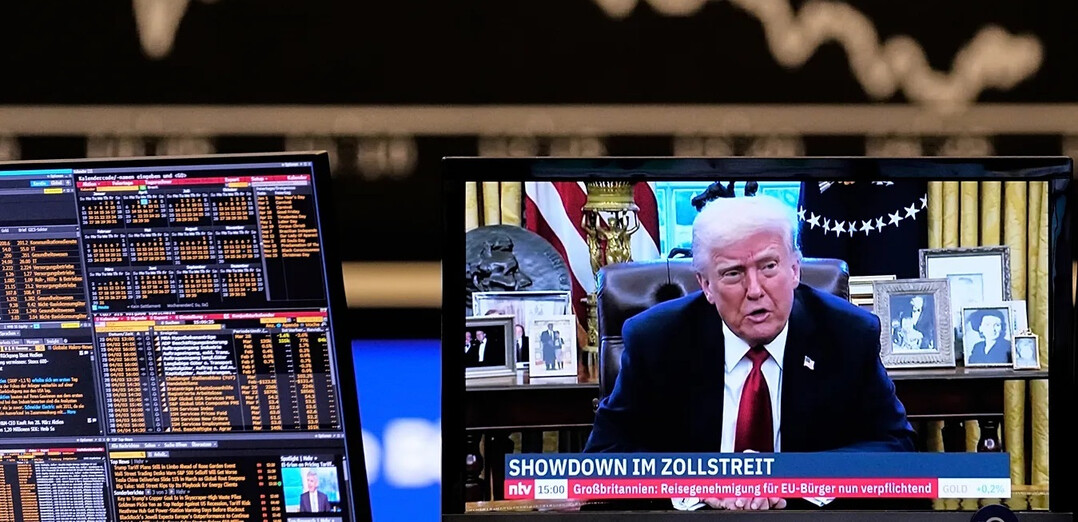
The sweeping Democratic gains in the recent U.S. midterm elections represent more than a routine shift in congressional power; they serve as a pointed referendum on the economic nationalism of Donald Trump’s second term. Following federal court rulings in February and May that invalidated key pillars of the administration's universal and reciprocal tariff regimes, American voters have delivered a decisive political verdict on policies that strained household budgets and disrupted labor markets.

From the outset, the administration's dual reliance on sweeping import duties and aggressive deportation drives faced broad skepticism from mainstream economists. Because tariffs function primarily as a tax paid by domestic importers and passed along to consumers, the inflationary fallout was largely foreseeable. Similarly, restricting the labor supply through mass removals failed to generate the promised gains in native-born employment or overall economic welfare. The electoral backlash suggests that everyday economic realities ultimately outweighed populist rhetoric at the ballot box.

Crucially, the resilience of the global economy over the past two years owes just as much to restraint outside the United States. When Washington unleashed steep tariff hikes in early 2025, fears mounted that major trading nations would retaliate indiscriminately, triggering a downward spiral reminiscent of the 1930s.

History offered a stark warning. Following the 1929 stock market crash, U.S. tariff increases under President Herbert Hoover prompted defensive measures from Britain—championed by then-Chancellor Neville Chamberlain—and swiftly ignited a global trade war. Between 1929 and 1933, world trade contracted by roughly 65 percent, deepening the Great Depression and destabilizing international order.

In 2025 and 2026, however, the global trading system absorbed the shock without fracturing. While data from the United Nations Conference on Trade and Development (UNCTAD) shows that U.S. duties—affecting a market representing roughly 13 percent of global imports—nudged average global tariffs up by 1 percentage point on agricultural goods and 2.8 percentage points on manufactured products in 2025, global trade volume still expanded by 8 percent that year. Projections released by the World Trade Organization (WTO) in October indicate that trade growth is holding steady at a similar pace this year, even amid heightened geopolitical conflict in the Middle East.

This divergence from the 1930s reflects a widespread recognition of how deeply modern prosperity depends on cross-border integration—a reality underscored in works like Ben Chu’s Exile Economics, which details how everyday staples from soybeans to steel rely on intricate international supply chains. Rather than replicating Washington’s blanket protectionism, major economies largely confined their responses to targeted countermeasures against the U.S. while keeping trade lanes open with one another. In effect, the world treated American protectionism as an anomaly to be managed rather than a model to be emulated.

To be sure, economic nationalism remains a potent force in American politics. Much as protectionist sentiment persisted during the Biden administration, the broader ideological currents of Trumpism will continue to shape policy debates, making a sudden U.S. return to multilateral pacts like the Comprehensive and Progressive Agreement for Trans-Pacific Partnership (CPTPP) unlikely.

Yet the past two years have demonstrated the limits of unilateral economic disruption. By rejecting a contagious trade war abroad and registering discontent at home, both global markets and American voters have signaled a preference for pragmatic interdependence over isolation.

[Copyright (c) Global Economic Times. All Rights Reserved.]

  • #Cherry Garden
  • #HalalFood
  • #Halal
  • #Petlife
  • #Halalhorizone
  • #Hormuz Impasse
  • #Joseon
  • #globaleconomictimes
  • #micore
KO YONG-CHUL Reporter
Reporter Page

Popular articles

  • Culinary Mashups and Nostalgia with a Twist: South Korea’s F&B Giants Vie for Consumer Attention

  • Japanese Hotel Prices Surge Nearly 9% Amid Booming Korean Tourism

  • AI Health and Wellness: How Generations Differ in Their Use of Artificial Intelligence

I like it
Share
  • Facebook
  • X
  • Kakaotalk
  • LINE
  • BAND
  • NAVER
  • https://globaleconomictimes.kr/article/1065563923779229 Copy URL copied.
Comments >

Comments 0

Weekly Hot Issue

  • When AI Breaks the Exam: Rethinking Privilege, Not Just Testing
  • No More Delays: South Korea Must Enforce Reconstruction Windfall Tax as Scheduled
  • From 'Crypto Hangover' to AI Powerhouse: How Jensen Huang Reframed Bitcoin's Energy Narrative
  • Beyond the Cheating Crisis: Rethinking What It Means to Learn in the Age of AI
  • Chip Rout Deepens Global Market Sell-Off Amid Growing AI Skepticism
  • South Korea Faces Urgent Call for Exam Reform Amid Surge in AI Cheating

Most Viewed

1
South Korea and Ethiopia Sign Trilateral MOU to Introduce Liquid-Based Cytology (LBC) Technology for Cervical Cancer Diagnosis
2
South Korean Burger Chain Lotteria Expands Singapore Footprint with Halal Certification and New Teriyaki Lineup
3
AI Semiconductor Stocks Plummet: Philadelphia Index Drops 5.28% and Micron Plunges 7.59% Amid Executive Shakeup and Export Restrictions
4
"Stay Out, Get Paid, or Have Police Stay With You": Shenzhen Imposes Strict Security Ahead of APEC Summit
5
AI Music Tops Melon Chart: Is the K-Pop Production Formula Changing?
체리가든 스토리
nutri huevos
로타리
동포저널

Hot Issue

Market Analysts Urge Balanced Portfolio of AI Stocks, Big Tech Bonds, and Gold Amid KOSPI Volatility

U.S. Federal Agencies Grapple with Cyber Breaches and Outages Amid AI-Driven Security Shifts

Temporary Ocean Cooling Fuels Unexpected Surge in Lake Baikal’s Water Levels, Study Finds

Fashion Runway Show 2026

Let’s recycle the old blankets in Jeju Island’s closet instead of incinerating them.

Global Economic Times
korocamia@naver.com
CEO : LEE YEON-SIL
Publisher & Editor : KO YONG-CHUL
Registration number : Seoul, A55681
Registration Date : 2024-10-24
Youth Protection Manager: KO YONG-CHUL
Singapore Headquarters
5A Woodlands Road #11-34 The Tennery. S'677728
Korean Branch
Phone : +82(0)10 4724 5264
#304, 6 Nonhyeon-ro 111-gil, Gangnam-gu, Seoul
Copyright © Global Economic Times All Rights Reserved
  • News K
  • 반달곰 프로젝트
  • 광고문의
Search
Category
  • All articles
  • Synthesis
  • World
  • Business
  • Industry
  • ICT
  • Distribution Economy
  • Well+Being 
    • 전체
    • Pet Life
    • Halal Horizon
  • Travel
  • Eco-News
  • Education
  • Korean Wave News
  • Opinion
  • Arts&Culture
  • Sports
  • People & Life 
    • 전체
    • International Student Report
    • With Ambassador
  • Column 
    • 전체
    • Cho Kijo Column
    • Cherry Garden Story
    • Ko Yong-chul Column
    • Kim Bong-seon's Photo Column
    • Kim Seul-Ong Column
    • Lee Yeon-sil Column
    • Professor Lee Soo-young’s Life Essays
  • Photo News
  • New Book Guide
  • Overseas Koreans
  • Multicultural News