For centuries, standardized testing has served as a cornerstone of modern meritocracy. Originating in ancient East Asia and later adopted worldwide, public examinations promised a level playing field—a mechanism to evaluate talent independent of wealth, lineage, or social connections. Yet, wherever high-stakes exams have existed, so too has academic dishonesty. From bribery in imperial courts to leaked answer sheets in the modern era, attempts to game the system are nothing new.
What sets today’s wave of testing scandals apart, however, is accessibility. Historically, cheating demanded significant financial resources and a network of co-conspirators willing to share the risk of exposure. Today, miniaturized hardware, encrypted communication, and generative artificial intelligence have drastically lowered the barrier to entry. Academic fraud has effectively been democratized.
While security experts will inevitably develop countermeasures to detect AI-assisted cheating, the financial burden of maintaining test integrity is set to skyrocket. Standardized exams, once prized as an economical tool for mass assessment in industrial societies, are rapidly becoming prohibitively expensive to secure. Soon, only large-scale, state-backed institutions may have the resources required to guarantee a credible testing environment.
This logistical crisis points to a far more profound existential dilemma: If artificial intelligence can outperform humans on standardized tests in a fraction of a second, what purpose does human education serve?
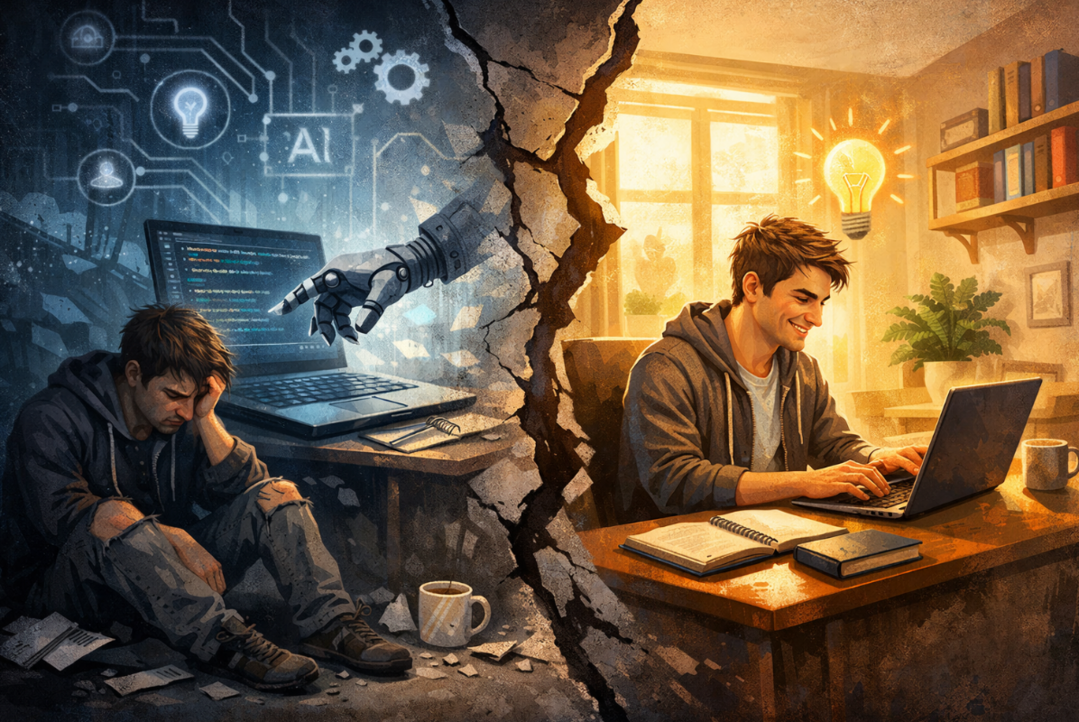
The answer lies in distinguishing between test preparation and true education. What is currently unraveling is not the value of learning itself, but an outdated assessment model—and the vast test-prep industry built around it. For decades, education systems have prioritized speed and accuracy in solving predictable problems, effectively training students to act as human "problem-solving machines." Now that actual machines do that job infinitely better, that educational model has reached its expiration date.
Rather than abandoning traditional learning, society must reclaim its core purpose: mastering language, internalizing foundational knowledge, and developing critical literacy. Innovation does not happen in a vacuum; without a solid grasp of existing knowledge, individuals cannot formulate meaningful questions or generate original ideas. Furthermore, fluency in human languages, mathematics, and coding remains essential—not to compete with AI, but to communicate with, direct, and govern increasingly autonomous systems. As machines grow smarter, human intellect must be sharpened to a higher standard to remain in control.
Ultimately, the greatest threat to education today is not technological cheating, but the failure to teach students how to read deeply, think critically, and write coherently. These skills form the bedrock of how we verify facts, exercise judgment, and create new knowledge—areas largely neglected by multiple-choice, entrance-exam-driven curricula. While shifting toward essay-based assessments is often proposed as a solution, rushing into it without trained teachers, standardized grading rubrics, and broad public consensus risks fueling private tutoring markets and widening socioeconomic disparities.
Standardized tests are unlikely to disappear anytime soon. For all their flaws, merit-based exams remain far more equitable than societies governed by hereditary privilege. Safeguarding the integrity of these assessments against technological loopholes is certainly necessary. Yet, as we fortify the testing system, we must confront a far more urgent question: In a world shared with artificial intelligence, what should we be teaching our students, and what kind of human potential are we actually trying to measure?
[Copyright (c) Global Economic Times. All Rights Reserved.]