SEOUL — Global equities tumbled sharply this week as mounting doubts over the profitability of artificial intelligence and tightening U.S. export restrictions triggered a massive sell-off in the semiconductor sector.
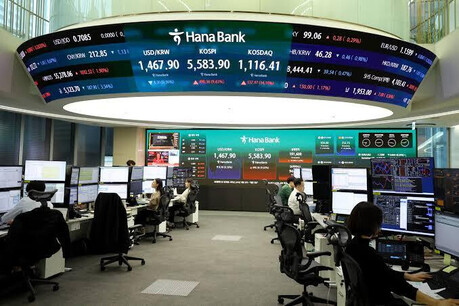
On the 20th, South Korea’s benchmark KOSPI index slipped below the 5,000 threshold once again, just three days after breaching that level for the first time in roughly nine months. The downturn mirrored heavy losses on Wall Street, where the Dow Jones Industrial Average, S&P 500, and Nasdaq Composite extended their declines for a second consecutive session. Major chipmakers bore the brunt of the rout, suffering double-digit percentage losses and dragging down markets across Taiwan and Japan.
Investor sentiment has been rattled by a wave of regulatory and geopolitical headwinds. Following scrutiny over Nvidia’s alleged indirect shipments to China, rival chipmaker AMD now faces accusations of supplying updated server firmware to a blacklisted Chinese manufacturer. Compounding supply chain anxieties, reports indicate that Samsung Electronics and TSMC have suspended certain chip deliveries to Chinese buyers to comply with U.S. Commerce Department mandates. Meanwhile, new legislation passed by the U.S. Senate will require hyperscale data centers to fund their own power generation and grid upgrades, threatening to drive up capital expenditures for AI infrastructure developers.
Analysts note that beneath these immediate catalysts lies a broader structural concern: whether billions of dollars poured into AI development will yield sustainable returns. As enthusiasm cools, fears of an impending slump in chip demand have weighed heavily on industry leaders, including Samsung Electronics and SK Hynix.
The correction has been particularly painful for South Korean investors. After surging 116.3% year-to-date to a record peak of 9,114.55 on June 22—making it the world's top-performing market—the KOSPI's annual gain has rapidly eroded to 15.6%. With few near-term catalysts to restore confidence, market strategists warn that equities may be entering a prolonged bear market. Financial advisors are urging retail investors to avoid leveraged bets and aggressive "buying the dip" tactics, recommending instead long-term diversification with idle capital.
The financial turbulence stands in stark contrast to South Korea's recent macroeconomic milestones. Fueled by the chip boom, the nation's exports surpassed $1 trillion on the 19th, and GDP growth is forecast to remain in the high-3% range through next year. However, economists caution that a sharper-than-expected downturn in global chip demand could quickly spill over into the broader economy, underscoring the need for proactive policy measures from Seoul.
[Copyright (c) Global Economic Times. All Rights Reserved.]