SAN FRANCISCO — Last week, the waterfront of San Francisco’s historic Fisherman’s Wharf was a cacophony of roaring jet engines and cheering crowds. As part of the annual Fleet Week celebration honoring U.S. military personnel, spectators watched in awe as U.S. Navy Blue Angels, Air Force heritage flight teams, and United Airlines commercial jets tore through the skies over the bay.
Yet amidst the traditional displays of military might and maritime parades, one particular exhibit stole the spotlight on the ground: a long queue of visitors waiting eagerly to catch a glimpse—and go inside—a propeller-driven "air taxi."
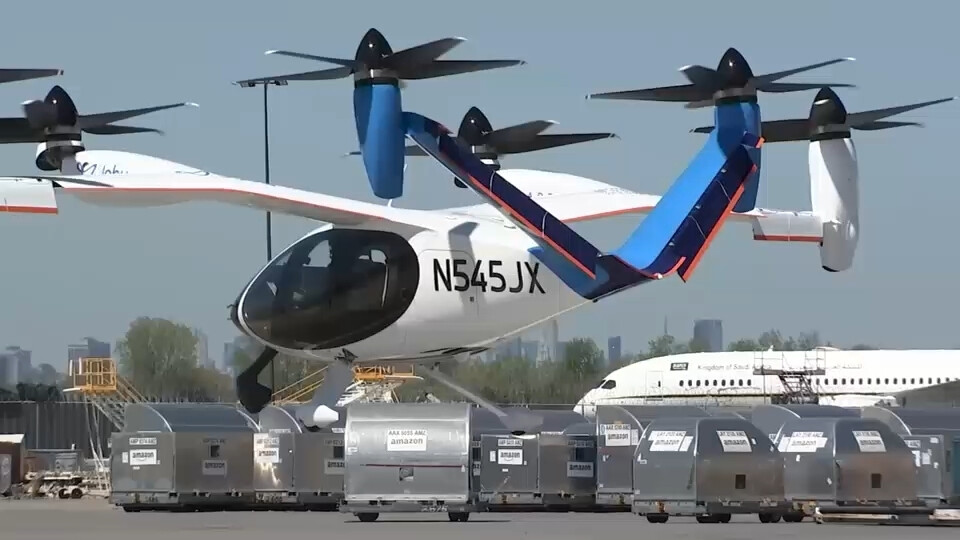
Joby Aviation, a leading U.S. electric vertical takeoff and landing (eVTOL) pioneer, chose the festival grounds to exhibit its flagship S4 aircraft model for two days. Although the aircraft was a full-scale non-flying display model, it gave the general public a rare, tangible look at the future of urban air mobility (UAM). With actual flight testing still underway, crowds lined up eagerly just to sit in the cabin and experience a virtual reality (VR) cockpit simulation.
Inside the S4: What It’s Like Up Close
The S4 is an advanced eVTOL aircraft designed to carry one pilot and four passengers in a 5-seat cabin configuration. Its sleek frame features six electric motors mounted on the wings, each driving a five-bladed propeller—totaling 30 spinning blades per aircraft.
Dimensions: Maximum length of 14.05 meters, height of 3.72 meters, and a maximum takeoff weight of 2,400 kg.
Capacity: Accommodates four standard carry-on suitcases in addition to passengers.
Performance: Designed to reach a top speed of 200 mph (approx. 320 km/h) and a maximum altitude of 3,048 meters (10,000 feet).
A standout engineering feature of the S4 is its tilt-rotor mechanism. The propellers pivot smoothly from a 90-degree vertical position—allowing helicopter-like vertical takeoffs and landings in dense, skyscraper-filled city centers—to a 0-degree horizontal position for high-speed, airplane-style forward cruising.
Stepping inside the cabin requires a bit of effort; without auxiliary boarding steps, the entry hatch sits roughly at wheel-height, making it tricky for young children to climb in unaided. Inside, the seating is arranged in three rows, with the front row reserved for the pilot. While the middle two seats offer ample legroom, the rear row feels slightly more confined with a lower headroom clearance. Large panoramic windows and a sweeping front windshield, however, provide an unobstructed, expansive view of the outside world.
The Path to Commercialization: How Close Are We?
Joby’s prominent presence at a military air show highlights a deliberate strategy: introduce the technology directly to the public to build familiarity and accelerate mainstream acceptance.
Regulatory progress is moving steadily forward. Joby has successfully completed most of the FAA's rigorous five-stage type certification process, clearing 70% to 80% of the overall requirements. Last month, under the FAA’s Advanced Air Mobility (AAM) and eVTOL Integration Pilot Program (eIPP), Joby conducted successful test flights across major regions in Texas, including Dallas-Fort Worth International Airport, further proving its commercial viability. Beyond the U.S., the company is actively laying the groundwork for commercial launches in international markets such as Dubai. Notably, Joby also made headlines last month when an autonomous flight aircraft successfully completed a cross-country U.S. flight, fueling excitement for fully autonomous air taxi services in the future.
The Road Ahead: Hurdles and Financial Realities
While excitement is palpable, the ultimate question on everyone’s mind remains: When will electric air taxis actually take flight for everyday commuters?
During its Q2 earnings call in August, Joby expressed optimism about recording its first paying passengers before the end of the year, though a precise timeline has yet to be finalized. The company is currently in the final 5th stage of FAA certification, with five test aircraft actively flying and twelve additional units slated for production.
"We are turning electric vertical flight from a remarkable technology into an everyday reality, returning time to people and fundamentally changing how we move," said JoeBen Bevirt, Founder and CEO of Joby Aviation.
However, scaling the future of flight comes with steep financial hurdles. In the second quarter, Joby posted $38.6 million in revenue—largely driven by its blade manufacturing division following its $125 million acquisition of Blade Air Mobility’s passenger business last August. Net losses, meanwhile, ballooned to $245.4 million (approx. 325.6 billion KRW), roughly 6.4 times higher than its quarterly revenue.
Although Joby held approximately $2.3 billion in cash and short-term investments at the end of June, mounting accumulated losses have strained its financial structure. Amid broader investor caution regarding the profitability timeline of advanced tech sectors, Joby's stock price plunged over the past year, reflecting similar downward pressures faced by rival Archer Aviation.
As electric aviation pioneers navigate these financial and regulatory skies, the dream of calling an air taxi from your smartphone is closer than ever—yet the industry must first clear its final financial and certification landing strips.
[Copyright (c) Global Economic Times. All Rights Reserved.]