![[등록] 2026-09-01 15:48:31](/support/_updata/banner2/tl181982910_6749.png)


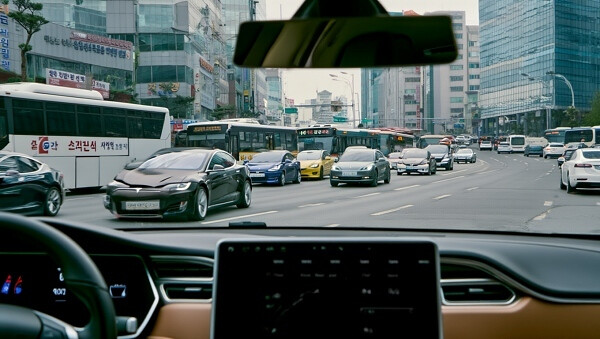
SEOUL — A growing number of Tesla owners in South Korea are attempting to bypass regional restrictions to activate "Full Self-Driving" (FSD) software illegally, sparking urgent calls for legislative reform and enhanced safety oversight.
According to data released on May 4, 2026, by the office of Representative Park Yong-gap of the Democratic Party of Korea, 85 instances of unauthorized FSD activation have been recorded as of late last month. This trend highlights a stark disparity in the Korean EV market, where the advanced driving feature is currently legal for only a tiny fraction of Tesla vehicles.
The "2% Loophole": Why Most Teslas in Korea Lack FSD
The root of the issue lies in international trade agreements and manufacturing origins. Under the Korea-U.S. Free Trade Agreement (KORUS FTA), vehicles manufactured in the United States are exempt from certain local safety certifications, allowing their software features to be deployed more readily.
Currently, FSD is officially supported only for:
Model S and Model X (U.S.-made)
Cybertruck (U.S.-made)
Of the 180,684 Tesla vehicles registered in South Korea, only 4,292 (approximately 2.4%) are legally permitted to use FSD. This includes 2,708 Model X units, 1,193 Model S units, and 391 Cybertrucks. The vast majority of Teslas on Korean roads—specifically the popular Model 3 and Model Y—are sourced from Tesla’s Gigafactory Shanghai. Because these Chinese-made models do not fall under the FTA's safety exemptions, they must undergo rigorous domestic certification that has yet to be finalized.
The Rise of "Grey Market" Software Tweaks
Frustrated by the wait, some owners are turning to illicit methods to unlock the software. Investigative reports suggest that users are utilizing unofficial external hardware or modifying software source codes to trick the vehicle's computer into bypassing regional locks.
Industry experts warn that these modifications are not just a legal breach but a significant safety hazard.
"Modifying safety-critical software without manufacturer validation can lead to unpredictable vehicle behavior, especially in complex urban environments like Seoul," said a domestic automotive safety consultant.
Legal Consequences and Enforcement Hurdles
The Ministry of Land, Infrastructure, and Transport (MOLIT) has clarified that unauthorized FSD activation violates the Automotive Management Act, which prohibits the arbitrary alteration, installation, or deletion of software that affects safe operation.
Penalties for violations include:
Up to two years of imprisonment.
Fines of up to 20 million KRW (approx. $14,700).
Despite these stiff penalties, enforcement remains a "cat-and-mouse" game. While Tesla Korea has attempted to patch vulnerabilities through Over-the-Air (OTA) software updates, and the government has requested formal investigations into known cases, tracking individual violators is difficult. Under current Personal Information Protection Laws, the government faces restrictions when attempting to access specific vehicle owner data for administrative monitoring without a warrant.
The Path Forward: Integration and Oversight
The situation has placed the Korean government in a difficult position. On one hand, there is immense pressure from consumers to authorize FSD for all models to stay competitive in the tech landscape. On the other, the safety of autonomous features on South Korean roads remains a paramount concern.
Representative Park Yong-gap emphasized that reactive measures are insufficient. "We need a comprehensive framework that addresses the certification lag for non-U.S. models while granting authorities the power to effectively monitor and penalize dangerous software tampering," Park stated.
As Tesla continues to push the boundaries of AI-driven transport, South Korea serves as a primary case study on how local regulations must evolve to keep pace with global software deployment—and the lengths to which enthusiasts will go to experience the "future" ahead of schedule.
[Copyright (c) Global Economic Times. All Rights Reserved.]