
• 2026.10.23 (Fri)
  • All articles
  • LOGIN
  • JOIN
Global Economic Times
[등록] 2026-09-01 15:48:31
  • Synthesis
  • World
  • Business
  • Industry
  • ICT
  • Distribution Economy
  • Well+Being
    • Pet Life
    • Halal Horizon
  • Travel
  • Eco-News
  • Education
  • Korean Wave News
  • Opinion
  • Arts&Culture
  • Sports
  • People & Life
    • International Student Report
    • With Ambassador
  • Column
    • Cho Kijo Column
    • Cherry Garden Story
    • Ko Yong-chul Column
    • Kim Seul-Ong Column
    • Lee Yeon-sil Column
  • Photo News
  • New Book Guide
MENU
 
Home > World

Sovereignty Sparks Fly Over High Seas Rescue: China and Taiwan Clash Over Fishing Vessel Fire

Pedro Espinola Special Correspondent / Updated : 2026-04-19 05:47:36
  • -
  • +
  • Print


TAIPEI/BEIJING — A humanitarian maritime rescue operation near the disputed Senkaku Islands (known in China as the Diaoyu Islands) has ignited a fresh diplomatic firestorm between Beijing and Taipei. What began as an emergency response to a burning fishing vessel has rapidly devolved into a heated exchange over national sovereignty, "cognitive warfare," and regional jurisdiction.

The Incident at Sea
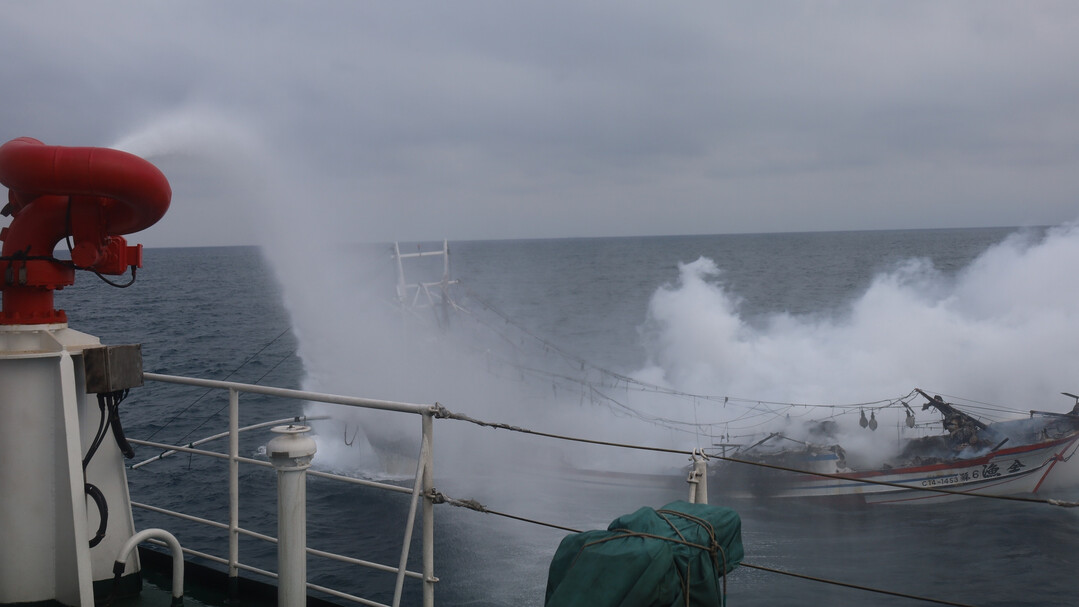
According to reports from the China Coast Guard (CCG) and Taiwan’s Coast Guard Administration (CGA), a fire broke out on a Taiwanese fishing vessel at approximately 5:00 AM on April 16. The incident occurred roughly 142.6 kilometers northeast of the Senkaku Islands, a region characterized by overlapping territorial claims and intense geopolitical sensitivity.

The CCG stated that its vessels, which were conducting "routine patrols" in the area, intercepted the distress signal and proceeded to extinguish the flames. Despite their efforts, the vessel eventually sank. Of the seven crew members on board, six Philippine nationals were rescued by a nearby Taiwanese fishing boat. However, the Taiwanese captain remains missing.

Rescue or Political Maneuvering?
The friction began when the China Coast Guard took to social media to frame the mission as a demonstration of its jurisdiction over Taiwanese citizens. "The Coast Guard will continue to protect the lives, property, and safety of Chinese fishermen, including those from Taiwan, in accordance with the law," the CCG stated, pointedly categorizing the vessel as "China Taiwan-affiliated."

Taipei moved quickly to denounce this narrative. On April 18, Taiwan’s CGA issued a stern rebuttal, accusing Beijing of utilizing a maritime accident to conduct "cognitive warfare." Taiwanese officials pointed out that the Chinese statement omitted the crucial fact that the survivors were actually rescued by another Taiwanese vessel, not the CCG.

"Humanitarian rescue knows no borders and is a universally recognized value," the CGA stated in a press release. "However, Beijing is using this incident to infringe upon Taiwan's sovereignty through political manipulation. The term 'China Taiwan-affiliated' is a clear attempt to alter the status quo through labels."

A Crowded Theater of Tension
The rescue efforts were further complicated by the involvement of Tokyo. Since the incident occurred within Japan’s search and rescue responsibility zone, the Japanese Coast Guard dispatched two patrol boats and two aircraft at Taiwan's request.

The timing of the clash is particularly sensitive. It coincides with a period of "gray-zone" pressure from Beijing, which has combined military intimidation with "peace offensives"—such as the recent invitation of Taiwan's opposition leaders to Beijing.

Adding fuel to the fire, the transit of the Japanese Maritime Self-Defense Force destroyer JS Ikazuchi through the Taiwan Strait on April 17 drew a sharp rebuke from the People’s Liberation Army (PLA). Colonel Shi Yi, spokesperson for the PLA Eastern Theater Command, stated that Chinese forces "tracked and monitored the entire passage," accusing Japan of sending "wrong signals" to Taiwan independence forces.

The Missing Captain and the Long Shadow of Sovereignty
As search operations continue for the missing Taiwanese captain amidst heavy winds and rough seas, the incident serves as a stark reminder of how easily humanitarian issues are swallowed by the territorial disputes of East Asia.

For Beijing, the rescue is a tool to assert domestic legitimacy over the "rebellious province." For Taipei, it is a fight to maintain its identity as a self-governing entity on the international stage. As long as the waters of the Senkaku Islands remain a flashpoint, even a life-saving mission can become a battlefield of words and flags.

[Copyright (c) Global Economic Times. All Rights Reserved.]

  • #Hormuz Impasse
  • #globaleconomictimes
  • #micorea
  • #mykorea
  • #nammidonganews
  • #singaporenewsk
  • #Samsung
  • #Daewoo
  • #Hyos
Pedro Espinola Special Correspondent

Popular articles

  • Japan's Foreign Resident Population Hits Record High of 3.1%, Driven by Growth in Chinese and Vietnamese Nationals

  • Gold Trade Without US Dollars: China's New Channel for Yuan Internationalization

  • "Resembles the brain, so it's good for the brain?"... 5 Surprising Health Benefits of Walnuts

I like it
Share
  • Facebook
  • X
  • Kakaotalk
  • LINE
  • BAND
  • NAVER
  • https://globaleconomictimes.kr/article/1065559559627301 Copy URL copied.
Comments >

Comments 0

Weekly Hot Issue

  • 15th Chungcheongbuk-do Public Design Contest Ceremony Held
  • Chungbuk Successfully Hosts 2026 Agri-Food Export Consultation Fair, Securing Over $34 Million in Consultations
  • Chungbuk Province and ECCK Forge Strategic Partnership to Boost European High-Tech Investments
  • Chungbuk Province, Cheongju City, and Hansol Iugnss Sign Investment Agreement
  • Chungnam Province Establishes First 'Chungnam Women's Policy Participation Group' to Discover and Improve Policies with Residents
  • Stopping Climate "Cilicides": Chungnam Province and Municipalities Unite to Strengthen Disaster Response

Most Viewed

1
US Pushes to Deploy Special Task Force to the Korean Peninsula—Is It Also Targeting China?
2
Samsung Electronics Enters the 100 Trillion Won Quarterly Operating Profit Era
3
McDonald's Korea Expands and Relocates Headquarters to Booyoung Taepyeong Building in Taepyeong-ro
4
HMM Relocates Headquarters to Busan: A New Era for South Korea's Flagship Carrier
5
Cheonan Secures 'Excellence' Award at South Chungcheong Province's 13th Cadastral and Drone Surveying Competition
체리가든 스토리
nutri huevos
로타리
동포저널

Hot Issue

US Eighth Army Commander Signals Shift: US Forces in South Korea Ready for Regional Deployments Beyond Peninsula

"Too Popular for Our Own Good": Japan's Matcha Boom Brings Surging Exports and Looming Industry Crises

Democrats Lead GOP by 10 Points Ahead of Midterms as Trump’s Approval Hits Record Low 

Fashion Runway Show 2026

Let’s recycle the old blankets in Jeju Island’s closet instead of incinerating them.

Global Economic Times
korocamia@naver.com
CEO : LEE YEON-SIL
Publisher : KO YONG-CHUL
Registration number : Seoul, A55681
Registration Date : 2024-10-24
Youth Protection Manager: KO YONG-CHUL
Singapore Headquarters
5A Woodlands Road #11-34 The Tennery. S'677728
Korean Branch
Phone : +82(0)10 4724 5264
#304, 6 Nonhyeon-ro 111-gil, Gangnam-gu, Seoul
Copyright © Global Economic Times All Rights Reserved
  • 향기네무료급식
  • APEC2025
  • 반달곰 프로젝트
Search
Category
  • All articles
  • Synthesis
  • World
  • Business
  • Industry
  • ICT
  • Distribution Economy
  • Well+Being 
    • 전체
    • Pet Life
    • Halal Horizon
  • Travel
  • Eco-News
  • Education
  • Korean Wave News
  • Opinion
  • Arts&Culture
  • Sports
  • People & Life 
    • 전체
    • International Student Report
    • With Ambassador
  • Column 
    • 전체
    • Cho Kijo Column
    • Cherry Garden Story
    • Ko Yong-chul Column
    • Kim Seul-Ong Column
    • Lee Yeon-sil Column
  • Photo News
  • New Book Guide
  • Overseas Koreans
  • Multicultural News