• 2026.09.16 (Wed)
  • All articles
  • LOGIN
  • JOIN
Global Economic Times
[등록] 2026-09-01 15:48:31
  • Synthesis
  • World
  • Business
  • Industry
  • ICT
  • Distribution Economy
  • Well+Being
  • Travel
  • Eco-News
  • Education
  • Korean Wave News
  • Opinion
  • Arts&Culture
  • Sports
  • People & Life
    • International Student Report
    • With Ambassador
  • Column
    • Cho Kijo Column
    • Cherry Garden Story
    • Ko Yong-chul Column
    • Kim Seul-Ong Column
    • Lee Yeon-sil Column
  • Photo News
  • New Book Guide
MENU
 
Home > Well+Being

Unseen Risks of Reused Plastic Water Bottles: From Bacterial Growth to Proper Hygiene

Myung Sun Yim Correspondent / Updated : 2026-09-16 05:42:24
  • -
  • +
  • Print


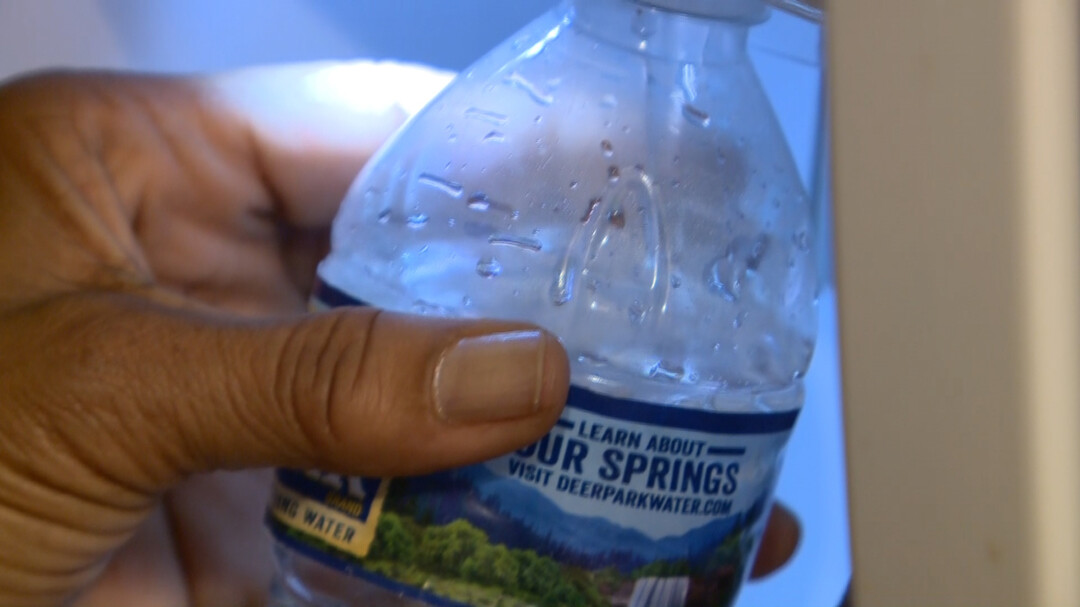
Many people have the habit of drinking bottled water, closing the cap, and saving it to drink again later. It is also common in homes and offices to reuse plastic bottles for a day or two, assuming the water inside remains clean because it looks clear. However, once you drink directly from a polyethylene terephthalate (PET) bottle, the environment inside changes significantly. The main concern is not just the water itself, but the microorganisms left behind on the bottle's rim, cap, and inner surfaces.

Scientific studies have highlighted how quickly bacteria multiply in opened bottled water. Research published in Water Environment Research by Shawn Raj and colleagues from the MD Anderson Cancer Center demonstrated that bacterial colony-forming units (CFUs) escalate rapidly depending on temperature. At 37 degrees Celsius, an initial count of less than 1 CFU/mL rose to about 2 CFU/mL after 2 hours, roughly 3,000 CFU/mL after 8 hours, 14,000 CFU/mL after 24 hours, and peaked at around 38,000 CFU/mL after 48 hours. Although storing the bottle in a refrigerator slows down this proliferation—reducing bacterial counts by about 50% at 24 hours and 84% at 48 hours compared to room temperature—refrigeration only delays growth rather than eliminating existing bacteria or preventing contamination.

Further investigations, such as a 2024 study published in the Journal of Pharmacy and Bioallied Sciences by researchers at Saveetha Medical College and Hospital, compared microbial loads between PET bottles and stainless steel bottles. The study found that used PET bottles started with an average microbial load of 68.8 CFU/mL, which was higher than stainless steel bottles at 35.4 CFU/mL. Furthermore, just three hours of usage caused a 70% increase in the microbial load of PET bottles.

Direct contact drinking is a major catalyst for this contamination. When lips touch the bottle opening, oral microflora and saliva transfer easily to the container. Handling the cap or bottlenecks with hands also introduces environmental microbes. Because approximately 90% of people refill their bottles without washing them in between, microorganisms accumulate rapidly over time. 

Additionally, microorganisms can form a biofilm—a protective layer clinging to the interior plastic surface—making quick rinses or simple water splashes insufficient for proper cleaning. Research into Mycobacterium avium survival on PET surfaces shows that cells can adapt, grow, and strengthen their adherence over time. According to the Centers for Disease Control and Prevention (CDC), proper cleaning requires using soap and water with scrubbing to effectively eliminate bacteria and viruses, rather than merely rinsing with plain water. Proper washing drastically reduces residual microbial counts down to safer levels, emphasizing that the primary hazard is not the container material itself, but the failure to clean and sanitize it regularly. 

Finally, storing nutrient-rich beverages like juices, sports drinks, or flavored teas in opened bottles requires even greater caution. Microbial proliferation rates vary widely depending on the beverage composition, specific microorganism strains, and storage temperatures. Ultimately, a PET bottle ceases to be a sterile, sealed container the moment it is opened and touched by human lips. Maintaining safety relies not on avoiding plastic entirely, but on understanding that proper washing and hygiene are indispensable for preventing bacterial buildup.

[Copyright (c) Global Economic Times. All Rights Reserved.]

  • #\ormuz Impasse
  • #globaleconomictimes
  • #micorea
  • #mykorea
  • #nammidonganews
  • #singaporenewsk
  • #Samsung
  • #Daewoo
  • #Hyos
Myung Sun Yim Correspondent
Myung Sun Yim Correspondent Global Economic Times Correspondent based in Los Angeles, USA

Popular articles

  • Seoul Hosts Regional Meeting on Chemical Weapons Convention

  • Jeon Do-yeon and Park Hae-soo's Play The Cherry Orchard to Conclude 3-Year Journey in New York

  • United States Prepares for Solemn 25th Anniversary of 9/11 Terror Attacks 

I like it
Share
  • Facebook
  • X
  • Kakaotalk
  • LINE
  • BAND
  • NAVER
  • https://globaleconomictimes.kr/article/1065559276308764 Copy URL copied.
Comments >

Comments 0

Weekly Hot Issue

  • Israeli Directors Stand Firm on Gaza Documentary "NAZA" Despite Intense Backlash at Home
  • "Can't Read Poetry in the Era of Shorts? That's Why I Write Poems"—Emily Jungmin Yoon on Slowing Down Time 
  • Acclaimed Avignon Festival Hit, Han Kang's Reading Play "Bird" to Premiere in South Korea at SPAF 
  • Jennie’s "Dracula" Sets New K-Pop History with 16 Consecutive Weeks in Billboard Hot 100 Top 10
  • Actor Won Hyun-joon and Actress Lee Soo-jin to Tie the Knot on October 4: A New Star Couple is Born
  • European Parliament to Open Liaison Office in Ottawa Amid Deepening Canada-EU Rapprochement

Most Viewed

1
Connecting Generations and Cultures through the Sound of Drums: Master Lee Kyung-hwa Holds Successful Jindo Buk-chum Workshop in Berlin
2
Police Agency Implements Major Nighttime Reshuffle, Replacing 14 Out of 18 Regional Police Chiefs
3
Desperate Pursuit of HBM: China’s AI Chip Sector Faces Crippling Bottlenecks as Gray Market Prices Soar
4
South Korea Unveils Record 821 Trillion Won Budget for 2027
5
Samsung Display Invests 67 Trillion Won… Giving Wings to Chungnam’s High-Tech Industry
광고문의
임시1
임시3
임시2

Hot Issue

Google DeepMind and Anthropic Insider Warnings: The Escalating Global Debate Over AI Safety and Superintelligence

U.S. Officially Acknowledges Deployment of Orbital Space Weapons: Will an Arms Race in Space Escalate?

Saudi Arabia Faces a Dilemma Amid Houthi Offensives and Ineffective Regional Pacts

Surging LNG Prices Forebode a Freezing Winter amid Middle East Conflict

Fashion Runway Show 2026

Global Economic Times
korocamia@naver.com
CEO : LEE YEON-SIL
Publisher : KO YONG-CHUL
Registration number : Seoul, A55681
Registration Date : 2024-10-24
Youth Protection Manager: KO YONG-CHUL
Singapore Headquarters
5A Woodlands Road #11-34 The Tennery. S'677728
Korean Branch
Phone : +82(0)10 4724 5264
#304, 6 Nonhyeon-ro 111-gil, Gangnam-gu, Seoul
Copyright © Global Economic Times All Rights Reserved
  • 향기네무료급식
  • BCB부천방송
  • 반달곰 프로젝트
Search
Category
  • All articles
  • Synthesis
  • World
  • Business
  • Industry
  • ICT
  • Distribution Economy
  • Well+Being
  • Travel
  • Eco-News
  • Education
  • Korean Wave News
  • Opinion
  • Arts&Culture
  • Sports
  • People & Life 
    • 전체
    • International Student Report
    • With Ambassador
  • Column 
    • 전체
    • Cho Kijo Column
    • Cherry Garden Story
    • Ko Yong-chul Column
    • Kim Seul-Ong Column
    • Lee Yeon-sil Column
  • Photo News
  • New Book Guide
  • Overseas Koreans
  • Multicultural News