![[등록] 2026-09-01 15:48:31](/support/_updata/banner2/tl181982910_6749.png)



(C) University of Oxford
SEOUL – As the integration of Artificial Intelligence (AI) in higher education shifts from a futuristic novelty to a daily necessity, South Korean academic authorities have taken a decisive step to address the growing concerns over academic integrity and ethical lapses.
On February 27, 2026, the Ministry of Education and the Korean Council for University Education (KCUE) convened at the Samkyung Education Center to unveil a draft of the "Ethical Guidelines for AI Utilization in Universities." The proposal arrives at a critical juncture where the line between "AI assistance" and "academic dishonesty" has become increasingly blurred.
The Five Pillars of Academic AI Ethics
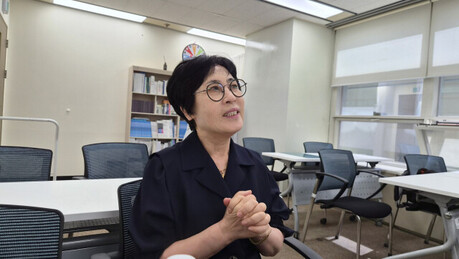
The guidelines, presented by Professor Kim Ja-mi of Korea University’s Graduate School of Education, are the result of an exhaustive meta-analysis of AI policies from 45 global institutions and agencies. Initially distilled from 116 raw principles, the final framework rests on five core pillars:
Academic Integrity: Ensuring that AI is used as a tool for learning, not a shortcut for bypassing intellectual effort.
Human-Centricity and Accountability: Establishing that the ultimate decision-making power and responsibility for AI-generated outputs lie solely with the human user.
Transparency and Trustworthiness: Requiring students and faculty to disclose when and how AI was employed in the creative or research process.
Fairness: Preventing discrimination and ensuring equitable access to AI tools regardless of an individual's background.
Data Protection and Security: Prioritizing the safety of personal information and institutional data in an algorithmic environment.
Shifting the Pedagogical Paradigm
The guidelines go beyond mere "thou shalt nots" by providing practical implementation strategies for educators. Professors are encouraged to design assignments that require complex, multi-layered thinking that AI cannot easily replicate. Furthermore, the criteria for evaluation are evolving; "Sincerity in AI usage" and "proper citation of AI sources" are set to become standard grading metrics.
"We have moved away from purely declarative principles to create a field-appropriate standard that can be applied directly to classrooms and evaluations," Professor Kim emphasized during the seminar.
Voices from the Field: Literacy over Limitation
While the guidelines were generally welcomed, experts at the seminar stressed that technology is moving faster than policy. Professor Byun Soon-yong of Seoul National University of Education warned against over-reliance on "AI detection software," noting that these tools often lack the reliability to be the sole arbiters of honesty.
Instead, the consensus leaned toward AI Literacy. Oh Se-won, Director of Strategic Planning at Soongsil University, argued that the traditional "result-oriented" evaluation system is obsolete.
"We must transition toward process-based evaluations and oral examinations," Oh stated. "This shift shouldn't be a burden placed solely on individual professors. It requires institutional support and a fundamental change in how we define 'learning'."
Global Context and Next Steps
The South Korean initiative mirrors global movements, such as the UNESCO Recommendations on the Ethics of AI and the European Union’s AI Act, but with a specific focus on the unique pressures of the Korean academic environment. As "deepfake" technology and sophisticated Large Language Models (LLMs) continue to evolve, the Ministry of Education plans to refine these 12 sub-principles further based on ongoing feedback before distributing the final manual to universities nationwide.
The ultimate goal is clear: to foster an environment where AI enhances human intellect rather than replacing it, ensuring that the "Class of 2026" and beyond are judged by their own cognitive merits in an increasingly automated world.
[Copyright (c) Global Economic Times. All Rights Reserved.]