![[등록] 2026-09-01 15:48:31](/support/_updata/banner2/tl181982910_6749.png)


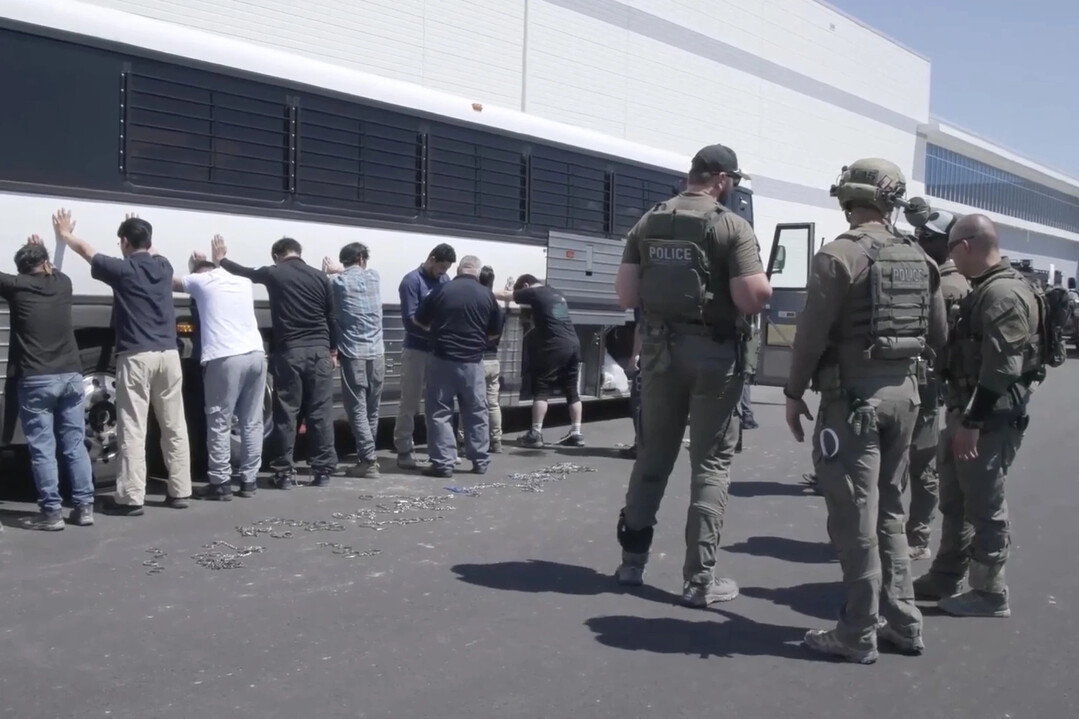
One year after a massive immigration raid in the United States shook relations between Seoul and Washington, more than 300 South Korean workers who were unlawfully arrested and detained have officially initiated legal proceedings against the federal government. According to reports by CNN, the affected workers have begun filing administrative tort claims against nine U.S. federal agencies, including the Department of Homeland Security (DHS), Immigration and Customs Enforcement (ICE), Customs and Border Protection (CBP), the Federal Bureau of Investigation (FBI), the Department of Justice, and the Department of Labor.
This administrative claim serves as a mandatory pre-lawsuit requirement when suing the U.S. federal government. If the government fails to respond or denies the claims within a six-month window, the plaintiffs are legally authorized to proceed with a formal federal lawsuit. The legal representatives for the workers plan to finalize all claim submissions by the end of the year, effectively mounting a large-scale legal challenge against the Donald Trump administration's aggressive immigration enforcement.
The incident dates back to September 4 of last year, when ICE and Homeland Security Investigations (HSI) launched a sudden, heavy-handed raid on the construction site of the Hyundai Motor Group and LG Energy Solution joint-venture battery plant in Ellabell, Georgia. U.S. authorities hailed it as the largest single-worksite immigration sweep in HSI history, detaining 475 individuals, over 300 of whom were South Korean nationals. Heavily armed agents placed workers in handcuffs and leg shackles, treating technical experts as high-risk criminals and sparking immediate international outrage.
Serious questions regarding the legality of the operation quickly surfaced. CNN revealed that the actual search warrants obtained by authorities targeted only four specific individuals—none of whom were the detained South Korean workers. The plaintiffs' legal counsel emphasized that the primary objective of the lawsuit extends beyond monetary compensation; it seeks a formal acknowledgment of liability and an official apology from the U.S. government. Attorneys noted that specialized engineers who entered the country legally to install critical industrial machinery were subjected to degrading treatment under the pretext of tracking down a handful of unauthorized individuals.
Meanwhile, the U.S. government has maintained that the raid was executed lawfully. The DHS defended the operation as part of an ongoing criminal investigation into unlawful employment practices and other serious federal offenses, while CBP asserted that many of those detained violated the terms of their visas or legal status. U.S. officials reiterated that holding a non-immigrant visa or Electronic System for Travel Authorization (ESTA) does not automatically guarantee unhindered entry or continuous right to work.
This legal battle highlights persistent structural frictions in bilateral economic ties. The U.S. has aggressively courted South Korean conglomerates, securing approximately $3500 billion in investment pledges through intense trade and tariff pressures. However, massive manufacturing setups require specialized domestic technicians on-site, exposing critical shortcomings in current U.S. visa policies that fail to accommodate short-term dispatch and expert technical work. Precedent suggests that accountability is possible; a similar 2018 immigration raid on a Tennessee meatpacking plant resulted in federal settlements exceeding $1 million after detained workers proved civil rights violations, including excessive force and unlawful arrest.
[Copyright (c) Global Economic Times. All Rights Reserved.]