• 2026.11.13 (Fri)
  • All articles
  • LOGIN
  • JOIN
Global Economic Times
[등록] 2026-09-01 15:48:31
  • Synthesis
  • World
  • Business
  • Industry
  • ICT
  • Distribution Economy
  • Well+Being
    • Pet Life
    • Halal Horizon
  • Travel
  • Eco-News
  • Education
  • Korean Wave News
  • Opinion
  • Arts&Culture
  • Sports
  • People & Life
    • International Student Report
    • With Ambassador
  • Column
    • Cho Kijo Column
    • Cherry Garden Story
    • Ko Yong-chul Column
    • Kim Bong-seon's Photo Column
    • Kim Seul-Ong Column
    • Lee Yeon-sil Column
  • Photo News
  • New Book Guide
MENU
 
Home > Well+Being > Halal Horizon

Bridging Continents, Dividing Standards: The Complex Landscape of ASEAN-Türkiye Halal Trade

Global Economic Times Reporter / Updated : 2026-11-13 04:43:06
  • -
  • +
  • Print


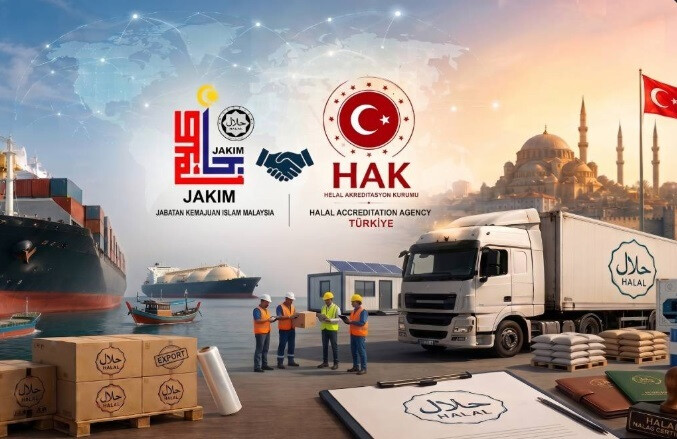
As Türkiye steps into full dialogue partner status with ASEAN, its deep-rooted commercial and religious connections with Southeast Asia are coming under fresh scrutiny. While these networks have historically opened lucrative doors for exporters in the Philippines, Indonesia, and Malaysia, they also highlight a persistent challenge: a fragmented web of certification authorities, accreditation disputes, and cross-border regulatory hurdles.

A Decades-Old Transcontinental Network

Long before formal diplomatic frameworks aligned, private halal certification bodies, Islamic institutions, and chambers of commerce forged tight links between Istanbul and Southeast Asia.

At the center of this network sits the World Halal Council (WHC), established in Jakarta in 1999 and later registered in Kuala Lumpur. During its formative years, the Manila-based Islamic Da’wah Council of the Philippines (IDCP) served as its operational core, helping secure its registration with the Philippine Securities and Exchange Commission.

The institutional gravity shifted in 2005 when Türkiye’s GIMDES assumed leadership of the WHC, moving its focal point to Istanbul. Even so, Southeast Asian leadership remained influential; prominent figures like the Philippines' Abdul Rahman T. Linzag served as secretary-general from 2007 to 2010. Türkiye’s clout further expanded under GIMDES chairman Huseyin Kami Buyukozer, who was named honorary president in 2011. This influence was starkly demonstrated in 2015, when the WHC rallied certifiers in Istanbul to block a European proposal for a unified halal standard, asserting that religious oversight must remain strictly within Islamic authority.

Regulatory Shifts and Turf Wars in Southeast Asia

These ideological and structural governance debates continue to influence regional trade policies. In 2021, the WHC openly criticized a proposed bilateral memorandum of understanding between the Philippines and Indonesia regarding halal-certified products, arguing that secular government bodies should not dictate religious compliance criteria.

Meanwhile, national regulatory frameworks are undergoing massive transformations:

Indonesia: Under Law No. 33/2014, the authority over halal certification shifted from the long-standing Indonesian Ulema Council (MUI) to the government agency BPJPH. Marking a major milestone in September 2026, the IDCP became the first Philippine-based certifier to be officially recognized by BPJPH.
Malaysia: Trade heavily relies on the centralized framework managed by JAKIM, which recently extended recognition to additional Philippine certifiers to smooth export pathways.

The Path Toward Regional Integration

Despite these localized breakthroughs, a cohesive regional framework remains out of reach. Current market access depends heavily on complex bilateral agreements—such as the June 2023 mutual recognition deal between BPJPH and MUI—rather than a unified ASEAN-wide mechanism.

As ASEAN deepens its economic ties with external partners like the Gulf Cooperation Council (GCC), these discrepancies translate into tangible economic costs. Exporters continue to grapple with redundant compliance burdens, unpredictable cross-border recognition, and competing accreditation platforms. Until Southeast Asia and its partners harmonize their regulatory architectures, navigating the global halal market will remain an expensive and uncertain endeavor for businesses on both sides.

[Copyright (c) Global Economic Times. All Rights Reserved.]

  • #Cherry Garden
  • #HalalFood
  • #Halal
  • #Petlife
  • #Halalhorizone
  • #Hormuz Impasse
  • #Joseon
  • #globaleconomictimes
  • #micore
Global Economic Times Reporter
Reporter Page

Popular articles

  • World Citizens are Flying Directly to Busan... The Era of 4 Million Foreigners is Just Around the Corner

  • Restoring Hearing with Genes, Cochlear Implants with Robots: Where Does Hearing Loss Treatment Stand Today?

  • Cold Wave and Autumn Chill Hit Korea on "Ipdong": Gangwon -6°C, Seoul Real-Feel -4°C… Rain and Snow Expected in Central Regions on Sunday

I like it
Share
  • Facebook
  • X
  • Kakaotalk
  • LINE
  • BAND
  • NAVER
  • https://globaleconomictimes.kr/article/1065555673617881 Copy URL copied.
Comments >

Comments 0

Weekly Hot Issue

  • Faces of Resilience and the Lens of Exploitation: Reflections on the Cinematic Landscape of 'Possible Love'
  • Housing Crisis Sparks Spain's First Nationwide Strike in Over a Decade Amid Rising Living Costs
  • UK Lawmaker Proposes Training Restrictions to Protect Footballers from Brain Injury Risks
  • From Asian Games Heartbreak to World Record Glory: South Korea’s Yang Ji-in Shines in Doha
  • Manchester United Target Mauricio Pochettino as Carrick’s Successor Amid Crisis
  • Service Quality Benchmark 2026: Telecom and Theme Park Leaders Retain Crowns

Most Viewed

1
South Korea and Ethiopia Sign Trilateral MOU to Introduce Liquid-Based Cytology (LBC) Technology for Cervical Cancer Diagnosis
2
US Army Conducts Rare Temporary Burial Drills to Prepare for Worst-Case Large-Scale War Scenarios
3
From Kim Whanki to Pokémon Cards... Seoul Auction Opens the Floodgates
4
Meeting Christmas Early!… Busan Dessert Sales Event "Daldal The Market" Held
5
World Citizens are Flying Directly to Busan... The Era of 4 Million Foreigners is Just Around the Corner
체리가든 스토리
nutri huevos
로타리
동포저널

Hot Issue

Collette Kress Steps In as Interim NVIDIA CEO Following Jensen Huang’s Departure

NVIDIA Chief Jensen Huang Steps Down After Three Decades at the Helm

Corporate Misconduct and Leadership Exits: A Retrospective on Tech and Retail Chief Executives

Fashion Runway Show 2026

Let’s recycle the old blankets in Jeju Island’s closet instead of incinerating them.

Global Economic Times
korocamia@naver.com
CEO : LEE YEON-SIL
Publisher : KO YONG-CHUL
Registration number : Seoul, A55681
Registration Date : 2024-10-24
Youth Protection Manager: KO YONG-CHUL
Singapore Headquarters
5A Woodlands Road #11-34 The Tennery. S'677728
Korean Branch
Phone : +82(0)10 4724 5264
#304, 6 Nonhyeon-ro 111-gil, Gangnam-gu, Seoul
Copyright © Global Economic Times All Rights Reserved
  • News K
  • 반달곰 프로젝트
  • 광고문의
Search
Category
  • All articles
  • Synthesis
  • World
  • Business
  • Industry
  • ICT
  • Distribution Economy
  • Well+Being 
    • 전체
    • Pet Life
    • Halal Horizon
  • Travel
  • Eco-News
  • Education
  • Korean Wave News
  • Opinion
  • Arts&Culture
  • Sports
  • People & Life 
    • 전체
    • International Student Report
    • With Ambassador
  • Column 
    • 전체
    • Cho Kijo Column
    • Cherry Garden Story
    • Ko Yong-chul Column
    • Kim Bong-seon's Photo Column
    • Kim Seul-Ong Column
    • Lee Yeon-sil Column
  • Photo News
  • New Book Guide
  • Overseas Koreans
  • Multicultural News