![[등록] 2026-09-01 15:48:31](/support/_updata/banner2/tl181982910_6749.png)


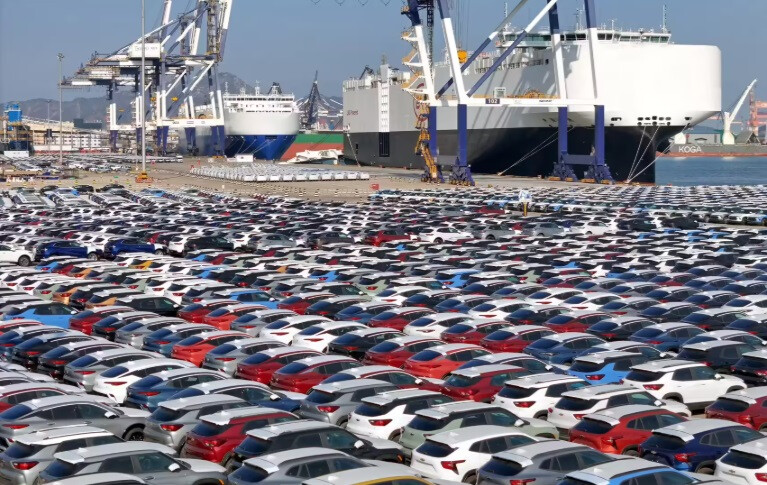
(C) ET Auto
SUWON, South Korea – The rapid ascent of the South Korean used car export industry, often hailed as the "K-Used Car" phenomenon, is facing a critical bottleneck. Recent measures to combat cross-border financial crimes have led to a wave of bank account freezes, paralyzing dozens of export intermediaries and raising alarms over the industry’s long-term viability.
A Gridlock in the Hub of Exports At the heart of the crisis is Suwon’s Deutsch Auto World, the nation’s largest used car sales complex. Since late 2025, numerous agencies dealing directly with foreign buyers have seen their primary business accounts frozen by financial authorities. The triggers are often suspicious signals detected in the currency exchange or fund transfer processes of overseas buyers, particularly those from high-risk regions.
One intermediary, referred to as "Company A," has had approximately 800 million KRW (approx. $600,000) locked for over two months. "We completed the vehicle purchases and shipments for buyers in Russia and Kazakhstan, only to find our accounts frozen without prior notice," a company representative stated. "As a merchant, we have no way of verifying the exact path through which a buyer’s funds were exchanged before reaching us. Now, we cannot pay salaries or purchase new inventory, but we can't even close the business due to existing contractual obligations."
The Ripple Effect of "Guilt by Association" The crackdown follows a "chain reaction" logic. Once an export intermediary's account is flagged due to a foreign buyer’s suspicious transaction, any domestic dealership that has transacted with that intermediary also faces account restrictions. This preventive measure, aimed at blocking the movement of illicit funds or money laundering via virtual assets, is currently applied broadly, often sweeping up legitimate businesses that have no knowledge of the funds' origins.
Structural Vulnerabilities Amid Record Growth The timing of this crisis is particularly painful. According to the Korea International Trade Association (KITA), South Korea’s used car exports surged from $1.8 billion in 2019 to $4.7 billion in 2023. As global demand for reliable Korean vehicles grows, the lack of a "safe payment" infrastructure for international B2B transactions has left exporters exposed.
Experts argue that the current system of account freezes lacks the nuance required for international trade. Unlike domestic transactions, cross-border deals—especially with countries under sanctions or those with unstable banking systems—inherently carry financial risks that individual merchants cannot mitigate.
Calls for Policy Reform "The structural risk is inevitable when dealing directly with overseas buyers in high-risk zones," said Suh Yong-gu, a professor of Business Administration at Sookmyung Women's University. "If these freezes become a recurring trend, exporters will be forced to bake this risk into their pricing, leading to a loss of price competitiveness or a total withdrawal from certain markets."
Industry insiders are calling for more refined criteria for freezing and unfreezing accounts. While acknowledging the necessity of preventing financial crimes, they argue for a "safe harbor" provision or a faster verification process for businesses that can provide legitimate shipping documents, invoices, and contracts.
As the standoff between financial regulators and the export sector continues, the "K-Used Car" industry stands at a crossroads. Without a more sophisticated financial safety net, the very momentum that drove Korean used cars to global prominence may run out of steam.
[Copyright (c) Global Economic Times. All Rights Reserved.]