![[등록] 2026-09-01 15:48:31](/support/_updata/banner2/tl181982910_6749.png)


(C) China US Focus
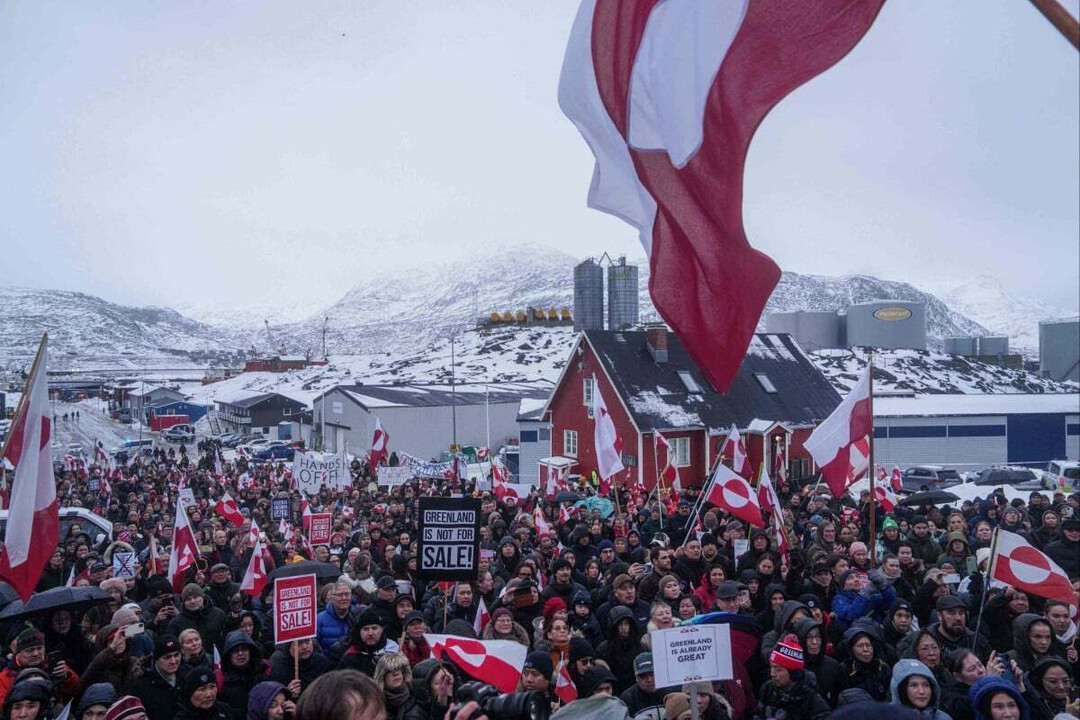
U.S. President Donald Trump’s relentless diplomatic maneuvers are finally shaking the foundations of the 'Atlantic Alliance.' His recent ambition to annex Greenland has gone beyond a mere real estate proposal, creating a fatal rift in the once-solid 'MAGA Solidarity' among Western far-right political forces.
Until now, European far-right parties have regarded Trump as a political role model and a reliable patron. Groups like Germany's AfD and figures like Nigel Farage expanded their influence by sharing Trump’s 'America First' and anti-immigration rhetoric. However, the situation shifted abruptly when Trump disregarded the sovereignty of Denmark—a NATO ally—and even hinted at potential military action regarding Greenland. For European far-right groups, whose core value is 'National First,' the blatant territorial greed and infringement of sovereignty by the U.S. became an 'unacceptable hostile act.'
The shift in attitude among European far-right figures is noteworthy. Even Farage, who claimed to be Trump’s closest ally, has voiced criticism, and far-right MEPs have backed EU-level retaliatory measures against coercive U.S. trade pressure. They have made it clear that 'right-wing values' ultimately lie in defending their own nation’s sovereignty and interests, not in blindly serving U.S. hegemonism.
This scene from across the Atlantic poses a heavy question to us: How do South Korea’s so-called 'far-right' or hardline conservative forces view Trump’s actions? Unfortunately, the voices at home are quite different from those in Europe. While European right-wingers demonstrate 'autonomous realism' by breaking away when Trump’s 'America First' policy infringes on their national interests, South Korea’s hardline conservatives remain trapped in a 'confirmation bias,' hanging on Trump’s every word.
To some hardline right-wing groups in Korea, Trump is more of a religious symbol that grants political legitimacy than a diplomatic counterpart to be assessed coldly through the lens of national interest. Even when Trump threatened to withdraw U.S. troops, pressured for higher defense cost-sharing, or made remarks damaging the value of the alliance, they were busy justifying these actions within the framework of a 'U.S.-centric order' rather than speaking out in criticism.
The reason European far-right forces have begun to distance themselves from MAGA is clear: in Trump’s slogan 'Make America Great Again,' there is no room for the 'greatness of other nations.' The Greenland incident vividly showed that Trump’s diplomatic line can sacrifice the sovereignty of allies at any time.
Now, Korea’s conservative forces must reflect. True conservatism is a group that prioritizes national sovereignty and interests above all. If a foreign leader harms national interests and shakes the foundation of an alliance, it is the duty of conservatives to speak out firmly, regardless of ideological ties. Observing the reality where European far-right groups choose to 'sever ties' with Trump for their national interest, it is time for Korea’s hardline conservatives, still immersed in the illusion of 'MAGA,' to deeply consider which path they should take.
[Copyright (c) Global Economic Times. All Rights Reserved.]