![[등록] 2026-09-01 15:48:31](/support/_updata/banner2/tl181982910_6749.png)


(C) Digital Watch Observatory
SEOUL – As South Korea officially enters a "super-aged society," where those aged 65 and older account for over 20% of the population, a new battlefield for innovation has emerged: wearable robotics. Companies that once focused on traditional sectors like fashion and banking are now pivoting toward AI-powered assistive suits to capture the "Young Old"—active, tech-savvy seniors with significant purchasing power.
Fashion Meets Robotics: Hyungji’s Strategic Pivot Leading the charge in the fashion industry is Fashion Group Hyungji. Known for its dominance in senior apparel with brands like Crocodile Ladies, the group is now integrating robotics into everyday wear. Its subsidiary, Hyungji Elite, recently signaled its official entry into the market by participating in the "RAAI 2025" (International Conference on Robotics, Automation, and AI) in Singapore.
The company has filed a trademark for "hyungjiROBOTICS," aiming to blend AI-based robotic tech with workwear and casual clothing. Their vision is to create "lifestyle wearable robots" that do not look like medical devices but rather stylish functional garments that reduce physical strain, allowing seniors to maintain an active social life.
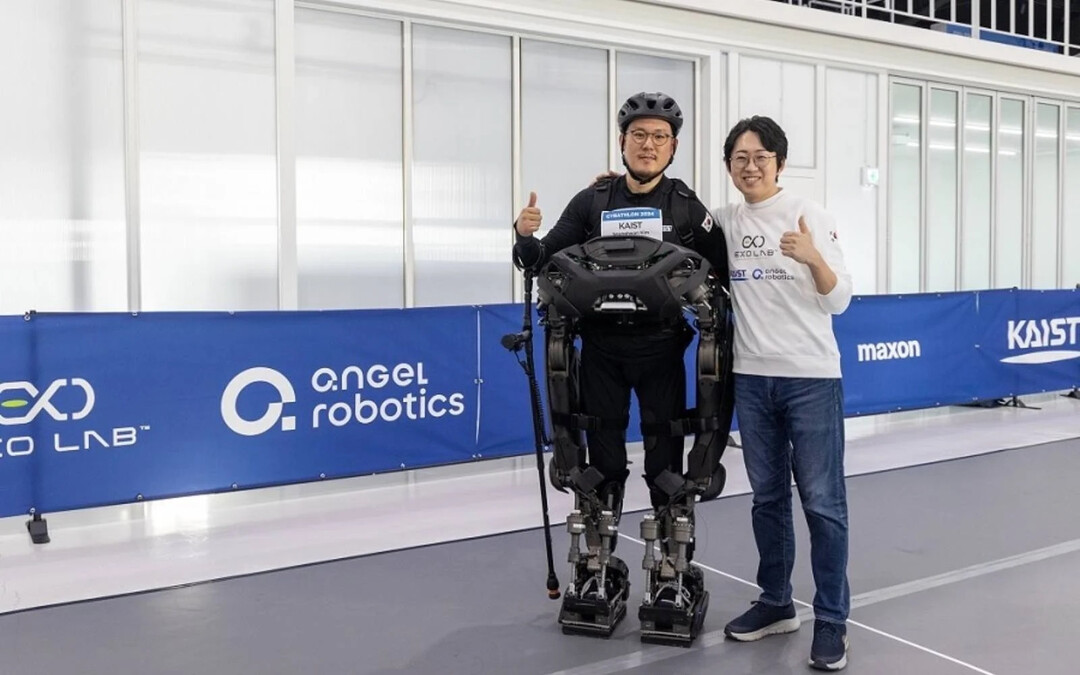
Financial Sectors Join the Fray The banking industry is also recognizing that financial health for seniors is inextricably linked to physical mobility. Hana Bank recently made headlines by partnering with Angel Robotics to launch the "Hana The Next Wearable Robot Service."
This initiative goes beyond simple financing. Hana Bank plans to offer purchase benefits for wearable suits, expand robot-related financial consulting, and develop specialized insurance and savings products tailored for robot users. "We are building a future-oriented financial model that combines AI and robotics to enhance the quality of life for the elderly," a Hana Financial Group official stated.
From Rehabilitation to Daily Exercise Startups are providing the technical backbone for this transition. Wirobotics has gained significant traction with its "WIM S," an ultra-lightweight walking-assist robot. Unlike heavy industrial suits, the WIM S is designed for daily use, assisting hip and thigh movements to improve walking speed and balance.
To support this, Wirobotics opened South Korea’s first robotic gait exercise center. Here, seniors—particularly those recovering from surgery or suffering from muscle loss—receive personalized training. The robot syncs with a mobile app to analyze gait patterns and muscle strength in real-time, providing a comprehensive health management solution that appeals to the health-conscious "Young Old" demographic.
The Economic Engine of a Super-Aged Society The rapid adoption of wearable tech is driven by necessity. Statistics Korea reports that as of 2025, the elderly population has surpassed the 10-million mark. Market experts suggest that the "Silver Economy" is no longer a niche market but the primary driver of domestic consumption.
"The influence of the senior generation is expanding far beyond healthcare," said an industry analyst. "Whether it is fashion, finance, or leisure, the integration of AI and wearable tech is becoming the standard for any business that wants to remain relevant in an aging demographic."
As technology becomes more discreet and affordable, the sight of seniors wearing robotic assists in parks and shopping malls may soon become as common as seeing them with smartphones, marking a new era of "technological aging" in South Korea.
[Copyright (c) Global Economic Times. All Rights Reserved.]