![[등록] 2026-09-01 15:48:31](/support/_updata/banner2/tl181982910_6749.png)


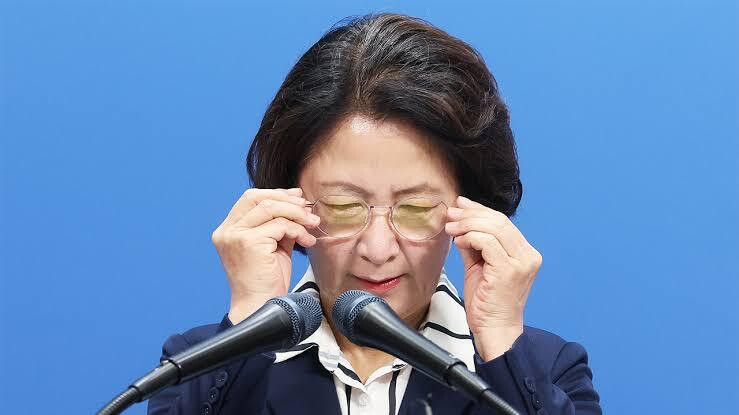
[Suwon] Gyeonggi Province Governor Choo Mi-ae officially declared a "financial emergency" on August 5, 2026, signaling a grave warning regarding the province's fiscal health. Governor Choo described the current state of Gyeonggi's finances as "living on a cash advance," asserting that if the current trajectory continues, the province faces a potential "bankruptcy-like" scenario.
The "Gray Rhino" at the Door
In a press conference, Governor Choo characterized the situation using the "Gray Rhino" metaphor—a high-impact, highly predictable threat that is often overlooked until it is too late. "Our debt is growing at three times the rate of other metropolitan governments nationwide," Choo stated, adding that the province's financial structure has reached a point where it can no longer support even existing projects, let alone new initiatives.
The Burden of "People’s Livelihood Subsidies"
A significant portion of the critique centers on the massive "people’s livelihood subsidies" (disaster relief funds) distributed during the COVID-19 pandemic. According to recent reports, Gyeonggi Province spent a total of 3.3 trillion KRW across three rounds of subsidies between 2020 and 2021—1.34 trillion KRW in the first round, 1.4 trillion KRW in the second, and 600 billion KRW in the third. Much of this funding was sourced through loans, including 1.9 trillion KRW from regional development funds, which have now become a heavy burden on the provincial balance sheet.
Staggering Statistics
The fiscal reality is stark:
High Debt-to-Asset Ratio: As of 2024, Gyeonggi’s assets stood at approximately 43.3 trillion KRW with liabilities of 6.6 trillion KRW, resulting in a debt-to-asset ratio of 15.3%—the highest among all metropolitan governments in South Korea.
Rapid Debt Growth: From 2023 to 2025, Gyeonggi’s debt surged by 36.1% (from 4.5 trillion KRW to 6.1 trillion KRW), a growth rate nearly three times the national metropolitan average of 12.7%.
Structural Fragility: Unlike Seoul or Incheon, which possess diverse and stable revenue streams (such as local income and automobile taxes), Gyeonggi’s tax revenue is overwhelmingly reliant on acquisition taxes, which fluctuate heavily with the real estate market.
The "Golden Time" for Correction
Governor Choo criticized the previous administration for relying on temporary fixes, such as issuing 943 billion KRW in local government bonds in 2025—which hit 99.6% of the issuance limit—and drawing from special fund accounts to cover general expenses. "While we hid the crisis with temporary measures, we missed the 'golden time' to fix our finances," Choo said.
Emergency Measures and Future Outlook
In response to the crisis, Governor Choo announced a four-point financial normalization plan, which includes:
Strict Spending Cuts: Immediate reduction of administrative expenses for high-ranking officials and the elimination of wasteful "event-based" budgets.
Structural Reform: A complete overhaul of the provincial revenue structure to reduce dependency on acquisition taxes.
Prioritization: Securing essential budgets for public safety, vulnerable populations, and core welfare services.
Fiscal Accountability: A 770 billion KRW reduction in the supplementary budget for 2026 to prevent further debt accumulation.
The declaration has sparked debate in political circles, with some calling for a focus on structural tax reform rather than political finger-pointing. As Governor Choo emphasized, "A leader responsible for the lives and taxes of 14.2 million residents must look reality in the eye." Whether this "financial emergency" will lead to a sustainable recovery or further political conflict remains to be seen.
[Copyright (c) Global Economic Times. All Rights Reserved.]