• 2026.04.14 (Tue)
  • All articles
  • LOGIN
  • JOIN
Global Economic Times
fashionrunwayshow2026
  • Synthesis
  • World
  • Business
  • Industry
  • ICT
  • Distribution Economy
  • Well+Being
  • Travel
  • Eco-News
  • Education
  • Korean Wave News
  • Opinion
  • Arts&Culture
  • Sports
  • People & Life
    • International Student Report
    • With Ambassador
  • Column
    • Cho Kijo Column
    • Cherry Garden Story
    • Ko Yong-chul Column
    • Kim Seul-Ong Column
    • Lee Yeon-sil Column
  • Photo News
  • New Book Guide
MENU
 
Home > World

The Return of the Rising Sun: Japan’s Bold Gambit to Reclaim Semiconductor Hegemony

Ana Fernanda Reporter / Updated : 2026-04-13 21:37:48
  • -
  • +
  • Print


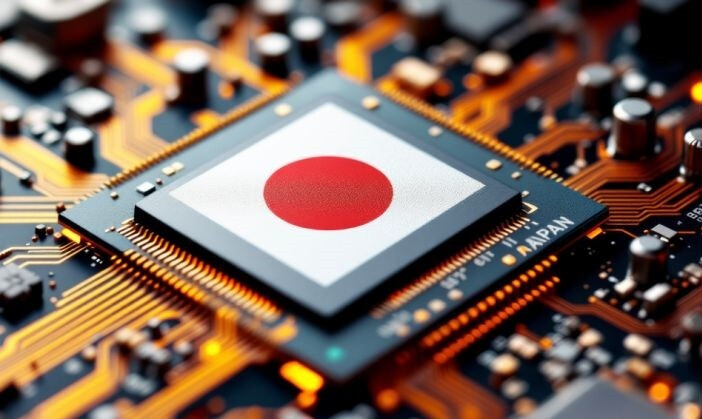
PHOENIX, AZ — The echoes of the 1980s are growing louder in the boardrooms of Tokyo. Once the undisputed titan of the global semiconductor market with a 50% share, Japan’s footprint has dwindled to a mere 8% over the decades. However, a seismic shift in global supply chains, fueled by US-China tensions and the AI gold rush, has provided Japan with a golden window to stage a historic comeback.

Infiltrating the "Silicon Desert"
In the arid landscape of Arizona, a quiet but decisive Japanese "invasion" is underway. According to recent data from the Arizona state government, TOCALO, a specialist in advanced surface treatment and thermal spray technologies, has secured a 2,980-square-meter facility in Chandler. This move is strategically designed to plug into the massive TSMC fab cluster known as the "Silicon Desert."

TOCALO is not alone. Shin-Etsu Chemical, a titan in semiconductor materials, is constructing new infrastructure in the region, while NGK Insulators is injecting $56 million to boost production capacity by 20%. Perhaps most tellingly, Tokyo Electron (TEL), one of the world’s largest equipment manufacturers, is upgrading its Phoenix operations to match the scale of its Japanese headquarters. These moves signal a coordinated effort by Japan’s Materials, Parts, and Equipment (MPE) sectors to dominate the essential plumbing of the global chip industry.

The Rapidus Moonshot
While the MPE sector secures the flanks, the Japanese government is betting the house on Rapidus, a national champion aimed at closing the ten-year gap in logic chip manufacturing. On April 11, the Ministry of Economy, Trade, and Industry (METI) approved an additional 631.5 billion yen in subsidies for the 2026 fiscal year, bringing total government support to a staggering 2.35 trillion yen (approximately $17 billion USD).

Currently, Rapidus is operating a pilot line for 2nm chips at its Chitose plant in Hokkaido. With a mass production target set for the second half of next year, the company is rapidly building a comprehensive ecosystem, including new analysis centers and Research and Development for Back-end Services (RCS). Having secured Fujitsu as its inaugural client, Rapidus aims to achieve full-scale production of AI-specific semiconductors by 2029.

A Bridge to the Future
The resurgence is not merely about domestic pride; it is about global integration. Tetsuro Higashi, Chairman of Rapidus, emphasized the role of the Leading-edge Semiconductor Technology Center (LSTC) in fostering international collaboration. "Through LSTC, we intend to link with overseas universities and companies to grow the global semiconductor industry as a whole," Higashi stated.

Industry analysts suggest that Japan’s success hinges on whether Rapidus can secure a diverse portfolio of global Tier-1 customers. While the technological mountain is steep—Japan currently lags behind industry leaders like TSMC, Samsung, and Intel in advanced logic—the combination of unparalleled dominance in raw materials and massive state-sponsored capital may yet prove to be a winning formula.

As supply chains decouple from China and re-center around democratic alliances, Japan is positioning itself not just as a supplier, but as the indispensable backbone of the next generation of AI hardware. The "Glory of the 80s" may no longer be a memory, but a blueprint for the future.

[Copyright (c) Global Economic Times. All Rights Reserved.]

  • #globaleconomictimes
  • #micorea
  • #mykorea
  • #nammidonganews
  • #singaporenewsk
  • #Samsung
  • #Daewoo
  • #Hyosung
  • #Apple
  • #korea
Ana Fernanda Reporter

Popular articles

  • Global Food Delivery Giants Hit Record Highs: Subscription and Quick-Commerce Emerge as Key Growth Engines

  • Saudi Arabia Warns of $180 Oil as Iran Conflict Threatens Global Energy Security

  • Hundreds of Millions of Older iPhones at Risk as Hacking Tool Goes Public

I like it
Share
  • Facebook
  • X
  • Kakaotalk
  • LINE
  • BAND
  • NAVER
  • https://globaleconomictimes.kr/article/1065616577428743 Copy URL copied.
Comments >

Comments 0

Weekly Hot Issue

  • The Extraordinary Singing Talent of a Senior Alumnus (KMA 39th Class)
  • Welcome to Cherry Garden Restaurant!  
  • The Reason Behind the International Calls
  • Medical Marvel or Warning? Sheep Botfly Pupa Found Developing Inside Human Nose
  • The "DuoBell": Breaking Through the Silence of Noise-Canceling Headphones
  • National Assembly Passes 26.2 Trillion Won 'Energy Crisis' Extra Budget; Up to 600,000 Won in Cash Relief

Most Viewed

1
From the Alps to Seoul: Life in the Heart of Europe
2
Egypt: The Rebirth of Wine’s Origins in an Ancient Civilization
3
Grandmaster Kangil Lee Restores Legal Status as Killeen Korean American Association President… A Signal for Innovation and Integrity in the Korean Community
4
Public Sector to Adopt ‘Odd-Even’ Vehicle Rotation Starting April 8; 5-Day Rotation Extended to Public Parking Lots
5
TikTok Bets $50M on South Korea: Creator Rewards to Increase Sixfold
광고문의
임시1
임시3
임시2

Hot Issue

Korea and Poland Elevate Ties to ‘Comprehensive Strategic Partnership,’ Expanding Cooperation to Hydrogen, Nano, and Space

National Assembly Passes 26.2 Trillion Won 'Energy Crisis' Extra Budget; Up to 600,000 Won in Cash Relief

South Korea Enters the Era of '100 AI Medical Devices Annually': Advancing into High-Complexity Clinical Fields

The "DuoBell": Breaking Through the Silence of Noise-Canceling Headphones

Fashion Runway Show 2026

Global Economic Times
korocamia@naver.com
CEO : LEE YEON-SIL
Publisher : KO YONG-CHUL
Registration number : Seoul, A55681
Registration Date : 2024-10-24
Youth Protection Manager: KO YONG-CHUL
Singapore Headquarters
5A Woodlands Road #11-34 The Tennery. S'677728
Korean Branch
Phone : +82(0)10 4724 5264
#304, 6 Nonhyeon-ro 111-gil, Gangnam-gu, Seoul
Copyright © Global Economic Times All Rights Reserved
  • 에이펙2025
  • APEC2025가이드북TV
  • 독도는우리땅
Search
Category
  • All articles
  • Synthesis
  • World
  • Business
  • Industry
  • ICT
  • Distribution Economy
  • Well+Being
  • Travel
  • Eco-News
  • Education
  • Korean Wave News
  • Opinion
  • Arts&Culture
  • Sports
  • People & Life 
    • 전체
    • International Student Report
    • With Ambassador
  • Column 
    • 전체
    • Cho Kijo Column
    • Cherry Garden Story
    • Ko Yong-chul Column
    • Kim Seul-Ong Column
    • Lee Yeon-sil Column
  • Photo News
  • New Book Guide
  • Multicultural News
  • Jobs & Workers