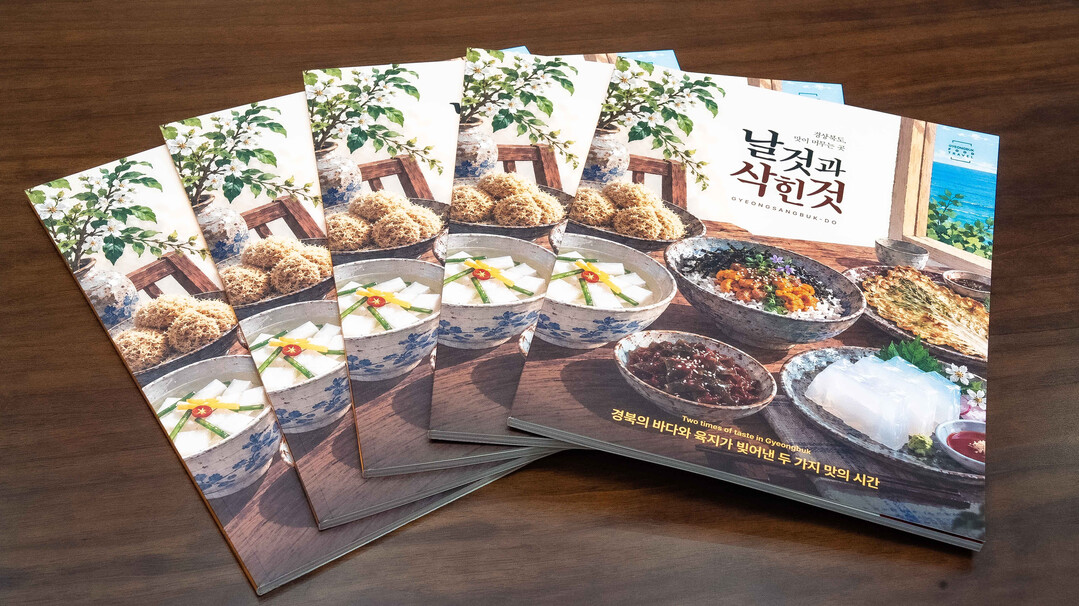
- Highlights lesser-known local dishes like ojingeo nureonchang (dried, translucent squid skirts) and taepyeongchu (traditional mung bean jelly soup).
- Aims to establish regional gastronomy as a powerful cultural heritage and a core driver for tourism.
The Gyeongbuk Cultural Tourism Corporation (President Kim Nam-il) announced on November 12 the release of a new culinary tourism guidebook titled The Raw and the Fermented. The book documents the unique food culture of North Gyeongsang Province and the lives of the people who preserve it.
Developed over a year, the publication marks a national milestone as the first of its kind to weave together the contrasting concepts of the "raw" and the "fermented" into a single, cohesive theme.
The book has earned praise for re-illuminating the roots and value of Gyeongbuk’s cuisine, introducing previously under-the-radar culinary traditions to the general public, and opening up fresh horizons for the region's gastronomic tourism.
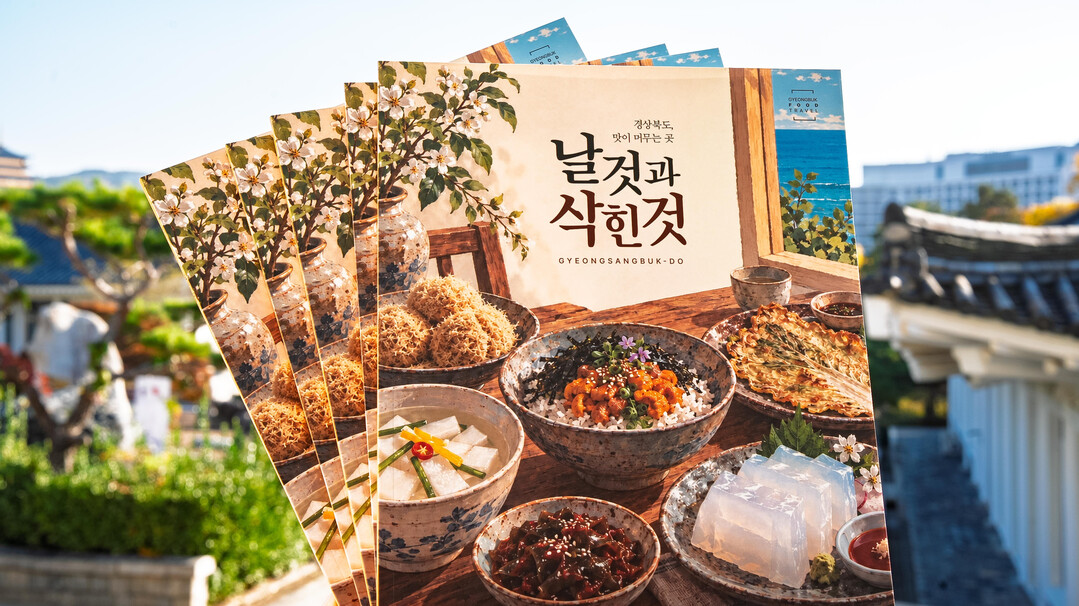
Unlike typical regional restaurant guides or general travel booklets, this publication delves into the origins of dishes—where they came from, why they became staples in specific locales, and the generational hands that kept them alive. By tracing the natural environments, seasonal rhythms, wisdom of daily life, and community memories embedded in every meal, the book reframes Gyeongbuk's food as both a vital tourism resource and a valuable cultural heritage.
The central motif of the book centers on "the time of eating fresh versus the time of waiting." Blessed with a long coastline along the East Sea, the towering ridges of the Baekdudaegan mountains, and the fertile plains and valleys of the Nakdong River, Gyeongbuk boasts an abundance of ingredients and a rich culinary tapestry.
"The raw" represents enjoying seasonal produce at its absolute peak—freshly reeled from the sea or foraged right on time from the mountains. Conversely, "the fermented" denotes methods of preserving the fleeting flavors of a single season—salting, pickling, drying, and fermenting ingredients to carry them across into the next season.
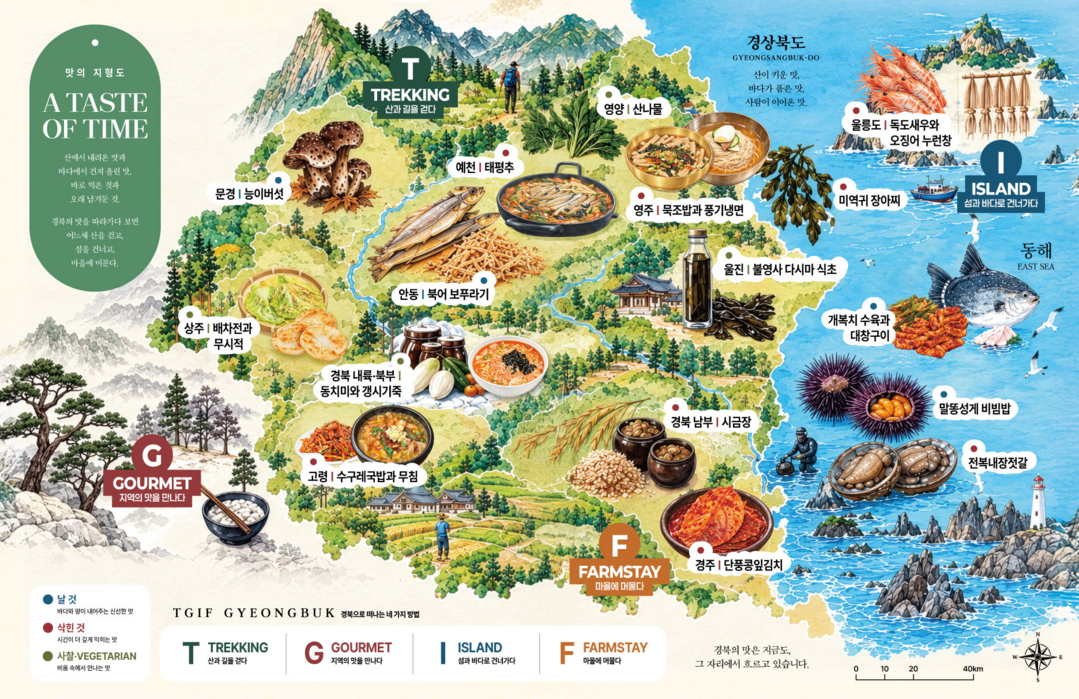
The guidebook is structured with an introduction—featuring "The Time of Eating Raw, The Time of Waiting" and a "Flavor Topography"—followed by three main parts:
PART 1: The Time of the Raw, which examines regional sensibilities and practical wisdom regarding seasonal ingredients such as mola mola (ocean sunfish) boiled slices, sea urchin roe bibimbap, and Mungyeong king oyster mushrooms.
PART 2: The Time of Fermentation, highlighting items like salted kelp ear, abalone liver jeotgal, ojingeo nureonchang, sigeumjang (traditional soybean paste), maple sesame-leaf kimchi, and taepyeongchu.
PART 3: Temple and Vegetarian Tables, showcasing restrained cooking techniques and natural ingredients through dishes like Bulguksa Temple's kelp vinegar, cabbage pancakes, radish sigeok (dried greens), dongchimi (water kimchi), and Yeongyang wild greens.
Adding exceptional depth to the publication are essays, columns, and interviews featuring prominent figures, including poet Ahn Do-hyun (author of A Piece of Coal) and chef-writer Park Chan-il.
Through this publication, the Corporation plans to uncover new culinary assets in Gyeongbuk and expand the foundation for local cuisine to grow into a self-sustaining tourism draw that encourages visitors to stay longer.
This effort aligns seamlessly with broader national and local government trends promoting K-food. The central government designated October 24 as the statutory "Han-sik (Korean Cuisine) Day," while the Gyeongbuk Provincial Government established a dedicated "Food Hallyu Industry Bureau" last August to strengthen industrial competitiveness through the convergence of food policy, food tech, and tourism. In tandem with these policy directions, the Corporation recently launched a "K-Food Culinary Tourism TF" to kick-start initiatives utilizing the region's distinct food heritage.
"As the criteria for choosing travel destinations evolve, food and exceptional local tastes have become crucial tourism catalysts in their own right," emphasized Kim Nam-il, President of the Gyeongbuk Cultural Tourism Corporation. "This book is an attempt to document the dishes that have sustained local tables for generations, along with the human stories behind them, introducing the hidden flavors of Gyeongbuk as an innovative tourism content."
[Copyright (c) Global Economic Times. All Rights Reserved.]