![[등록] 2026-09-01 15:48:31](/support/_updata/banner2/tl181982910_6749.png)


- Advanced packaging targets: Samsung Electronics pushes for its first-ever semiconductor facility in Gwangju
SEOUL — The center of gravity for South Korea’s semiconductor industry, which has historically been heavily concentrated in the Seoul metropolitan area, is undergoing a massive geographic shift toward non-capital regions, specifically the Honam (southwest) and Chungcheong (central) provinces.
According to ruling party and government sources on June 9, the nation’s two semiconductor titans—Samsung Electronics and SK hynix—are in the final stages of reviewing multi-trillion won investment plans for regional areas, with an official announcement expected as early as this month. Backed by a sharp recovery in earnings amid the ongoing semiconductor boom, the tech giants are aligning with the administration’s regional balanced development agenda while strategically bypassing the chronic infrastructure bottlenecks plaguing the capital region.
Advanced Packaging: The New Semiconductor Battlefield
The primary focus of this upcoming regional expansion is reportedly "advanced packaging"—the critical back-end process of semiconductor manufacturing. As circuit miniaturization hits physical limits, advanced packaging has emerged as the ultimate game-changer determining the performance of high-bandwidth memory (HBM) and next-generation artificial intelligence (AI) chips.
[Key Investment Highlights]
▶ Samsung Electronics: Pushing for a new advanced packaging facility in Gwangju (First-ever semiconductor production base in the Honam region).
▶ Infrastructure Legacy: Samsung's first new domestic packaging site in 35 years (since Onyang in 1991) and largest domestic expansion in 11 years (since Pyeongtaek).
▶ Strategic Alignment: Utilizing Honam's abundant renewable energy and Chungcheong's established infrastructure to resolve power shortages in the capital.
Most notably, Samsung Electronics is actively pushing to build an advanced semiconductor packaging plant in Gwangju Metropolitan City. This marks the first time Samsung will establish a semiconductor production base—either front-end or back-end—in the Honam region. It is Samsung’s first new packaging base in 35 years, following the establishment of the Onyang campus in South Chungcheong Province in 1991. If front-end lines are factored in, this is the largest new domestic greenfield investment since the ground-breaking of the Pyeongtaek campus 11 years ago. Industry insiders view this as a preemptive, decisive move by Samsung Electronics Chairman Jay Y. Lee to aggressively scale up capacity at the dawn of a new semiconductor supercycle.
Overcoming Capital Saturation via Renewable Energy
The selection of Gwangju as a primary investment target is a direct response to the severe saturation of power and water infrastructure in the capital area. The existing "Semiconductor Mega Cluster" centered around Pyeongtaek and Yongin has reached a critical bottleneck, where securing additional massive power grids for AI semiconductor lines has become nearly impossible.
In contrast, the Honam region boasts the highest potential for renewable energy in South Korea, particularly through solar and offshore wind power, offering unparalleled flexibility in green power supply. Furthermore, the global back-end processing firm Amkor Technology already operates a major facility in Gwangju, meaning a new Samsung plant could create immediate supply-chain synergy with the government's envisioned "Southern Innovation Belt" advanced packaging cluster.
An expansion into the Chungcheong area is also highly anticipated. Samsung Electronics already operates packaging hubs in Cheonan and Onyang, while SK hynix runs its core memory fabrication lines in Cheongju. Expanding within this region allows both companies to seamlessly leverage existing infrastructure. Speculation is also mounting that the investment might go beyond back-end processing to include "middle-fabs" that handle specialized mid-stage manufacturing steps, or even large-scale "public foundries" jointly funded by the public and private sectors.
Government Incentives and Political Momentum
The aggressive push by large conglomerates to look southward has been heavily accelerated by the government's robust policy drive. The administration has pledged all-out support for regional corporate investors, dangling lucrative carrots ranging from major tax incentives to the implementation of regionally differentiated electricity rates.
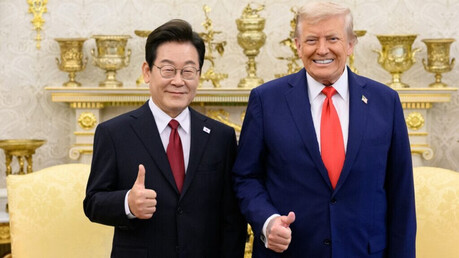
During a press conference marking his first anniversary in office yesterday, President Lee Jae-myung publicly called for corporate action, stating:
"I have gently pressured, and in fact, requested conglomerates to invest in regional areas as much as possible, promising that the government will provide full administrative and financial support."
This multi-trillion won regional investment blueprint is expected to be formalized on June 29 during a high-profile summit at the Blue House. The meeting, presided over by President Lee, will bring together the heads of the nation's top business conglomerates.
When reached for comment regarding the upcoming announcement, both Samsung Electronics and SK hynix maintained a cautious stance, stating, "We have no knowledge of this matter at this time."
[Copyright (c) Global Economic Times. All Rights Reserved.]