![[등록] 2026-09-01 15:48:31](/support/_updata/banner2/tl181982910_6749.png)


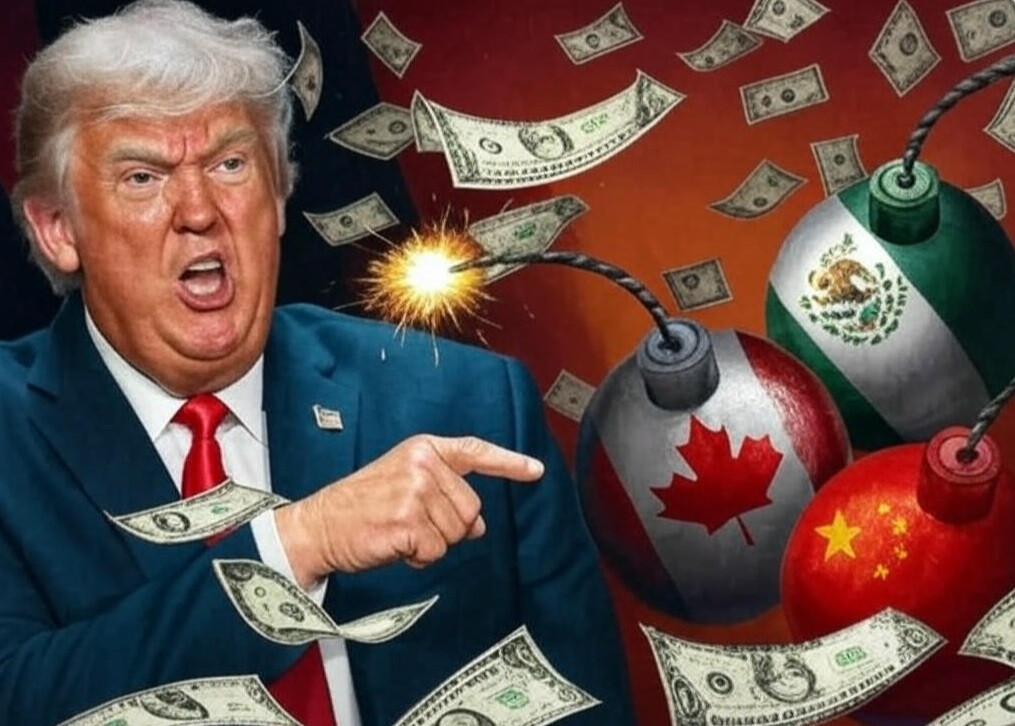
As U.S. President Donald Trump's global tariff war intensifies, there are growing concerns that it could severely harm the U.S. economy by repeating the failed protectionism of Argentina's past. Global scholars and economists warn that the Trump administration's trade policies are dangerously similar to the economic model that plunged 20th-century Argentina into a prolonged economic slump, expressing deep concern about America's economic future.
A column by Kaushik Basu, a Cornell University professor and former chief economist at the World Bank, published in Project Syndicate, provides key arguments supporting these concerns. In his column titled "Trump's Tariffs Will Accelerate America's Economic Decline," Basu points out that the economic policy direction chosen by President Trump is strikingly similar to the protectionist model that led to the downfall of Argentina, once a South American economic powerhouse.
In the late 19th century, Argentina prospered with a per capita income higher than that of Britain or Germany, thanks to its abundant natural resources and influx of European immigrants. However, after a military coup in the 1930s, the situation dramatically reversed. The new regime, under the pretext of protecting domestic industries, implemented a strong protectionist policy, raising import barriers, restricting immigration, and closing borders.
Basu clearly outlines the consequences of Argentina's protectionism. The inevitable loss of competitiveness in the global market led to economic recession and prolonged economic instability. Argentina, once a center of the global economy, struggled with economic difficulties for decades and has yet to fully recover from the aftermath.
Basu emphasizes that Argentina's shift to protectionism fundamentally changed the nation's fate, contrasting it sharply with the U.S. development, which thrived through economic openness, education, and technological innovation. He reiterates that today, President Trump's policies seem to be repeating the same misguided path that Argentina took in the last century.
The stark warning that if the U.S. had adopted the same protectionist strategy as Argentina about 100 years ago, it would now be an economically isolated and industrially declining nation is a profound insight that cannot be ignored.
The negative impact of the Trump administration's tariff policies on the U.S. economy can be seen in various specific aspects. Basu particularly worries about industries like automobiles and semiconductors, which require long-term investment and a stable business environment. President Trump's unpredictable tariff measures amplify uncertainty across the economy, acting as a major deterrent to corporate investment.
Furthermore, U.S. manufacturers, already weakened by high labor costs, face the double burden of rising raw material prices and increased production costs due to import tariffs. This ultimately leads to higher product prices for domestic consumers and weakens price competitiveness in the international market, encouraging investors to leave.
The more serious issue is that competing nations like China, India, and Mexico are rapidly growing with lower production costs and more open economic policies. Basu asserts, "Closing the economy under the guise of protecting U.S. industries will ultimately isolate the U.S. from the global market." Closed trade policies undermine America's innovation capacity, weaken its position in the global supply chain, and can lead to a long-term slowdown in U.S. economic growth. The risk of repeating the cycle of competitiveness loss and economic recession that Argentina experienced cannot be ruled out.
Of course, the Trump administration justifies its policies by aiming to revive domestic manufacturing and resolve trade imbalances. However, historical experience and economic theory clearly show that protectionism has far greater negative long-term impacts on the economy. While there might be short-term industrial protection effects, they ultimately lead to reduced consumer welfare, weakened competitiveness of import-dependent industries, and instability in the global trade system. Moreover, retaliatory tariffs from other countries in response to U.S. tariffs can directly harm U.S. export businesses, spreading damage across various sectors like agriculture, technology, and services.
In conclusion, President Donald Trump's aggressive tariff policies raise serious concerns that they could lead to a long-term decline in the U.S. economy by repeating the failed protectionism of Argentina's past. As Kaushik Basu warns, if the U.S. forgets its history of prosperity through economic openness and international cooperation and insists on anachronistic protectionism, it risks relegating itself to the periphery of the global economy.
It is not too late. The Trump administration must learn from past failures and shift its policies towards restoring an open, multilateral trade order and strengthening international cooperation. Only then can the U.S. sustain its economic prosperity and contribute to the stability of the global economy.
[Copyright (c) Global Economic Times. All Rights Reserved.]