• 2026.06.05 (Fri)
  • All articles
  • LOGIN
  • JOIN
Global Economic Times
fashionrunwayshow2026
  • Synthesis
  • World
  • Business
  • Industry
  • ICT
  • Distribution Economy
  • Well+Being
  • Travel
  • Eco-News
  • Education
  • Korean Wave News
  • Opinion
  • Arts&Culture
  • Sports
  • People & Life
    • International Student Report
    • With Ambassador
  • Column
    • Cho Kijo Column
    • Cherry Garden Story
    • Ko Yong-chul Column
    • Kim Seul-Ong Column
    • Lee Yeon-sil Column
  • Photo News
  • New Book Guide
MENU
 
Home > Distribution Economy

Japan’s Growth Hits 1.1%, Overtaking Korea for the First Time in 27 Years

KO YONG-CHUL Reporter / Updated : 2026-02-16 20:23:59
  • -
  • +
  • Print


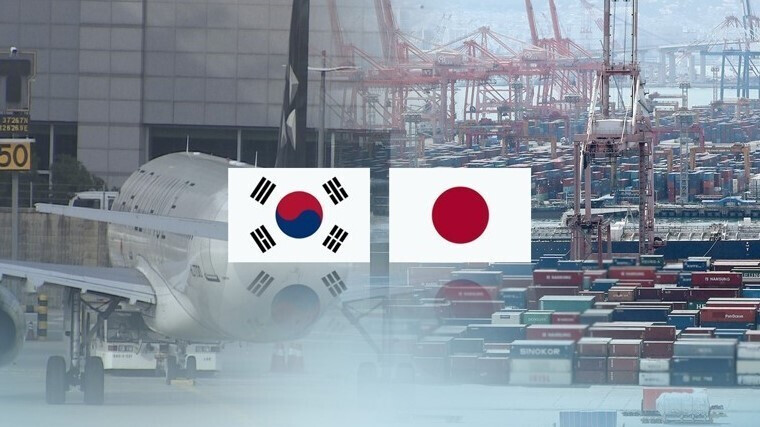
TOKYO/SEOUL — In a historic shift in East Asian economic dynamics, Japan’s economy grew faster than South Korea’s last year, marking the first time the Japanese archipelago has outpaced its neighbor since the depths of the 1997-98 Asian Financial Crisis.

According to preliminary data released by the Cabinet Office of Japan on February 16, Japan's real Gross Domestic Product (GDP) expanded by 1.1% in 2025. This figure narrowly edges out South Korea’s growth rate of 1.0%, as reported by the Bank of Korea.

A Tale of Two Trajectories
The 0.1 percentage point gap carries significant symbolic weight. For nearly three decades, South Korea was viewed as the "tiger economy" consistently outrunning a stagnating Japan. The last time Japan held the growth lead was in 1998, a year when Korea was reeling from a massive liquidity crisis and recorded a contraction of -4.9%.

Japan's Recovery Path: Japan’s 1.1% growth represents a notable rebound from 2024, when the economy contracted by -0.2%. The breakdown of Japan's recent economic performance shows a volatile but upward trend:

2021: 3.6% (Post-pandemic recovery)
2022: 1.3%
2023: 0.7%
2024: -0.2%
2025: 1.1% (Current preliminary estimate)

In nominal terms—which does not adjust for inflation—Japan's GDP reached 662.8 trillion yen (approximately $4.4 trillion USD), a robust 4.5% increase from the previous year. This surge in nominal value reflects the broader inflationary pressures and the weakening yen that have characterized the Japanese economy recently.

Quarterly Fluctuations and Revisions
Despite the annual growth, Japan's economic engine showed signs of sputtering in the latter half of the year. The quarterly breakdown reveals a strong start followed by a dip:

Q1: 0.3%
Q2: 0.5%
Q3: -0.7% (Negative growth)
Q4: 0.1% (Slight recovery)

Economists caution that these figures are "preliminary estimates." History suggests that final figures can shift. In 2023, early data suggested Japan might overtake Korea, but final revisions eventually placed Korea back in the lead. Analysts will be closely watching the "revised" data releases in the coming months to see if this 27-year reversal holds firm.

Looking Ahead: A Temporary Flip?
While the 2025 data offers a moment of celebration for Tokyo, international organizations suggest that the "South Korea-Japan Reversal" might be short-lived.

The Organization for Economic Cooperation and Development (OECD) released a forecast in December suggesting a divergence in 2026. The OECD predicts:

Japan: Growth is expected to slow to 0.5% in 2026 as the effects of previous stimulus wane and structural demographic challenges persist.
South Korea: Growth is projected to rebound to 2.2% in 2026, driven by a recovery in global semiconductor demand and stabilizing domestic consumption.

Structural Implications
The narrowing gap between the two nations highlights broader structural shifts. South Korea is currently grappling with "low growth entrenchment" caused by a rapidly aging population and a heavy reliance on a volatile export market. Meanwhile, Japan has benefited from a tourism boom and a corporate sector that has finally begun to raise wages and prices after decades of deflation.

For now, the 2025 results serve as a wake-up call for Seoul. The "growth reversal" underscores the need for structural reforms in South Korea to prevent a permanent slide into the "low-growth trap" that Japan has occupied for much of the 21st century.

[Copyright (c) Global Economic Times. All Rights Reserved.]

  • #Globaleconomictimes
  • #Korea
  • #Seoul
  • #Samsung
  • #LG
  • #Bitcoin
  • #Meta
  • #Business
  • #Economic
  • #The Woori Bank
  • #Elon Musk
  • #C
KO YONG-CHUL Reporter
Reporter Page

Popular articles

  • BMW Korea Ignites May with Exclusive 9-Model Online Limited Edition Lineup

  • U.S. Intelligence: Iran’s Nuclear Capabilities Remain Intact Despite Two Months of Strikes

  • Kakao Hits Record Q1 Performance: Operating Profit Surges 66% as Focus Shifts to "Agentic AI"

I like it
Share
  • Facebook
  • X
  • Kakaotalk
  • LINE
  • BAND
  • NAVER
  • https://globaleconomictimes.kr/article/1065612165047122 Copy URL copied.
Comments >

Comments 0

Weekly Hot Issue

  • Samsung Electronics Super-Enterprise Union Loses Majority Status Amid Backlash Over Bonus Disparities
  • Samsung to Embed Vital Signs and Heart Health Scores in Upcoming Galaxy Watch9 Lineup
  • Apple Honors Digital Excellence: 12 Exceptional Apps and Games Celebrated at the 2026 Design Awards
  • Nexon Revamps Signature Youth Coding Competition into AI-Driven 'Nexon Young Programmers Cup'
  • Tech University of Korea Gathers 200 Game and AI Researchers to Discuss Industrial Expansion
  • Major Korean Telcos Trim Online-Exclusive Plans by Up to 50% Amid Shift to Unified Mobile Tariffs

Most Viewed

1
From a moment of collective sacrifice to a moment of collective democracy: The Timing of the Election in Ethiopia and Korea
2
U.S. Holds Off on Immediate Comprehensive Semiconductor Tariffs, but Pressure Mounts for Samsung and SK Hynix to Accelerate Domestic Investments
3
[Interview] "Halal is Not a Religious Regulation, but a 'Trust Infrastructure'… Creating a Premium 'K-Halal' Centered on Data and Platforms"
4
‘600 Million Won Bonus’ at Samsung Electronics Triggers Deep Sense of Relative Deprivation Among Korean Workers
5
Bomb Attack Targets Moving Train in Pakistan: At Least 29 Dead, 102 Injured
광고문의
임시1
임시3
임시2

Hot Issue

Murata Unveils Next-Gen Resin Electrode MLCC for Automotive Applications

Samsung to Embed Vital Signs and Heart Health Scores in Upcoming Galaxy Watch9 Lineup

L&F Plus Secures KRW 220 Billion from National Growth Fund to Anchor South Korea’s First Mass LFP Cathode Production

Samsung Electronics Super-Enterprise Union Loses Majority Status Amid Backlash Over Bonus Disparities

Fashion Runway Show 2026

Global Economic Times
korocamia@naver.com
CEO : LEE YEON-SIL
Publisher : KO YONG-CHUL
Registration number : Seoul, A55681
Registration Date : 2024-10-24
Youth Protection Manager: KO YONG-CHUL
Singapore Headquarters
5A Woodlands Road #11-34 The Tennery. S'677728
Korean Branch
Phone : +82(0)10 4724 5264
#304, 6 Nonhyeon-ro 111-gil, Gangnam-gu, Seoul
Copyright © Global Economic Times All Rights Reserved
  • 에이펙2025
  • APEC2025가이드북TV
  • 반달곰 프로젝트
Search
Category
  • All articles
  • Synthesis
  • World
  • Business
  • Industry
  • ICT
  • Distribution Economy
  • Well+Being
  • Travel
  • Eco-News
  • Education
  • Korean Wave News
  • Opinion
  • Arts&Culture
  • Sports
  • People & Life 
    • 전체
    • International Student Report
    • With Ambassador
  • Column 
    • 전체
    • Cho Kijo Column
    • Cherry Garden Story
    • Ko Yong-chul Column
    • Kim Seul-Ong Column
    • Lee Yeon-sil Column
  • Photo News
  • New Book Guide
  • Multicultural News
  • Jobs & Workers