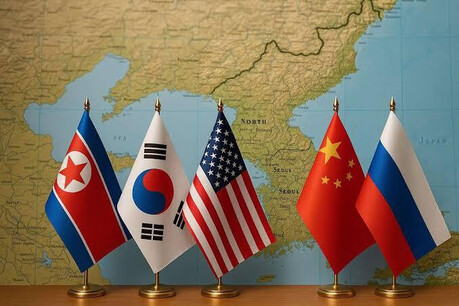


SEOUL — As major global powers realign their strategies ahead of an unprecedented three-way summit involving Washington, Beijing, and Moscow, South Korea and China held a timely bilateral meeting on November 18. In an era marked by deep geopolitical volatility, Seoul faces a delicate diplomatic balancing act: it must cement its core alliance with the United States while simultaneously cultivating robust cooperation with China, its vital strategic partner. Keeping channels of communication open with Beijing is crucial not only for curbing North Korea's nuclear ambitions but also for proactively managing flashpoints before they escalate.
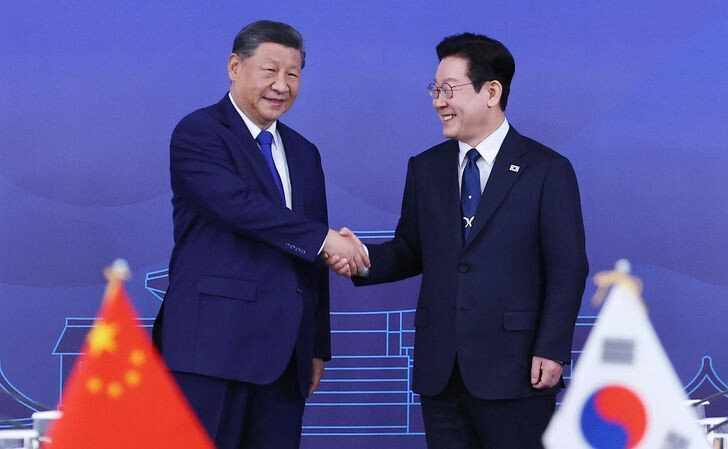
During their talks in Shenzhen, South Korean President Lee Jae-myung emphasized that sustainable growth in bilateral ties relies heavily on regional stability. "Peace and stability on the Korean Peninsula are prerequisites for our maturing partnership," President Lee noted, urging joint efforts to pioneer an era of peaceful coexistence. In reply, President Xi Jinping affirmed Beijing’s commitment to playing a constructive role, expressing backing for diplomatic tracks aimed at reducing tensions, including dialogue between Washington and Pyongyang. The encounter proved invaluable, allowing the two leaders to align perspectives on peninsular security on the eve of a high-stakes superpower summit.
Economic diplomacy also yielded tangible milestones as both governments declared the effective finalization of follow-up talks regarding services and investment under their bilateral Free Trade Agreement (FTA). Initiated back in 2018 to build upon the original 2015 FTA pact, negotiations had stalled for years before gaining fresh momentum following a leadership summit this past January. This breakthrough is anticipated to spur cross-border service industries and potentially ease lingering unofficial restrictions on Korean cultural exports, commonly referred to as the "Hallyu ban."
The diplomatic backdrop is rapidly evolving, fitting President Xi's frequent description of a "century-changing transformation." U.S. President Donald Trump has pushed regional allies like South Korea and Japan to take a harder line on containing Beijing, yet he frequently prioritizes transactional deals directly with China. With a trilateral summit incorporating Russia slated for the following day, middle-power nations like South Korea risk marginalization if exclusive, backroom diplomacy among superpowers becomes the norm.
Several underlying tensions continue to cast a shadow over Seoul-Beijing relations, most notably the prospective deployment of the U.S. Multi-Domain Task Force (MDTF) to the peninsula—a capability capable of neutralizing China's strategic missile tracking systems. Such a move threatens to trigger fallout far exceeding the diplomatic friction of the past THAAD missile crisis. To successfully navigate the friction between Washington and Beijing, South Korea must articulate transparent, principle-driven policies and communicate them clearly in terms that both sides can comprehend.
[Copyright (c) Global Economic Times. All Rights Reserved.]