![[등록] 2026-09-01 15:48:31](/support/_updata/banner2/tl181982910_6749.png)


SEOUL, SOUTH KOREA – In response to a series of recent sinkhole incidents that have raised public safety concerns, the Seoul Metropolitan Government has unveiled a comprehensive "Underground Space Management Innovation Plan." A key component of this initiative is the introduction of a sophisticated ground subsidence monitoring network capable of detecting subterranean shifts at depths of approximately 20 meters. This proactive measure aims to identify and mitigate the risk of large-scale sinkholes that could potentially lead to casualties.
The announcement, made on April 23rd, marks a significant shift in Seoul's approach to managing underground risks. Previously, the city's primary strategy relied on Ground Penetrating Radar (GPR) technology, which is effective for surveying depths of up to 2 meters. This focus stemmed from the initial assessment that leaks from aging water and sewage pipes, typically buried within 3 meters of the surface, were the primary cause of sinkholes. However, recent findings, as highlighted by Dong-A Ilbo, indicate that none of the significant sinkholes exceeding 10 meters in depth over the past decade were attributed to water pipe leaks. This revelation has underscored the need for monitoring deeper geological layers.
The new ground subsidence monitoring network will employ sensors strategically placed underground to provide real-time data on ground movement and potential instability. The pilot deployment of this advanced system will occur near the construction site of Subway Line 9 in the vicinity of the Myeongil-dong sinkhole incident in Gangdong-gu, which occurred near Daemyeong Elementary School on March 31, 2025.
In addition to the new monitoring network, the city will invest 1.5 billion KRW to bolster its existing GPR capabilities. The number of vehicle-mounted GPR units will be increased from four to seven, and the survey coverage area will be expanded from the current 30% of roads to 60%. This expanded coverage will also include priority inspection zones designated by local autonomous districts.
Furthermore, the Seoul Metropolitan Government has decided to make its "Ground Subsidence Safety Map" publicly accessible. This map, initially produced in 2024, was previously kept confidential, reportedly due to concerns about potential disruption to the real estate market. While initially described as a tool for predicting sinkholes, the city clarified that it primarily contains reference information on underground infrastructure. Acknowledging the public's right to know, the city will release the existing map in phases and plans to develop a new map with more precise and comprehensive data in the future.
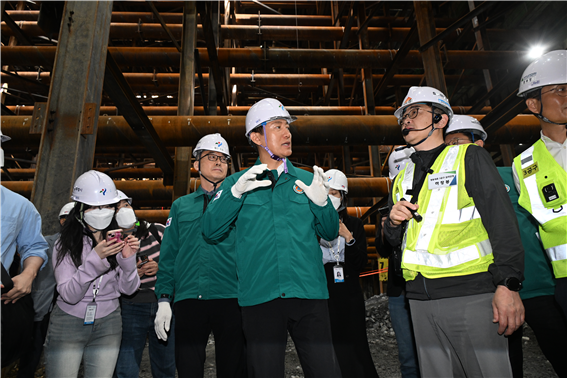
Highlighting the city's commitment to underground safety, Seoul Mayor Oh Se-hoon visited the Yeongdong-daero complex development construction site in Gangnam-gu on the same day. During his visit, he announced the establishment of a dedicated "Underground Safety Division" within the city government. The Seoul Metropolitan Council has also passed an amendment to relevant ordinances to strengthen underground safety management.
These measures represent a significant step forward in Seoul's efforts to proactively address the risk of sinkholes and ensure the safety of its citizens and infrastructure. By implementing advanced monitoring technologies and increasing transparency through the release of the "sinkhole map," the city aims to create a safer and more resilient urban environment. The integration of deeper ground monitoring acknowledges the complexity of sinkhole formation and signifies a commitment to a more data-driven and preventative approach to underground space management.
[Copyright (c) Global Economic Times. All Rights Reserved.]