• 2026.11.24 (Tue)
  • All articles
  • LOGIN
  • JOIN
Global Economic Times
한인동포뉴스(상단)
  • Synthesis
  • World
  • Business
  • Industry
  • ICT
  • Distribution Economy
  • Well+Being
    • Pet Life
    • Halal Horizon
  • Travel
  • Eco-News
  • Education
  • Korean Wave News
  • Opinion
  • Arts&Culture
  • Sports
  • People & Life
    • International Student Report
    • With Ambassador
  • Column
    • Cho Kijo Column
    • Cherry Garden Story
    • Ko Yong-chul Column
    • Kim Bong-seon's Photo Column
    • Kim Seul-Ong Column
    • Lee Yeon-sil Column
    • Professor Lee Soo-young’s Life Essays
  • Photo News
  • New Book Guide
MENU
 
Home > Well+Being

Early Dual-Drug Therapy Accelerates Cholesterol Reduction in High-Risk Heart Patients, Study Finds

Hannah Yeh Reporter / Updated : 2026-11-24 19:26:01
  • -
  • +
  • Print

SEOUL — Initiating treatment with a two-drug regimen rather than a single medication helps high-risk cardiovascular patients achieve aggressive cholesterol targets significantly faster, according to new clinical data presented at the American Heart Association (AHA) Scientific Sessions.

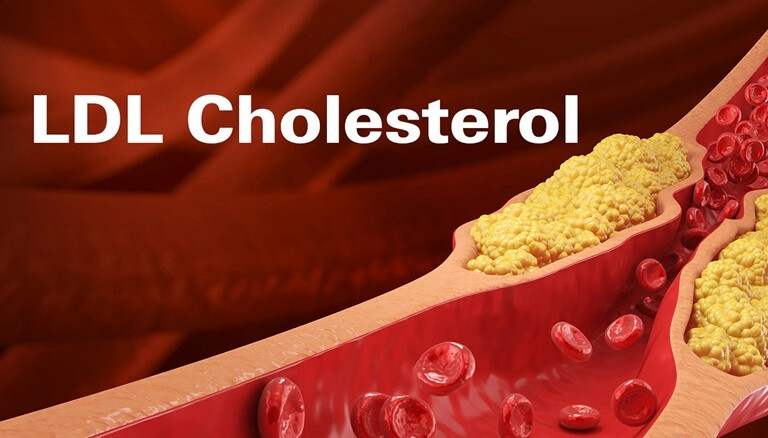
For individuals who have survived a heart attack or stroke, managing low-density lipoprotein (LDL) cholesterol is critical to preventing life-threatening recurrences. While medical guidelines have increasingly pushed for an aggressive LDL threshold of under 55 mg/dL, direct clinical evidence comparing this strict target against the traditional 70 mg/dL benchmark has been lacking—until now.

The multi-center 'Ez-PAVE' trial, conducted across 17 hospitals in South Korea, evaluated 3,048 patients with atherosclerotic cardiovascular disease over a three-year period. The findings confirmed that pushing LDL levels below 55 mg/dL cuts the risk of major cardiovascular events by 33% compared to the conventional target.

The Case for Combination Therapy

Reaching that lower threshold, however, remains a major clinical hurdle. Roughly 40% of patients assigned to the stricter target failed to achieve it, largely because doubling the dose of standard statin medications yields diminishing returns.

To overcome this, researchers split participants into two starting groups: 1,525 patients began therapy with a combination of a statin and ezetimibe, while 1,523 started on a statin alone. While statins curb cholesterol synthesis in the liver, ezetimibe blocks its absorption in the small intestine, offering a dual-action approach.

Within the first month, 44.3% of patients on the dual-drug regimen hit their LDL goals, more than doubling the 18.3% success rate seen in the single-drug group. Furthermore, patients starting on combination therapy required half as much high-intensity statin dosing and experienced fewer treatment adjustments, without any uptick in adverse side effects.

Interpreting Long-Term Outcomes

Despite the rapid early drop in cholesterol, the three-year rate of major cardiovascular events remained statistically similar between the combination group (8.5%) and the monotherapy group (7.9%).

Cardiologist Dr. Sang-hyup Lee of Severance Hospital, a co-investigator in the study, cautioned against viewing these long-term numbers as proof that initial drug selection does not matter. Because the trial required doctors to adjust medications continuously to hit target levels, nearly 30% of the single-drug group eventually had ezetimibe added to their regimen, narrowing the final LDL gap between the two groups to just 8 mg/dL.

"The study was originally powered to compare LDL targets, not to detect subtle differences between starting medications," Dr. Lee noted, adding that larger, longer-term studies across diverse populations are still warranted.

Implications for Real-World Care

Medical experts anticipate that the Ez-PAVE findings will prompt updates to South Korea's clinical guidelines, reinforcing the sub-55 mg/dL benchmark and encouraging earlier adoption of combination therapies.

Dr. Lee emphasized that the benefits of starting with two drugs are even more pronounced outside of a clinical trial setting. In everyday medical practice, patients are tested less frequently, and physicians often hesitate to escalate therapy promptly when targets are missed. For high-risk patients—such as those recovering from acute myocardial infarction or managing diabetes—starting with a dual-drug approach offers a much more dependable path to protecting long-term heart health.

[Copyright (c) Global Economic Times. All Rights Reserved.]

  • #Cherry Garden
  • #HalalFood
  • #Halal
  • #Petlife
  • #Cats
  • #Dogs
  • #Halalhorizone
  • #Hormuz Impasse
  • #Joseon
  • #globaleconomicti
Hannah Yeh Reporter
Hannah Yeh Reporter

Popular articles

  • Apple Unveils New 8.5-inch iPad Mini with OLED Display and Water Resistance

  • The Hidden Power of Cucumbers: Low in Calories and Great for Detox

  • A Cup of Black Tea Every Day Reduces the Risk of Heart Disease? 6 Health Benefits Backed 

I like it
Share
  • Facebook
  • X
  • Kakaotalk
  • LINE
  • BAND
  • NAVER
  • https://globaleconomictimes.kr/article/1065608667700898 Copy URL copied.
Comments >

Comments 0

Weekly Hot Issue

  • EU Targets Russian Sports and Finance in New Sanctions Push Amid Hybrid Threats
  • Global Classrooms Draw the Line on Generative AI: From Strict Bans to Guided Use
  • Trump and Vance Orchestrate Behind-the-Scenes Push to Reinstate Nvidia CEO Jensen Huang
  • Macron Blames 'Far-Left Subversion' for Protests, Yet Critics Point to a Broken Political Dialogue
  • Taiwanese Markets and Chipmakers Rally on Jensen Huang’s Return, Though Regulatory Headwinds Loom
  • Delivery Apps, Inflation, and Weight-Loss Drugs Squeeze U.S. Pizzerias as Over 9,600 Stores Close

Most Viewed

1
South Korea and Ethiopia Sign Trilateral MOU to Introduce Liquid-Based Cytology (LBC) Technology for Cervical Cancer Diagnosis
2
South Korean Burger Chain Lotteria Expands Singapore Footprint with Halal Certification and New Teriyaki Lineup
3
AI Semiconductor Stocks Plummet: Philadelphia Index Drops 5.28% and Micron Plunges 7.59% Amid Executive Shakeup and Export Restrictions
4
"Stay Out, Get Paid, or Have Police Stay With You": Shenzhen Imposes Strict Security Ahead of APEC Summit
5
Taiwan Bans Short-Selling Below Previous Close Starting Nov. 23, Raises Margin Ratio to 150%
체리가든 스토리
nutri huevos
로타리
동포저널

Hot Issue

Inside the 11-Day Blitz: How the White House and Tech Titans Engineered Jensen Huang’s Nvidia Comeback

Quiet Power Behind the Chip Giant: Lori Huang Co-Steers $109 Billion Nvidia Fortune Amid Company Turmoil

Fading Hype and Ethics Scrutiny Shadow Trump’s Second Meme Coin Gala

Fashion Runway Show 2026

Let’s recycle the old blankets in Jeju Island’s closet instead of incinerating them.

Global Economic Times
korocamia@naver.com
CEO : LEE YEON-SIL
Publisher & Editor : KO YONG-CHUL
Registration number : Seoul, A55681
Registration Date : 2024-10-24
Youth Protection Manager: KO YONG-CHUL
Singapore Headquarters
5A Woodlands Road #11-34 The Tennery. S'677728
Korean Branch
Phone : +82(0)10 4724 5264
#304, 6 Nonhyeon-ro 111-gil, Gangnam-gu, Seoul
Copyright © Global Economic Times All Rights Reserved
  • News K
  • 반달곰 프로젝트
  • 광고문의
Search
Category
  • All articles
  • Synthesis
  • World
  • Business
  • Industry
  • ICT
  • Distribution Economy
  • Well+Being 
    • 전체
    • Pet Life
    • Halal Horizon
  • Travel
  • Eco-News
  • Education
  • Korean Wave News
  • Opinion
  • Arts&Culture
  • Sports
  • People & Life 
    • 전체
    • International Student Report
    • With Ambassador
  • Column 
    • 전체
    • Cho Kijo Column
    • Cherry Garden Story
    • Ko Yong-chul Column
    • Kim Bong-seon's Photo Column
    • Kim Seul-Ong Column
    • Lee Yeon-sil Column
    • Professor Lee Soo-young’s Life Essays
  • Photo News
  • New Book Guide
  • Overseas Koreans
  • Multicultural News