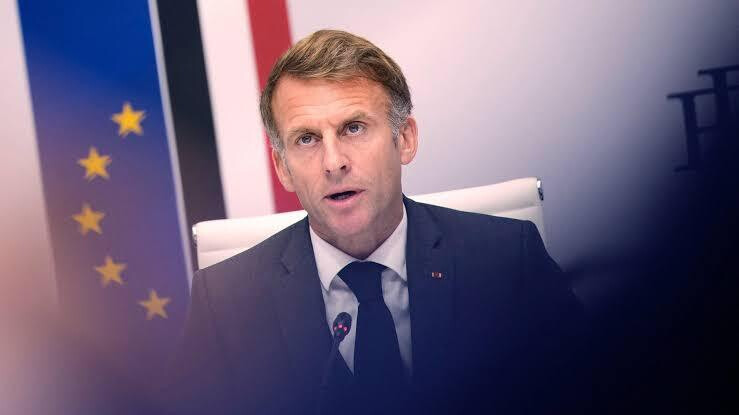
PARIS — Six weeks into nationwide demonstrations marked by arson, looting, and clashes with police, French President Emmanuel Macron has pointed the finger at "far-left elements" and juvenile delinquents, accusing them of attempting to dismantle the French Republic. However, as the Elysee Palace doubles down on law-and-order rhetoric, critics argue the government is willfully ignoring the systemic breakdown of democratic channels that drove citizens to the streets in the first place.
While street violence dominates headlines, political observers warn that reducing the crisis to mere criminality misses the mark. For many protesters, the absence of viable institutional avenues to air grievances has transformed radical disruption into a perceived last resort. Paradoxically, while Macron has urged disgruntled citizens to express their will at the ballot box in the next presidential election, he is constitutionally barred from seeking a third consecutive term—leaving him insulated from the very electoral accountability he prescribes.
Voices from the Streets: Fear of Stagnation Outweighs Arrest
In recent field reports from the demonstrations, participants utilizing "Black Bloc" tactics—a decentralized protest method involving black clothing and masks to evade police identification—rejected the government's narrative of a centrally orchestrated insurrection.
"The Black Bloc is a tactic, not an organization," said a 17-year-old participant going by the pseudonym Starflix, noting that the crowds include both ideological reformers and opportunistic looters. "I want a revolution and government reform. The thought that society will never change is far more terrifying than getting injured or arrested."
For youth from France’s marginalized outer suburbs, known as the banlieues, the unrest is rooted in daily exclusion. Nas, an 18-year-old protester, cited chronic teacher shortages and systemic barriers to employment. "Without violence, nothing gets achieved," he said. "It is the only way to make our voices heard."
Even activists who distance themselves from property destruction share a deep disillusionment with the state. One anonymous activist questioned the government's priorities, contrasting broken storefront windows with police deploying stun grenades against student protesters amid a cost-of-living crisis. Another longtime local organizer, 39, expressed shock at a town hall fire yet condemned the deployment of military-style vehicles against youth. "We grew up learning the values of liberty, equality, and fraternity, yet the current social inequality is sickening," the organizer said, adding that activists are bound together not by formal leadership—even rejecting ties to Jean-Luc Mélenchon’s hard-left La France Insoumise (LFI) party and traditional unions—but by shared anger.
French intelligence estimates the country's hardcore far-left contingent at roughly 5,000 individuals. Michel Klein, a former police official, dismissed the notion of an existential coup, noting that while anarchists and far-left radicals may harbor the desire to topple the state, they entirely lack the capacity to do so.
Closed Channels and Frontline Fallout
Sociologists studying social movements have long noted that when institutional outlets for dissent are sealed off, collective action inevitably radicalizes. Critics contend that the Macron administration has consistently sidelined intermediary bodies, such as labor unions and civic organizations, while failing to translate mass petitions and national debates into tangible policy.
Rather than engaging local authorities or union leaders, the state's response has centered on aggressive policing, administrative surveillance banning certain activists from protesting, and systematic prosecutions. Tensions escalated further when the government accused some high school staff of acting as "accomplices" to student protesters, while the Education Ministry halted the public release of data tracking school blockades.
Consequently, educators have been left to manage the fallout on the front lines. School principals and teachers are simultaneously juggling remote learning, student mediation, and police coordination. To date, 245 school staff members—including 81 principals—have been injured, prompting the principals' union to demand concrete state backing rather than abandonment.
A Political Vacuum
The crisis is compounded by a broader crisis of representation. Twice elected via the "Republican Front"—a coalition aimed at blocking the far right—Macron has governed with increasingly right-leaning policies, alienating his broader electorate and inadvertently strengthening extremist factions.
French political scientist Julien Talpin attributes this malaise to a wider "de-ideologization" of mainstream politics. Unlike past eras defined by clear ideological clashes over the welfare state and economic models, contemporary mainstream parties offer few distinct policy alternatives, breeding voter apathy.
As a result, existential debates over pension reform, labor hours, social security, and climate change remain unresolved. Whether next April’s presidential election can mend the social fabric remains doubtful. Writing in Le Monde, Talpin warned that leaving the underlying political structure intact while simply handing universal suffrage to a new "savior" will fail to heal a deeply fractured nation.
[Copyright (c) Global Economic Times. All Rights Reserved.]