![[등록] 2026-09-01 15:48:31](/support/_updata/banner2/tl181982910_6749.png)


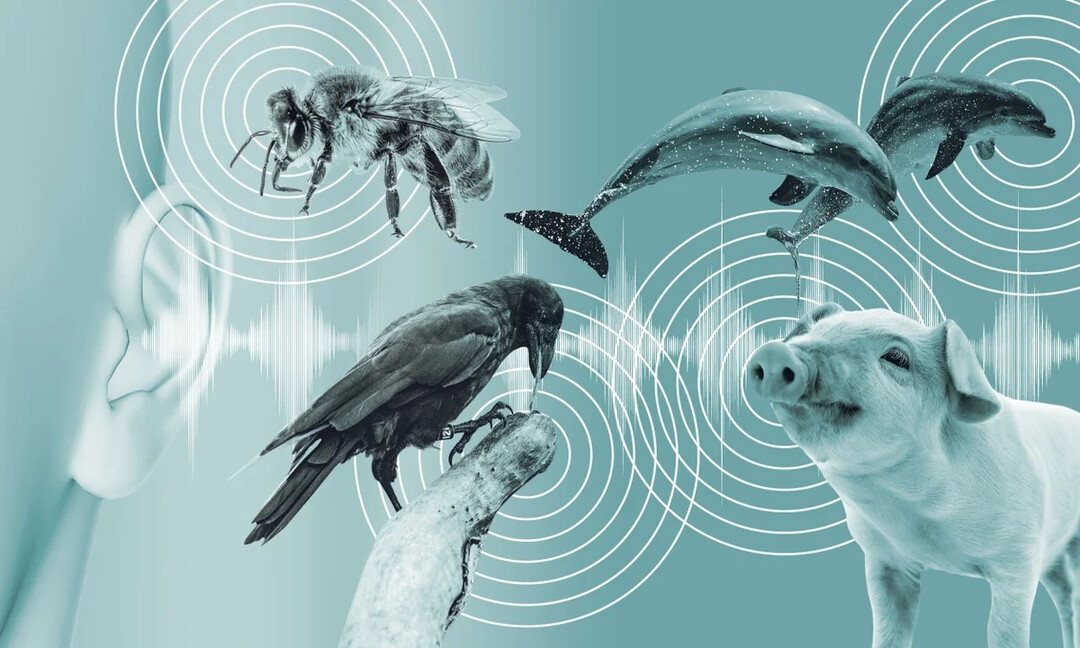
Imagine a world where you could finally understand exactly what your dog is trying to tell you when it barks while wagging its tail. This seemingly fantastical dream—long confined to the realms of children’s fiction like Doctor Dolittle—is rapidly shifting into the realm of scientific reality, thanks to the explosive advancements in artificial intelligence.
Decoding the Songs of Birds
The progress in this field was recently underscored by the awarding of the "Koller-Dolittle Prize for Interspecies Communication" to Dr. Julie Elie of the University of California. The $100,000 prize, established in 2024, honors research that bridges the communication gap between species.
Dr. Elie’s groundbreaking work focused on the zebra finch, a songbird whose vocalizations have long intrigued scientists. By utilizing machine learning algorithms to process over a decade of recorded bird calls, Dr. Elie successfully identified 11 distinct "core" vocalizations. Her research reveals that these finches use individual-specific signals to identify one another and communicate their identities and behavioral intentions. This systematic breakdown of bird song highlights how AI can act as a modern-day "Rosetta Stone," deciphering the complex codes of the natural world just as the original tablet unlocked ancient Egyptian hieroglyphs.
The Linguistic Patterns of Sperm Whales
The application of AI extends far beyond small songbirds. In the vast, deep oceans, researchers are making significant strides in understanding the communication patterns of sperm whales. These massive marine mammals communicate through rhythmic clicking sounds known as "codas."
By applying machine learning to these clicks, scientists have discovered that sperm whales modulate the rhythm, duration, and pitch of these sounds to distinguish "vowels," mirroring phonetic structures found in human languages like Mandarin and Latin. To overcome the difficulty of recording in the deep ocean, researchers have developed specialized sensors attached to the whales' skin. These devices collect high-quality acoustic and behavioral data even at depths of over 1.6 kilometers, providing the raw material necessary to train advanced AI models.
Project leads suggest that we are no longer in the era of "absurdist thinking" regarding whale communication. While current progress allows us to understand only a few phrases—comparable to the level of a two-year-old toddler—researchers anticipate that within a few years, we may reach a level of comprehension and interaction equivalent to that of a five-year-old child.
The Rise of ‘NatureLM-Audio’
A pivotal player in this field is the "Earth Species Project," which began in 2017. The team recently achieved a significant milestone by developing "NatureLM-Audio," a Large Language Model (LLM) designed specifically to analyze and explain animal vocalizations. What sets this model apart is its capability to be applied even to animal species that have never been previously studied.
Aza Raskin, the leader of the project, emphasized the transformative potential of these tools. "Once we have sufficient data, AI models will go beyond mere decoding," Raskin noted. "They will be capable of generating coherent responses that we can send back to the animals."
A New Era of Connection
For decades, scientists have accumulated massive archives of animal sound data but lacked the computational tools and time to analyze them effectively. AI has shattered these limitations, acting as a bridge between the biological complexities of the animal kingdom and human linguistic frameworks.
As we stand on the cusp of this technological frontier, the implications are profound. If we successfully establish bidirectional communication with other species, it will fundamentally redefine our relationship with the natural world. While we are still in the early stages of this journey, the marriage of machine learning and zoology suggests that a future of "talking to the whales" may soon be more than just a dream—it may be our new reality.
[Copyright (c) Global Economic Times. All Rights Reserved.]