![[등록] 2026-09-01 15:48:31](/support/_updata/banner2/tl181982910_6749.png)


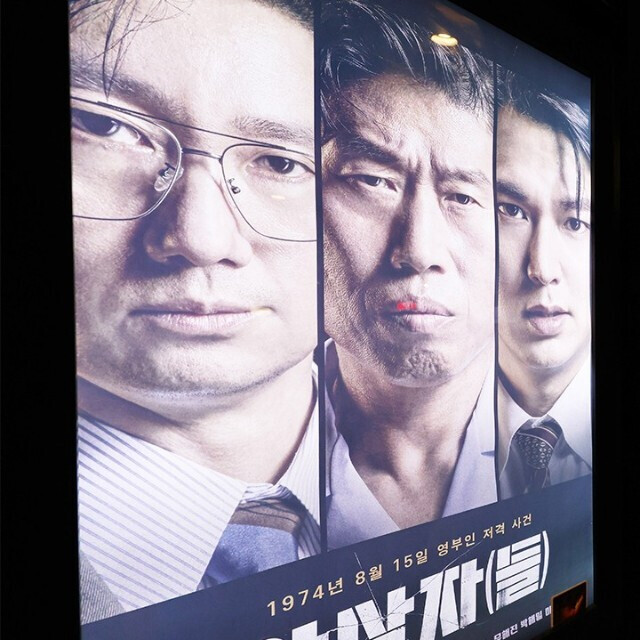
Controversy over historical distortion surrounding the film The Assassin(s), which deals with the shooting of First Lady Rhee Yung-soo, is spreading to the cancellation of film events and personal attacks against the actors.
While voices in the film industry are emerging asking people to stop slandering creators such as actors and production teams, criticisms are also being raised that this situation reflects the recent extreme conflicts within South Korean society.
◇ Was the KCIA Behind the Shooting of Rhee Yung-soo?… People Power Party Criticizes for "Historical Distortion"
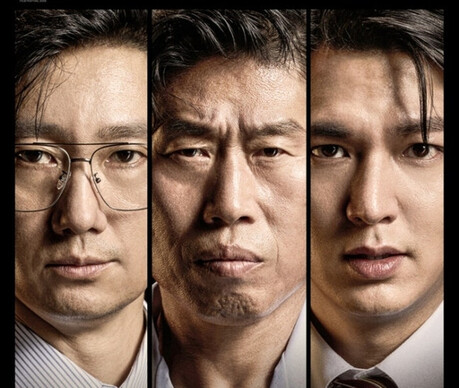
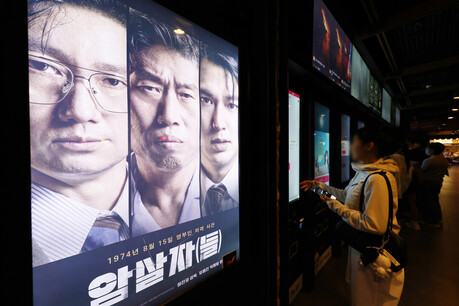
Released on the 23rd of last month, the film The Assassin(s) is based on the actual 1974 incident in which First Lady Rhee Yung-soo was killed by a bullet during Zainichi Korean Mun Se-gwang's attempt to assassinate President Park Chung-hee.
Using the true story as a foundation and applying imagination, the production team structured the story around people pursuing the truth behind the First Lady's shooting incident. It follows detective Chul-gu (played by Yoo Hae-jin), who considers the colleague taking the blame for the incident to be wronged, along with newspaper social affairs editor Jae-hwan (Park Hae-hee) and rookie reporter Young-il (Lee Min-ho), as they dig into the reality of the case.
Based on doubts announced by the investigation headquarters, the characters in the play dig into the possibility of accomplices. The characters go as far as hypothesizing that the Korean Central Intelligence Agency (KCIA) might have been behind it, based on diplomatic relations with Japan at the time.
In response, political circles including the People Power Party criticized the film, claiming it distorted historical facts through a conspiracy theory that former President Park Chung-hee planned the assassination. The Park Chung-hee Presidential Memorial Foundation and the Rhee Yung-soo Memorial Association demanded that the film's screening be halted.
The production team stated, "This is not a film produced to newly establish a specific historical conclusion or to deny and distort existing facts," adding, "We ask that you view the work purely as a product of creation."
Director Hur Jin-ho, who directed the work, explained in several interviews that he did not assume former President Park Chung-hee was behind the incident.
◇ Box Office Slumps Amid Intensified Controversy… Malicious Comments on Actors' SNS and Cancellation of Film Events
The controversy has affected the film's box office performance.
During the Chuseok holiday period (September 24–27), The Assassin(s) attracted about 1.407 million viewers, beating out Tazza: Beelzebub's Song and Odyssey to take the top spot. However, its pace of drawing audiences slowed down afterwards, temporarily losing first place in the daily box office to Tazza: Beelzebub's Song.
The daily average number of viewers plummeted by about 80% from approximately 351,000 during the Chuseok holiday period to about 64,000 (September 28–October 2) after the controversy erupted in political circles. This is a sharp decline even considering the difference between holidays and weekdays.
CGV's Egg Index, based on actual audience ratings, dropped from 95% on opening day to 90% as of the 3rd. Online, criticism grew fierce, pushing the Naver netizen rating down to 2.6 out of 10.
The repercussions even spread to the participating actors.
Protesting comments continued to pour in on YouTube advertisement videos of fast-food brands and securities firms featuring Yoo Hae-jin as a model. Currently, the comment sections for these videos have been closed.
The controversy expanded as malicious comments continued to flood the social media accounts (SNS) of not only cast members such as Lee Min-ho and Ryu Hye-young, but also actors who left recommendation reviews for The Assassin(s).
Consequently, production company Hive Media Corp canceled film-related events citing the safety of attendees.
Yoo Hae-jin and Lee Min-ho decided not to attend the opening ceremony of the 31st Busan International Film Festival on the 6th, and the outdoor stage greeting event for The Assassin(s) scheduled to be held at the film festival on the 7th fell through. The film festival's talk program 'Actors House,' which Lee Min-ho was scheduled to participate in on the same day, was also canceled.
It was also decided not to proceed with the stage greetings for The Assassin(s) planned for the 3rd to 5th to mark the second weekend of release.
The Busan Film Commission canceled the public screening of The Assassin(s) scheduled for the 5th. The commission explained that it comprehensively considered the recent situation of the work, stating that this "does not mean judgment or support for the content of the work or a specific position surrounding it."
◇ Film Industry Urges: "Stop Slandering and Threatening Creators"… Criticisms Point Out It Reflects "A Society with Deepened Conflicts"
Film industry organizations successively raised their voices asking people to refrain from criticizing creators. The controversy is overheating as the criticism extends to personal identities such as actors' faces, and a conservative group announced it would hold a rally in front of Yoo Hae-jin's home.
The Producers Guild of Korea (PGK) stated, "Just as diverse interpretations exist for historical events, it is natural for films themed on historical events to allow for diverse interpretations and receive evaluations accordingly." However, they added, "We express serious concern as the current debate is spreading beyond criticism of the work itself into threats against those who participated in film production, including production companies, directors, actors, and staff."
They appealed, "Please stop slandering and threatening individuals involved in the film, discussing their privacy, and threatening their personal safety and livelihoods."
The Cinematographers Guild of Korea (CGK) also expressed concern, saying, "All thoughts you felt after watching the work are precious. Empathy, disappointment, and different perspectives are all part of meaningful dialogue surrounding a film." They added, "If that dialogue goes beyond the work to target creators and individual actors, or if audience evaluations cannot be conveyed as they are, we worry that it might become slightly more difficult for creators to take on new stories in the future."
Comparisons are also being drawn with controversies surrounding the black comedy film The President's Last Bang (2005), which dealt with the assassination of President Park Chung-hee, with some pointing out that the extreme conflict patterns of recent Korean society are faithfully reflected in this current controversy.
While The President's Last Bang became embroiled in legal disputes over defamation of the deceased due to scenes in the movie where the president showed a fondness for women and frequently used Japanese, back then it did not affect the personal lives or other activities of the actors.
In contrast, conflicts surrounding a single film, including The Assassin(s), are intensifying. Actress Jung Yu-mi was criticized for inciting "misandry" simply for appearing in the film Kim Ji-young, Born 1982 (2019), and singer Na-ul posted a poster for The Birth of Korea (2024)—a film dealing with the life of President Syngman Rhee—on SNS, only to face numerous malicious comments and end up blocking the comment feature.
A film industry official noted, "It seems there was no such behavior of attacking the actors appearing in the movie when The President's Last Bang was released," adding, "Regardless of the merits or faults of the film, situations where people mutually criticize and conflict seem to be intensifying."
[Copyright (c) Global Economic Times. All Rights Reserved.]