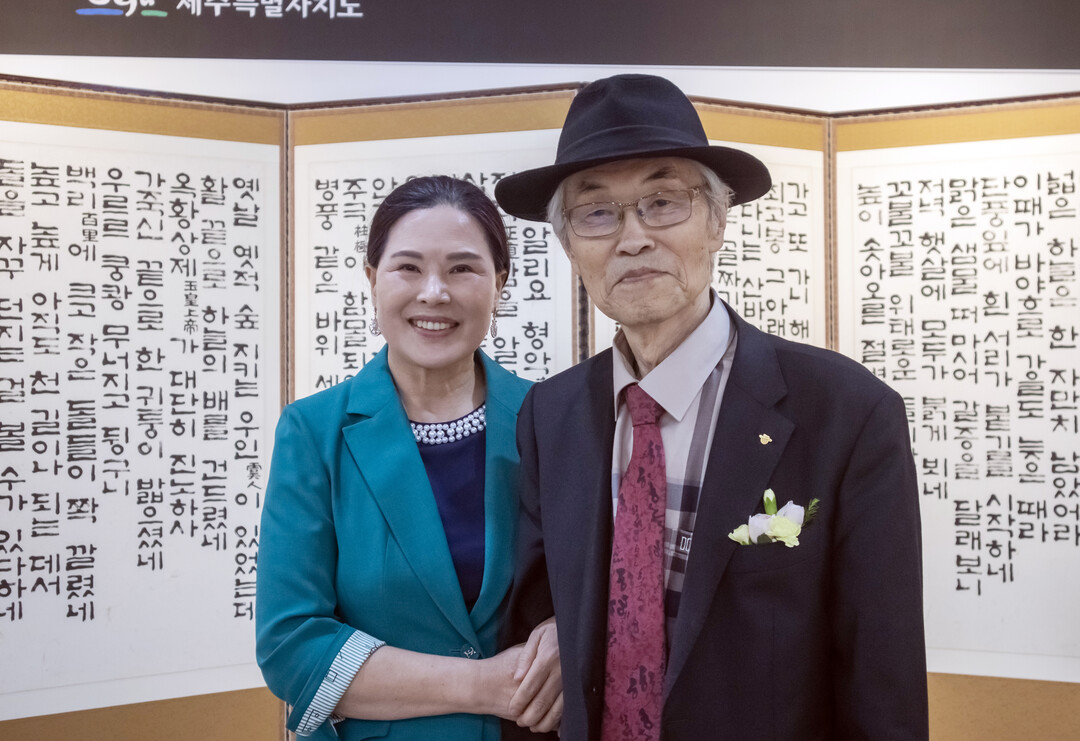
Like a daffodil blooming through the white snow, there is a calligrapher who has carved the texture of life with the tip of her brush. She is Gyeolgot Kim Su-ae, who has walked the path of Hangeul calligraphy for over 45 years since taking her first steps in 1980. Her artistic journey, which began with a fateful encounter with her teacher, Hangol Hyun Byeong-chan, has deepened through the realms of scholarship and art, culminating in a Ph.D. in Korean language and literature and her role as a university research professor. We meet her for a special journey into her artistic world and life’s story—breathing life into forgotten Jeju dialects and conveying the profound spirit of our written language beyond the canvas.
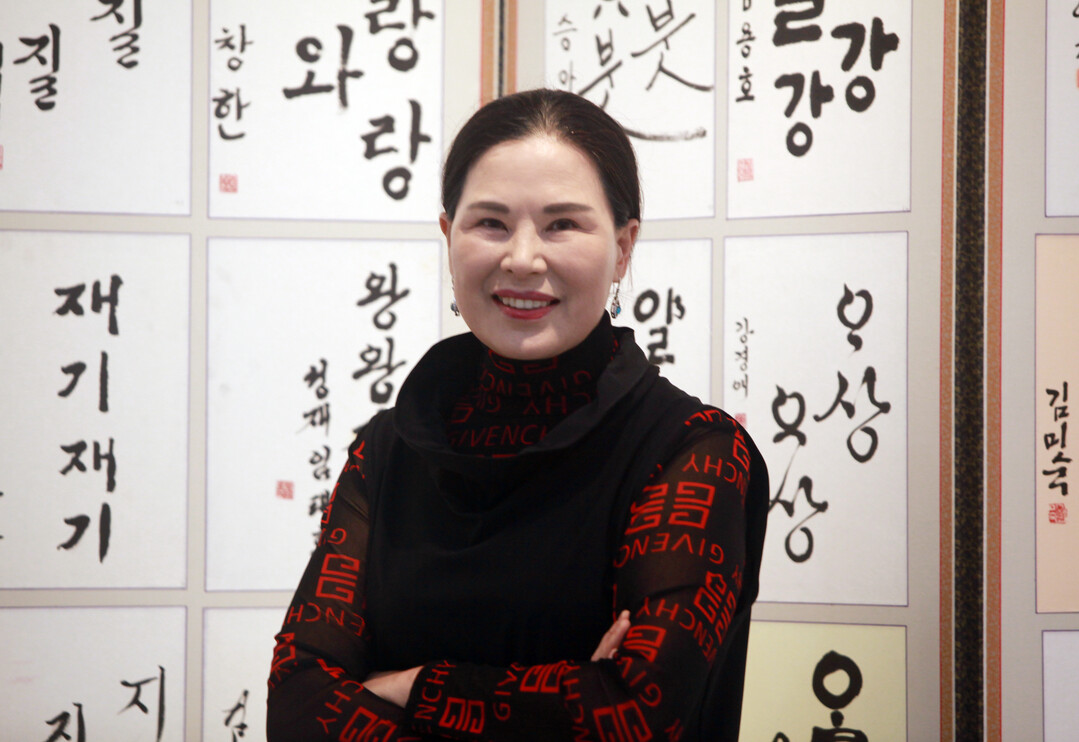
Q1. Calligraphy is an art of writing letters, but at the same time, it is an art of expressing the meaning and spirit contained within them. What does calligraphy mean to you, and when did it become such an important part of your life?
To me, calligraphy is not merely the skill of writing characters; it is an art that records life and expresses the human spirit. I believe that the tip of the brush holds the artist’s heart, character, lived experiences, and philosophy of looking at the world. Having first picked up a brush in 1980, I have been walking alongside calligraphy for over 45 years. It began simply with the joy of learning how to write, but meeting my teacher, Hangol Hyun Byeong-chan, opened my eyes to the depth and infinite possibilities of Hangeul calligraphy.
Beginning serious studies under him in 1984, calligraphy became the center of my life. In particular, in 1992, I co-founded the Hangol Hangeul Calligraphy Society, which was reorganized into the Korea Hangeul Calligraphy Love Association in 2001. Serving as its general secretary until 2006, I poured a tremendous amount of time and effort into the development of Hangeul calligraphy. Looking back, calligraphy has been both an art and a scholarship for me—a pathway to meeting people and communicating with the world. Even now, every time I pick up the brush, I remember the excitement of the very first time I held it. Calligraphy is an inseparable part of my life that I can never put down, and a path I will continue to walk in the future.
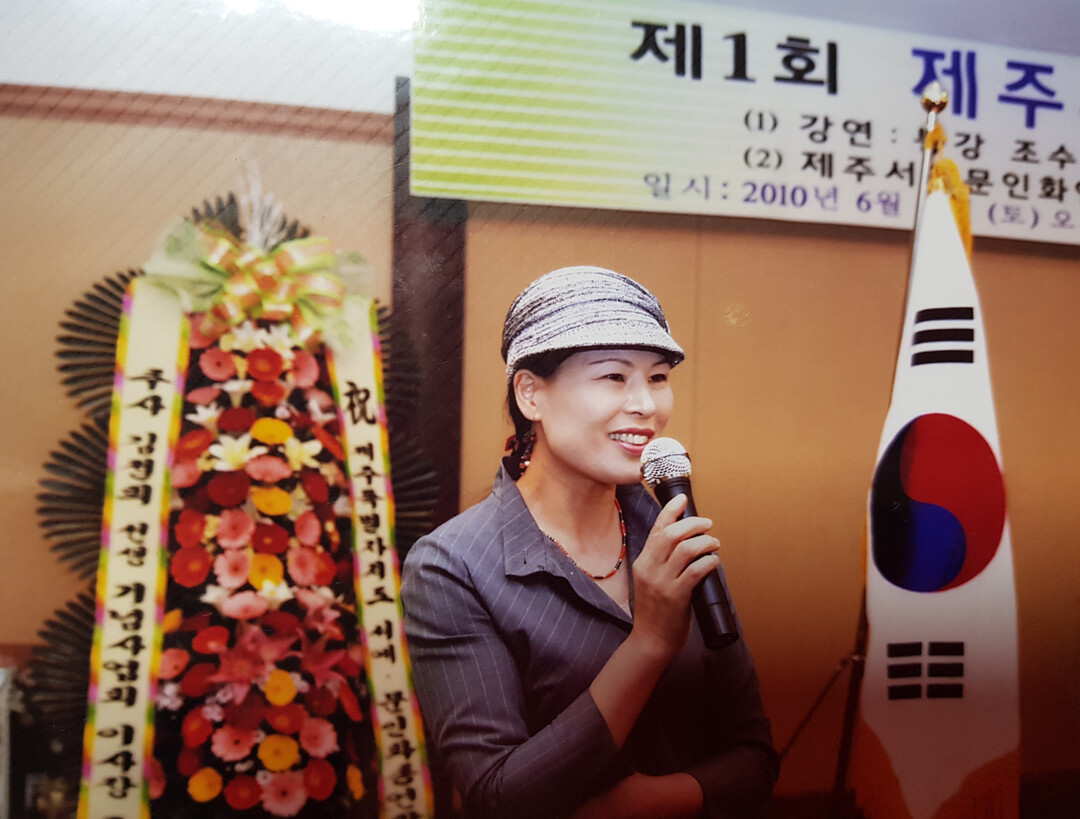
Q2. Amidst countless scripts and modes of expression, what was the decisive turning point that shaped your current artistic world?
The most decisive influence in shaping my artistic world was my teacher, Hangol Hyun Byeong-chan. He taught me that Hangeul calligraphy should not stop at writing Hangeul beautifully, but must become an independent art form that embodies the spirit and culture of our people. Initially, I focused on mastering basic brush techniques and traditional scripts, but I gradually awakened to the formative beauty and expressive potential inherent in Hangeul.
In particular, his teaching that true Hangeul calligraphy requires an understanding not only of the visual shapes of letters, but also of the historical background and linguistic meaning behind their creation, became a major turning point for me. Prompted by those words, I studied calligraphy culture to earn my master's degree, and later pursued a Ph.D. in Korean language and literature at Jeju National University. This academic research laid the foundation for me to deeply understand and accurately express the characters in my work. I believe my unique artistic direction lies in preserving the spirit of tradition while adding modern formative sensibilities, capturing the regional identity of Jeju and the beauty of our native tongue.
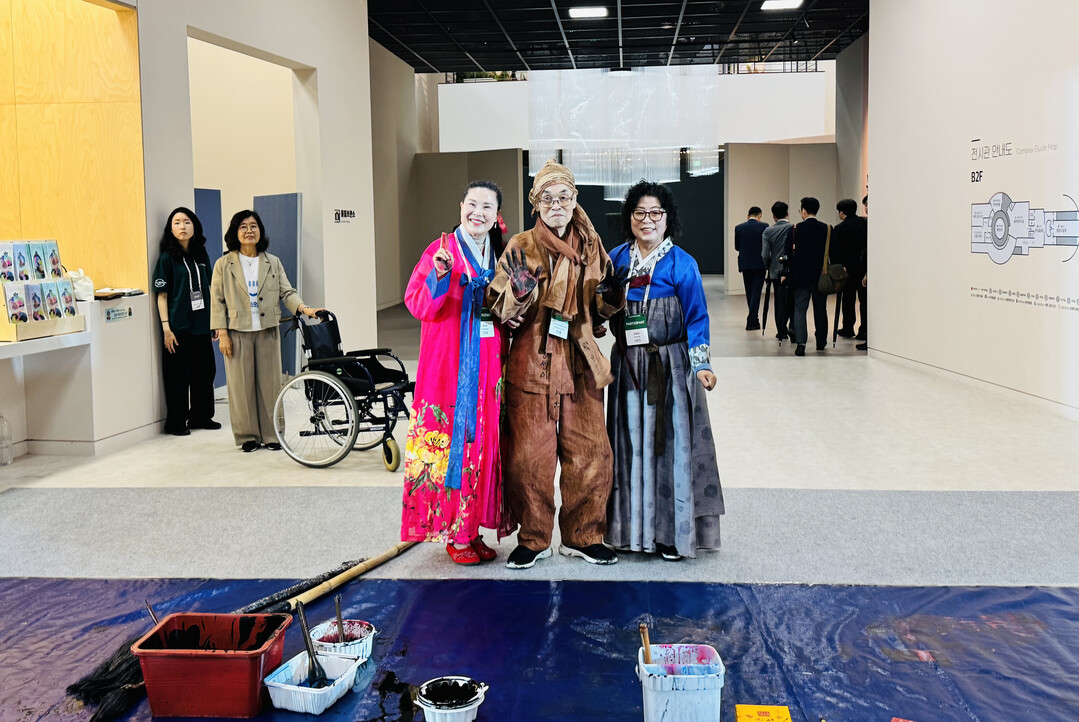
Q3. I understand you are active in the Jeju Special Self-Governing Province Hangeul Calligraphy Love Association. Could you introduce the association along with your mentor?
The Jeju Special Self-Governing Province Hangeul Calligraphy Love Association is a community dedicated to studying, inheriting, and artistically developing the beauty and value of Hangeul, rooted in the Hangeul calligraphy spirit and teachings of Hangol Hyun Byeong-chan. My teacher devoted his entire life to researching Hangeul calligraphy and nurturing future generations, leaving a monumental footprint in developing Hangeul into an independent artistic realm.
Many disciples, including myself, have inherited those teachings and are active on national stages. Through this association, I hope that Hangeul calligraphy will develop into an art that preserves the identity of our culture. In particular, by expressing the Jeju dialect and the lives of Jeju people through Hangeul calligraphy, I want to contribute to creating unique cultural and artistic content native to Jeju. The Hangeul Calligraphy Love Association is my artistic root and a precious community to which I have dedicated my youth and passion.
I began learning calligraphy from teacher Hangol Hyun Byeong-chan in 1984, and in 1992, I helped found the Hangol Hangeul Calligraphy Society under his leadership, serving as general manager. Later, when it transitioned into the Korea Hangeul Calligraphy Love Association in 2001, I served as general secretary until 2006, taking charge of organizational operations and administrative affairs for about 18 years. From 2007 to the present in 2026, I have been serving as the vice chairperson. Back then, exhibition spaces and administrative systems were not as well-established as they are today, so everything—from managing members, receiving artworks, operating competitions, preparing for evaluations, to domestic and international exchanges—had to be handled directly by running around on foot.
Preparing for Hangeul calligraphy competitions and various international exchange events often meant pulling all-nighters, and there were times I shed tears over my teacher’s stern reprimands. However, through that process, I learned responsibility, drive, and how to lead an organization. Looking back now, all those moments were precious lessons that helped me grow. Our association has strived to inherit teacher Hangol’s spirit of Hangeul calligraphy, widely promote the beauty and value of Hangeul, and develop Hangeul calligraphy into a global art and culture.
In particular, it is deeply meaningful that our competition is celebrating its 25th Hangeul Love Calligraphy Competition this year. As someone who has been with it since its founding days, I take great pride in having witnessed its history up close. I hope that Hangeul calligraphy will continue to be loved across generations and evolve into a new artistic arena that embraces even the Jeju dialect and Jeju culture.
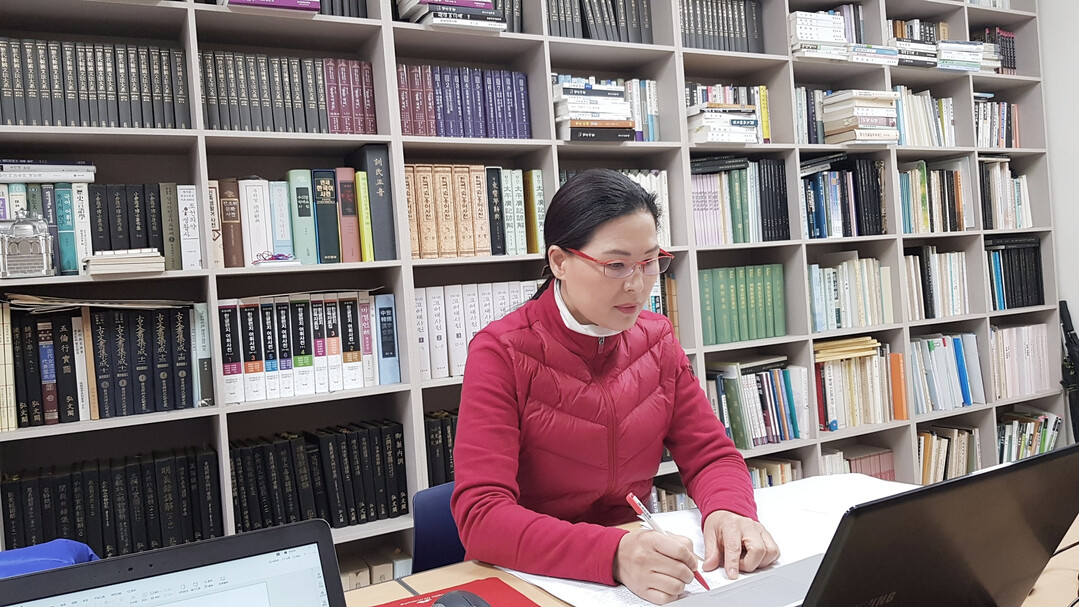
Q4. You use the pen name ‘Gyeolgot’ for your work. What meaning and artistic aspirations are embedded in this name?
‘Gyeolgot’ is the pen name given to me by my teacher, Hangol Hyun Byeong-chan. He found its meaning in the Jeju daffodil. One day, the teacher told me that daffodils are flowers that bloom by piercing through the white snow, and urged me, “No matter how cold it is and how high the snow piles up, break through it and bloom,” giving me the pen name Gyeolgot. I still cannot forget those words. I couldn’t sleep for several nights after receiving that name, feeling such overwhelming excitement and joy that I couldn't contain it. It made me realize right then that picking up the brush was the right choice. I take it as a directive to maintain my own artistic spirit and dignity amidst any hardship, just like the daffodil that blooms without losing its beauty and fragrance even in the snow.
I wanted to imbue ‘Gyeolgot’ with my life and artistic aspirations. Rather than comparing myself to others or seeking flashy recognition, I want to be an artist who cultivates her own inner texture (gyeol) over a long time and communicates with the world through that texture. Expressing the natural textures of the island of Jeju, the textures of people's lives, and the texture of the spirit contained in our language and writing is also an important goal of mine. To bloom quietly like a daffodil yet leave a lasting fragrance—that is the image of Gyeolgot I aspire to be.
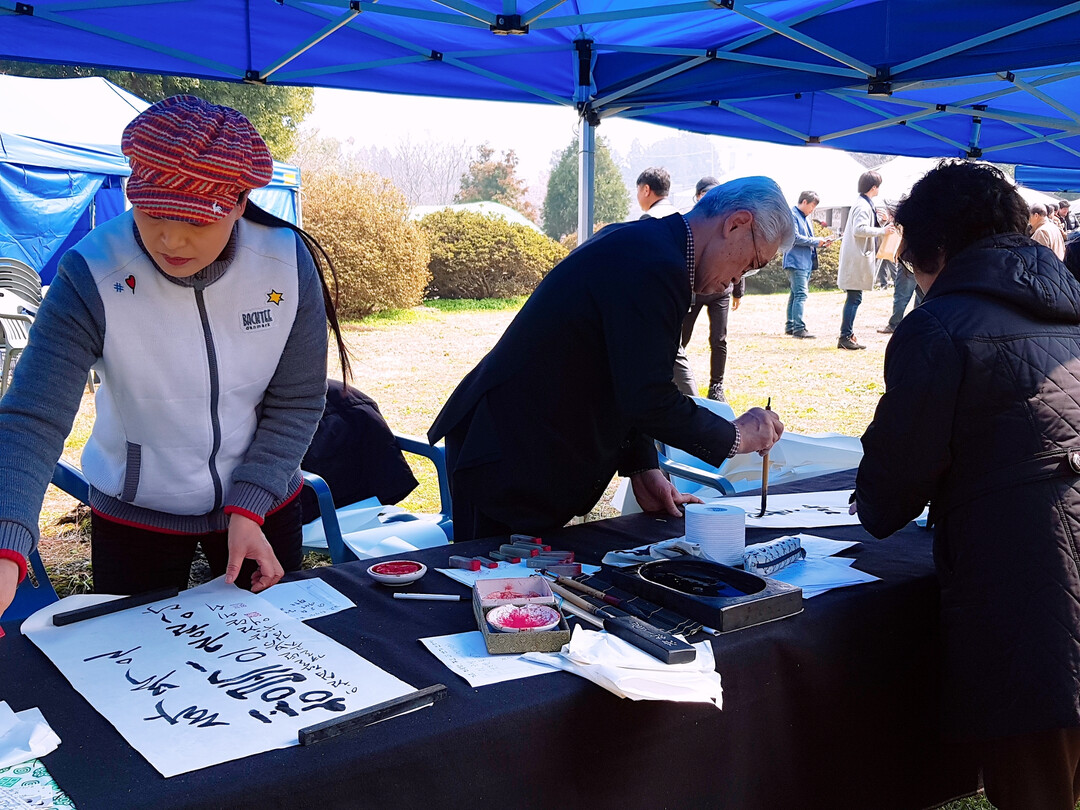
Q5. Among the works you have created so far, which one do you think reveals your true self most honestly, and what story does that work hold?
I believe that works utilizing the Jeju dialect reveal my identity most honestly. The Jeju dialect holds the lives and history of Jeju people, wisdom regarding nature, and the spirit of community completely intact. In particular, the Jeju dialect used in daily life by our parents' generation and elders holds a deep emotion and philosophy of life that the younger generation may not yet fully understand. While studying Korean language and literature, I have researched the linguistic value and historical significance of the Jeju dialect, and I have taken a deep interest in expressing this through calligraphy and lettering.
I believe that a single phrase of the Jeju dialect written in Hangeul can become a childhood memory for someone, a longing for home for another, and a realization for others that we must protect our disappearing native tongue. Therefore, to me, Jeju dialect works serve as cultural records that capture the lives of Jeju people and breathe new life into a vanishing language. Moving forward, I want to reinterpret Jeju proverbs, folk songs, myths, and histories of daily life into artworks to build an artistic world unique to Jeju.
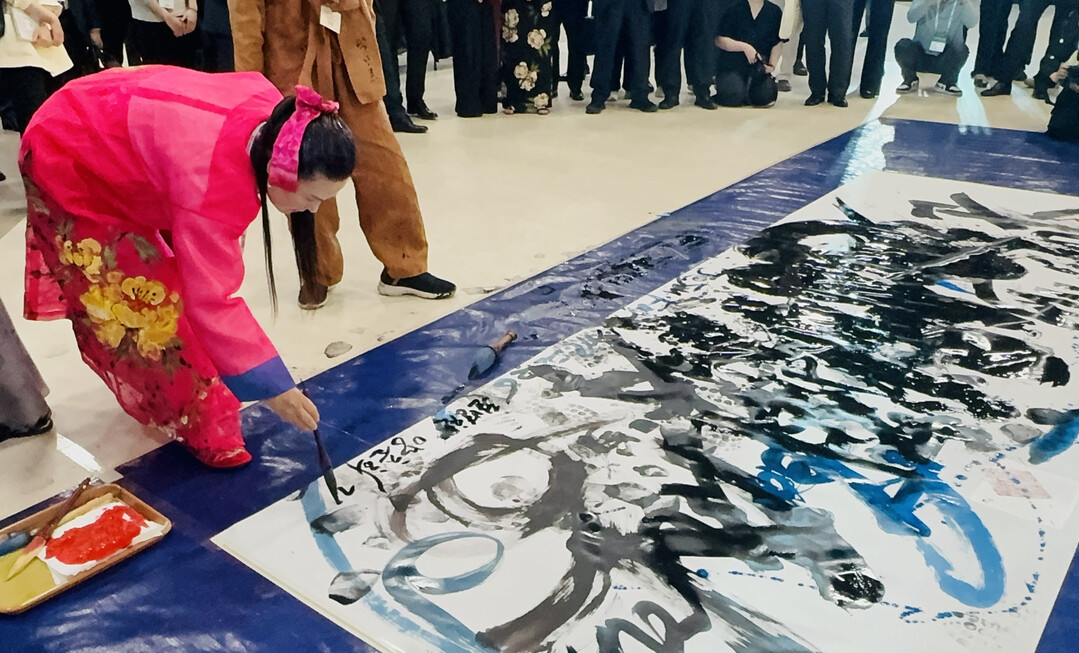
Q6. Today is an era where digital technology and AI can even create writing and images. Amidst these changes, what do you think is the unique value that can only be delivered by calligraphy written by a human hand holding a brush?
Even in an age where AI can generate text and images, I believe that the value of human-created calligraphy, written directly with a brush, will become even more important. While AI can produce sophisticated letters and images, it cannot fully substitute for an artist's lived life experiences, fleeting emotions, or the breathing and spirit imbued in the tip of the brush.
Calligraphy is an art that requires a long time of training and contemplation before making a single stroke. The shading of the ink, the speed of the brush, the strength of the pressure, and the harmony of the blank space transparently reveal the artist's sensibility and character. I believe that is precisely why a human must hold the brush directly. That said, there is no need to reject AI and digital technology. While actively utilizing new technologies, the human heart and artistic philosophy must remain at the core.
In particular, if we combine Hangeul calligraphy and the Jeju dialect with digital technology, we can convey our culture to even more generations and people around the world. I want to be an artist who embraces the changes of the times while safeguarding tradition. Technology may advance, but the belief that the essence of art begins in the human heart will never change.
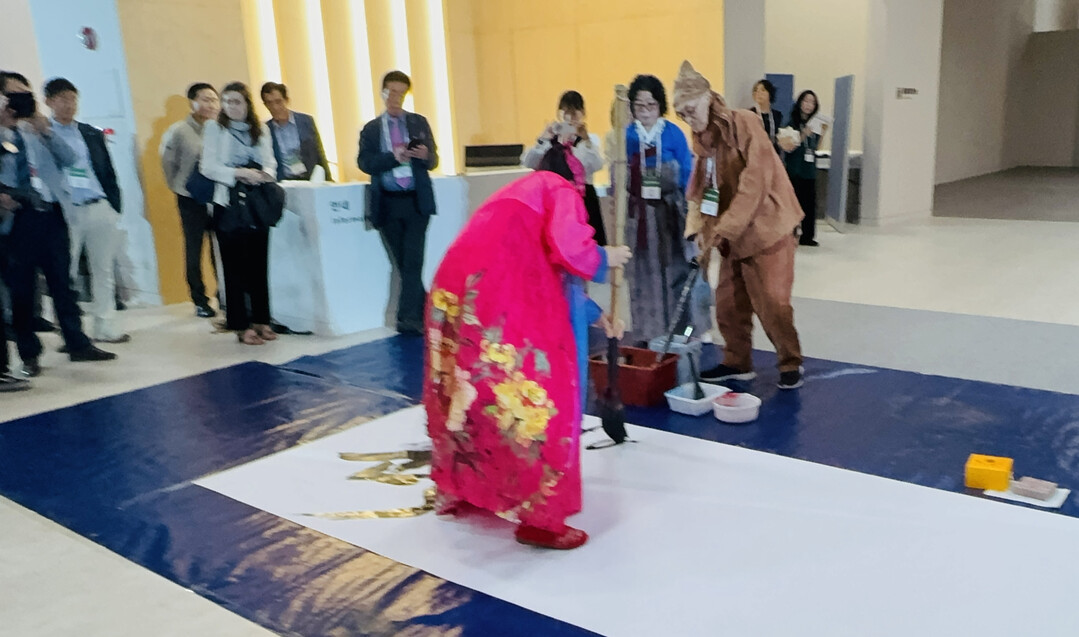
Q7. When nurturing younger generations or meeting people who want to learn calligraphy, is there an attitude or mindset you emphasize cultivating before learning techniques?
I tell my students to cultivate human character and mindset before mastering techniques. Calligraphy is written with the hand, but perfected with the heart. No matter how well one writes characters, it is difficult to create profound artwork without humility, patience, and self-reflection. I, too, faced many stern reprimands during my learning process under my teacher. At the time, there were difficult and disappointing moments, but looking back now, those teachings became the greatest stepping stones that helped me grow.
In particular, my teacher continuously encouraged me to pursue new studies. He advised me to attend university, saying that to do calligraphy one must understand theory, and encouraged me all the way to a doctoral program, stating that proper Hangeul calligraphy requires studying Korean language and literature to decipher ancient texts. Through those teachings, I realized that learning has no end. Following my teacher, my personal motto is, “If you want to move others, you must move yourself first.” It means that the teacher must practice first, and the student must strive first. I want to tell younger learners to continuously study and become artists equipped with their own philosophy.
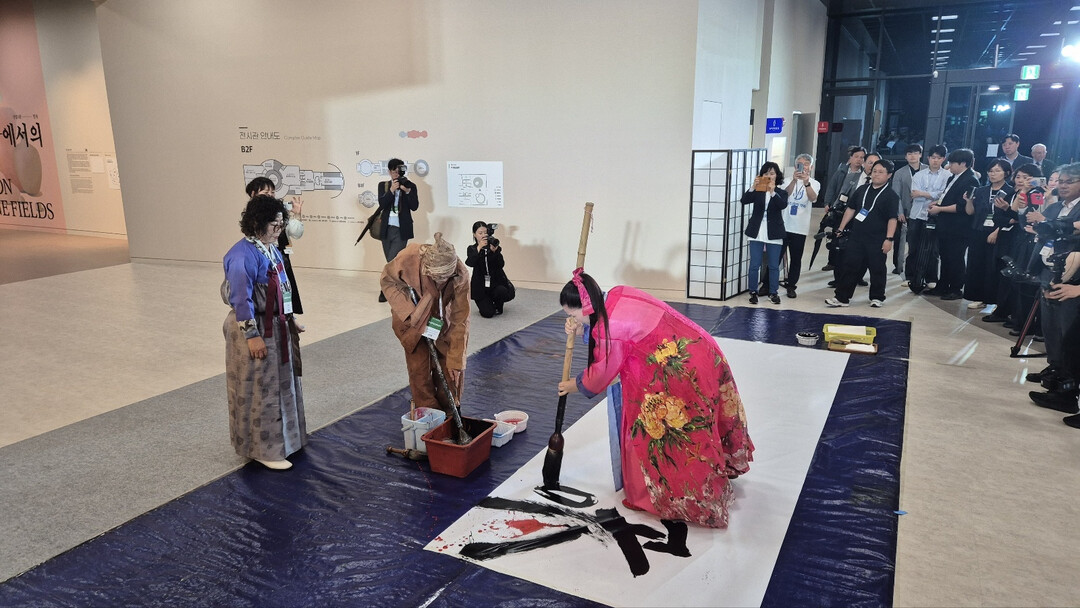
Q8. Looking ahead, if you have any specific challenges you want to take on or goals you want to achieve as an artist, what are they? And what kind of emotions or thoughts do you hope viewers take away from Kim Su-ae's works in the days to come?
My ultimate goal for the future is to build a unique artistic world that fuses the Jeju dialect with Hangeul calligraphy, and to complete a font design. As a Ph.D. in Korean language and literature, I research the linguistic value of the Jeju dialect, and as a calligrapher, I express its beauty through my work. Based on these dual experiences, I want to reinterpret Jeju proverbs, folk songs, myths, and everyday stories through Hangeul calligraphy and lettering.
In particular, I want to develop the Jeju dialect into modern artistic content so that it can appeal engagingly to younger generations and people worldwide. Moving forward, I want to take on new challenges, such as Hangeul calligraphy exhibitions utilizing AI and digital technology, and convergence art projects utilizing the Jeju dialect. By continuing academic research and artistic creation hand in hand, I want to lend strength to widely publicize the value of Jeju culture.
Rather than leaving behind a famous name as an artist, I hope the path I have walked remains a meaningful trace for someone. I hope viewers look at my work and feel the human heart, the nature of Jeju, and the preciousness of our native language contained within it. And if, looking back at my work someday, the sincere heart of a person who loved Hangeul, loved Jeju, and never stopped learning is conveyed, I will be more than happy. Until the day I put down my brush, I will live as an artist who learns, researches, and records the spirit of Jeju and the beauty of our script.
“I want to be an artist who blooms quietly like a daffodil yet leaves a lasting fragrance.”
“I learned the brush from my teacher, understood writing through scholarship, and now, I record the spirit of Jeju through art.”
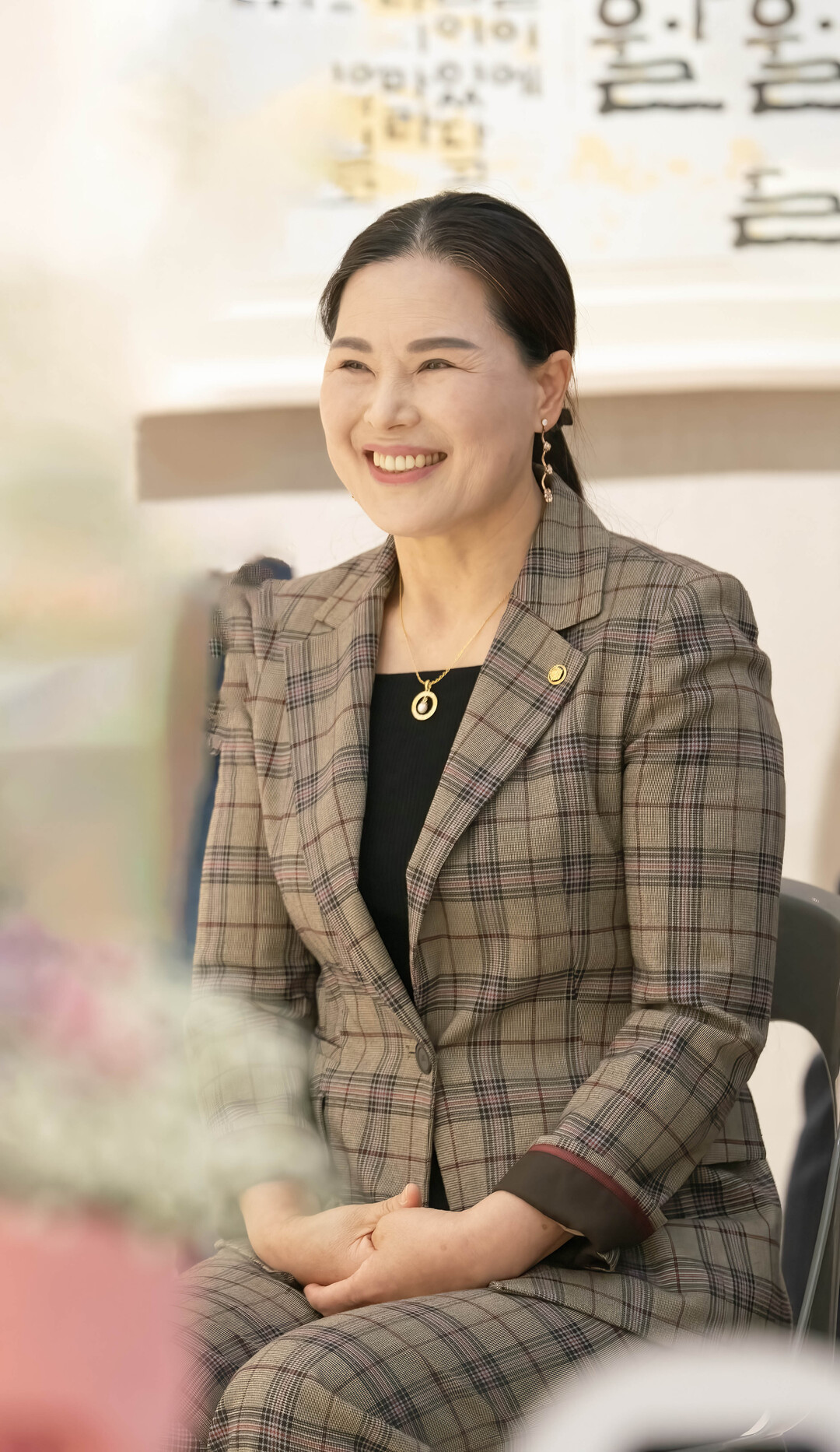
Calligrapher · Poet · Ph.D. in Korean Language and Literature · Jeju National University Research Professor, Gyeolgot Kim Su-ae
[Copyright (c) Global Economic Times. All Rights Reserved.]