![[등록] 2026-09-01 15:48:31](/support/_updata/banner2/tl181982910_6749.png)


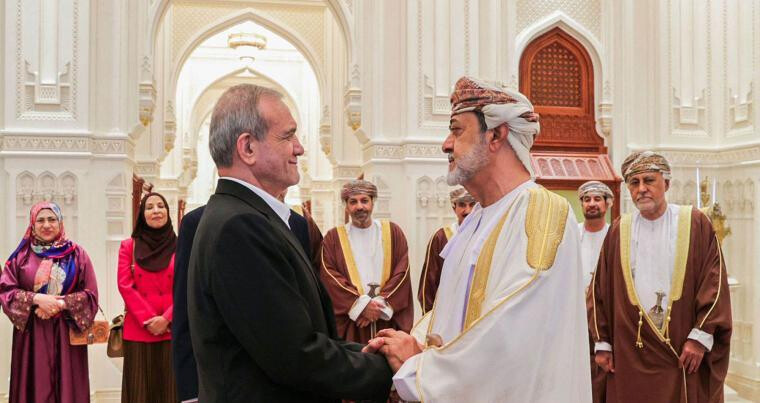
On July 27, 2026, Omani Foreign Minister Badr Albusaidi initiated a coordinated round of telephone diplomacy, holding consecutive discussions with foreign ministers from Iran, Saudi Arabia, Qatar, Kuwait, and Egypt.
According to official statements from the Omani Foreign Ministry, the discussions focused on formulating a "practical, fair, and sustainable agreement" through structured political and diplomatic dialogue. Central to these talks was the imperative of guaranteeing safe navigation through the Strait of Hormuz—a vital choke point through which approximately one-fifth of the world’s petroleum passes—and stabilizing global supply chains disrupted by recent regional instability.
Oman’s proactive engagement comes at a critical juncture. The recent 13-day period of heightened kinetic conflict between U.S. forces and Iranian-aligned groups created severe market volatility and heightened security risks across the Gulf. With military engagements temporarily paused, Muscat sees a crucial window of opportunity to pivot from crisis management to structured negotiation.
New Flashpoints: The Saudi Infrastructure Attack and Blame Game
Despite the temporary lull in direct U.S.-Iran violence, regional fragility remains acute. On July 27, Saudi defense forces announced the interception of multiple unmanned aerial vehicles (UAVs) targeting critical oil infrastructure in the Kingdom’s Eastern Province as well as suburban areas of the capital, Riyadh.
Brigadier General Turki Al-Malki, spokesperson for the Saudi Ministry of Defense, explicitly attributed the attack to Iranian-backed regional militias. In a statement posted on social platform X, Al-Malki asserted that launch vectors confirmed the drones originated from Iraqi territory, launched by militia groups operating under Tehran’s umbrella.
Conversely, the Islamic Resistance in Iraq (IRI)—an umbrella coalition of pro-Iranian Shia militia factions—issued an immediate denial. The group characterized the Saudi allegations as "fabricated pretext designed to exacerbate regional frictions and justify aggressive countermeasures."
Recognizing the danger of escalation, the Iraqi government in Baghdad moved quickly to investigate. Sabba al-Numan, spokesperson for Iraqi Prime Minister Mohammed Shia' al-Sudani, confirmed that military and intelligence authorities were instructed to launch an immediate, thorough investigation to determine whether Iraqi airspace or territory was breached.
Maritime Security and Global Supply Chain Safeguards
A major pillar of Oman’s current diplomatic effort concerns maritime stability. The Strait of Hormuz remains one of the most vulnerable economic bottlenecks in the global economy. Any prolonged disturbance to vessel traffic through the strait threatens global energy security, elevates shipping insurance premiums, and accelerates inflationary pressures across international markets.
During his consultations with regional foreign ministers, Minister Albusaidi reiterated that maritime security cannot be separated from broader regional political settlements. By advocating for cooperative security arrangements that involve all littoral states, Oman seeks to institutionalize freedom of navigation while addressing the underlying political grievances that endanger commercial shipping.
Muscat’s Tradition of Neutrality: Why Oman Holds the Key
Oman’s position as an indispensable mediator is rooted in its long-standing foreign policy stance of non-alignment and constructive dialogue—often summarized as "friend to all, enemy to none."
Historically, Muscat served as the secret venue for initial negotiations between Washington and Tehran that ultimately led to the 2015 Joint Comprehensive Plan of Action (JCPOA). Oman’s unique ability to maintain open, trust-based communication channels with Tehran, Riyadh, Washington, and Western capitals positions it as one of the few global actors capable of delivering effective de-escalation solutions.
Diplomatic observers note that while Saudi Arabia’s frustration over persistent drone attacks is palpable, Riyadh also seeks to safeguard its ambitious economic transformation plans under Vision 2030, which require regional stability and sustained foreign investment. Oman’s mediation offers Riyadh and Tehran a structured mechanism to address security grievances without resorting to military retaliation.
Outlook: The Road to Sustainable Regional De-escalation
The road ahead remains fraught with risks. The proliferation of non-state actors, advanced drone technology, and proxy dynamics across Iraq, Yemen, and Syria means that minor tactical miscalculations can swiftly derail diplomatic momentum.
However, Oman’s swift re-entry into the diplomatic forefront has provided much-needed momentum toward dialogue. By prioritizing practical political arrangements over confrontational rhetoric, Muscat is striving to convert a fragile truce into a lasting framework for regional security. Whether this initiative succeeds will depend on the willingness of both Saudi Arabia and Iran to exercise restraint and utilize diplomatic channels to settle mutual security concerns.
[Copyright (c) Global Economic Times. All Rights Reserved.]