SEOUL — As South Korea’s capital celebrates a record-breaking surge in international visitors—welcoming over 13 million travelers in the first nine quarters alone—the city's premier gateway is facing a silent crisis. While global travel publications routinely rank Seoul among the world's top destinations, the sprawling and fragmented layout of Seoul Station is turning the city's initial welcome into a frustrating maze for foreign tourists.
A Multilayered Labyrinth
For most international visitors arriving via the AREX (Airport Railroad Express) from Incheon International Airport, Seoul Station serves as the primary stepping stone into the city. However, navigating the transit hub often ends in confusion.
The station brings together an intricate web of transportation networks, including Subway Lines 1 and 4, the Gyeongui-Jungang Line, the GTX-A commuter rail, and high-speed KTX trains. With platforms, concourses, and transfer corridors spread across multiple subterranean and above-ground levels, even seasoned locals occasionally lose their bearings. For first-time visitors weighed down by heavy luggage, the layout can feel insurmountable.
The friction is most pronounced for passengers using the AREX Express train. Unlike regular subway commuters, express train passengers must exit through a dedicated gate on the third basement level using a QR-coded ticket, regardless of their final destination. Travelers attempting to transfer directly to Lines 1 and 4 without exiting often find themselves trapped at turnstiles that reject QR codes, forcing them to retrace their steps with heavy bags.
While railway authorities have recently introduced brighter signage and directional banners, urban transit experts argue that cosmetic fixes are insufficient to solve deep structural design flaws.
The Cash-Only Transit Card Barrier
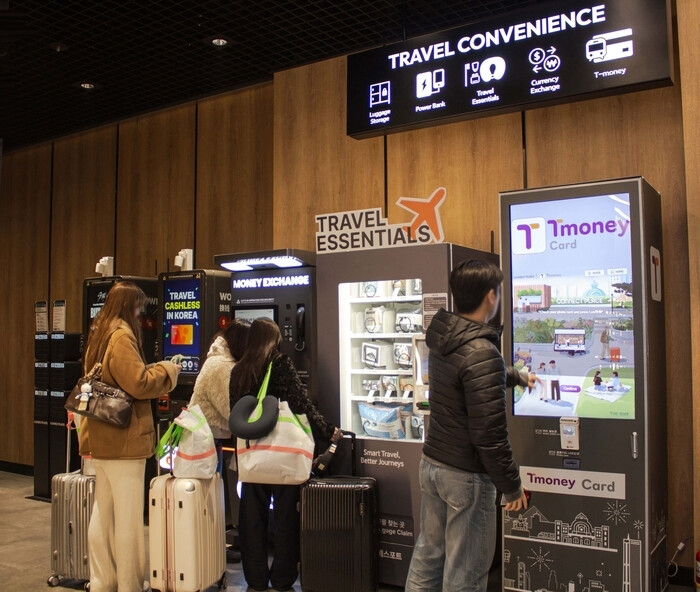
Beyond navigation, international tourists frequently encounter payment hurdles when attempting to purchase or top up transit cards.
The ticketing infrastructure remains fragmented across different operators. While some modern ticket kiosks accept foreign credit cards for one-way tickets or Climate Card purchases, older machines within the exact same stations accept cash only. Furthermore, purchasing a T-money card and adding credit often requires physical cash in South Korean Won. Because newly purchased cards carry a zero balance, tourists must locate ATMs that accept foreign cards—often leading to a frustrating search across multiple bank terminals.
Calls for Structural Overhaul
Urban planning and tourism experts emphasize that sustaining Seoul's global tourism boom requires more than marketing campaigns; it demands seamless infrastructure.
Analysts suggest that short-term improvements must focus on bridging systemic gaps between different transit operators to simplify transfer pathways. Long-term solutions, meanwhile, point toward a major spatial reconfiguration. Experts propose transforming the subterranean areas into a unified, open-plaza layout—similar to major international transit hubs—allowing travelers to transition effortlessly between high-speed rails, commuter lines, and subways.
As Seoul solidifies its status as a top-tier global destination, streamlining its primary gateway remains a crucial test for the city's future tourism competitiveness.
[Copyright (c) Global Economic Times. All Rights Reserved.]