• 2026.11.10 (Tue)
  • All articles
  • LOGIN
  • JOIN
Global Economic Times
[등록] 2026-09-01 15:48:31
  • Synthesis
  • World
  • Business
  • Industry
  • ICT
  • Distribution Economy
  • Well+Being
    • Pet Life
    • Halal Horizon
  • Travel
  • Eco-News
  • Education
  • Korean Wave News
  • Opinion
  • Arts&Culture
  • Sports
  • People & Life
    • International Student Report
    • With Ambassador
  • Column
    • Cho Kijo Column
    • Cherry Garden Story
    • Ko Yong-chul Column
    • Kim Bong-seon's Photo Column
    • Kim Seul-Ong Column
    • Lee Yeon-sil Column
  • Photo News
  • New Book Guide
MENU
 
Home > Distribution Economy

"Wiped Out 90%": Why Retail Traders Refuse to Quit High-Risk Leverage Despite Brutal Market Rout

Hwang Sujin Reporter / Updated : 2026-11-10 18:15:34
  • -
  • +
  • Print

"When the first 10% loss hit, I convinced myself it was just a routine correction and that the market would bounce right back," shared an anonymous office worker on a popular corporate community platform. The individual, identified only as 'A,' recounted how they managed to save nearly half a billion won over a career, only to sink their entire net worth into U.S. leveraged products during a euphoric bull run. "By the time the drawdown hit 30% to 40%, I knew something was deeply wrong, but I kept telling myself a full recovery was just weeks away."

Through a repetitive cycle of panic-selling and high-risk re-entries, A ultimately watched over 90% of their capital vanish. "Roughly 450 million won simply dissolved into thin air," they confessed, describing physical and emotional burnout so severe that normal daily functions and work became nearly impossible.

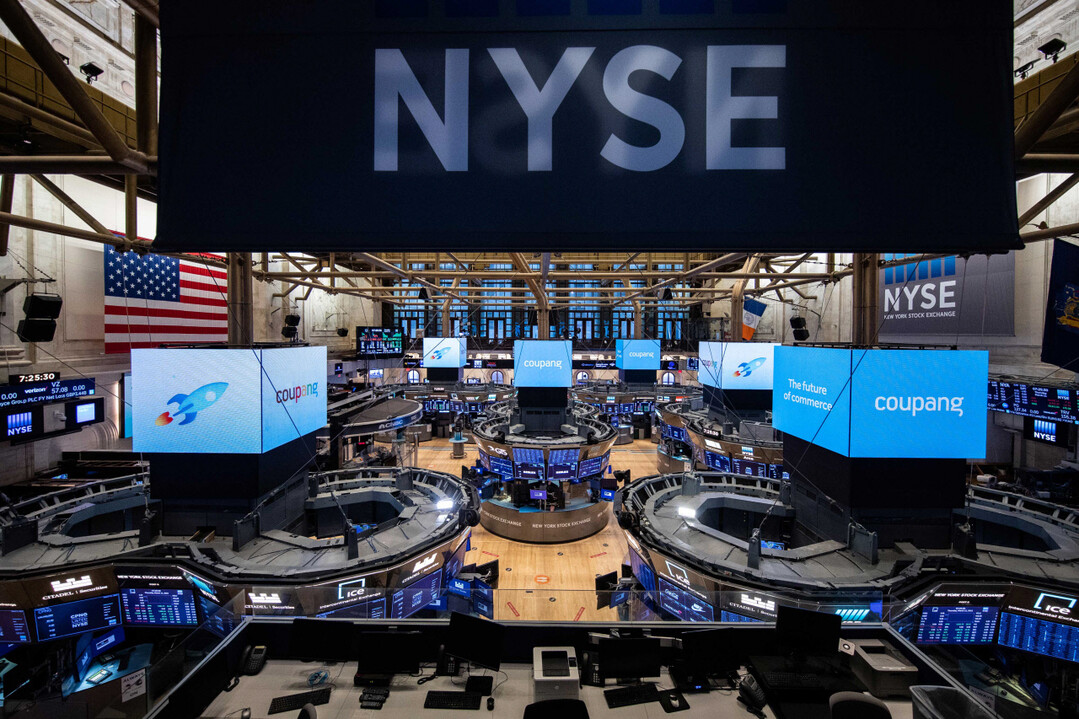
Despite devastating losses across leveraged investment vehicles amid a wider market correction, individual investors continue to chase rebounds, fueled by the hope of recovering their capital overnight.

Data from the Korea Exchange shows that the benchmark KOSPI recently rebounded to close up 4.39% at 5,239.13, triggering a brief program-trading sidecar at the opening bell. While bargain hunting and stabilizing oil prices provided temporary relief, the index remains over 40% below its summer peak. Blue-chip giants like Samsung Electronics and SK Hynix closed significantly lower than their yearly highs, suffering drops exceeding 45% and 58%, respectively.

The fallout in leveraged financial instruments has been far more catastrophic. Single-stock leveraged exchange-traded funds (ETFs) tracking companies like SK Hynix and Samsung Electronics have cratered between 79% and nearly 90% from their respective peaks earlier in the year.

These derivative products are designed to deliver twice the daily return of their underlying assets. However, consecutive days of high market volatility amplify losses due to the mathematical trap of the negative compounding effect. For instance, if an underlying asset drops 30% in a single session and recovers 30% the next, the base asset finishes lower, but a leveraged product suffers an even steeper, mathematically harder-to-recover deficit, often requiring a massive secondary rally just to break even.

Smart Money Pulls Back While Retail Defies the Trend

Institutional investors and global hedge funds are moving swiftly to de-risk. According to Goldman Sachs, prime brokerage data indicates that hedge fund net leverage ratios dropped significantly over the past month at the fastest pace seen since the spring. Over a span of two weeks, institutional offloading of technology shares topped billions of dollars, intensifying the broader market downturn.

Market analysts point out that many institutional players attempting to trade short-term relief rallies found themselves trapped by persistent macroeconomic uncertainty, prompting them to further trim exposure in mega-cap technology and growth sectors.

Conversely, domestic retail investors continue to pour capital into index-based and sector-specific leveraged ETFs. Following regulatory tightening and higher margin requirements on single-stock leverage products, capital has simply migrated toward broader index leverage funds, driving billions in retail net inflows.

Financial experts strongly urge caution, warning that high volatility will likely remain a fixture of the market environment. Market strategists advise that rather than attempting to time market bottoms or rely on high-risk leveraged instruments to recoup losses, investors should focus on disciplined, phased allocations into structurally sound, globally competitive companies with a long-term horizon.

[Copyright (c) Global Economic Times. All Rights Reserved.]

  • #Cherry Garden
  • #HalalFood
  • #Halal
  • #Petlife
  • #Halalhorizone
  • #Hormuz Impasse
  • #globaleconomictimes
  • #micorea
  • #mykor
Hwang Sujin Reporter

Popular articles

  • CGV Unveils October Tech Special Hall Lineup… From Films to K-Pop Live Concerts

  • November Shopping Festival Sparks Retail War in South Korea: Where to Find the Best Deals

  • First Snow and Freeze Hit Korea as Winter Officially Begins on 'Ipdeong'

I like it
Share
  • Facebook
  • X
  • Kakaotalk
  • LINE
  • BAND
  • NAVER
  • https://globaleconomictimes.kr/article/1065604444378057 Copy URL copied.
Comments >

Comments 0

Weekly Hot Issue

  • Intergenerational Strain Deepens in South Korea: The Rising Cost of Senior Welfare for Asset-Poor Youth
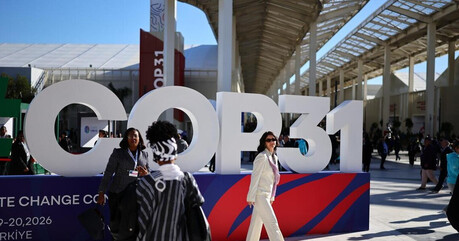
  • COP31 Opening Day Stumbles Amid Friction Over Climate Finance and Adaptation Goals
  • Genesis Enters Ultra-Luxury EV Segment with Flagship GV90 and Neolun SUVs 
  • Daewoo Consortium Begins Detailed Design for Gadeokdo New Airport Amid Environmental Backlash
  • Shift of Focus Urged for South Korea's Zero Energy Building Policy
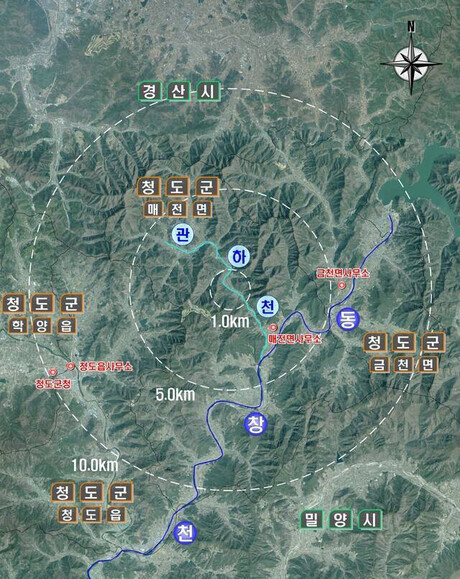
  • Cheongdo County Secures 61 Billion Won for Climate Resilience and Eco-Friendly River Restoration

Most Viewed

1
Why Can't We Use 'Muse' in Korea?… Zuckerberg Says, "Due to a Lack of Data Centers"
2
US Army Conducts Rare Temporary Burial Drills to Prepare for Worst-Case Large-Scale War Scenarios
3
World Citizens are Flying Directly to Busan... The Era of 4 Million Foreigners is Just Around the Corner
4
Eating 100g of Baechu Kimchi Daily Linked to Lower High-Cholesterol Risks
5
November Shopping Festival Sparks Retail War in South Korea: Where to Find the Best Deals
체리가든 스토리
nutri huevos
로타리
동포저널

Hot Issue

Jensen Huang Faces Shareholder Class Action and Leadership Scrutiny Amid Espionage Allegations Involving Former Associate

Disgraced South Korean Scientist Hwang Woo-suk Becomes UAE Citizen

Is South Korea Heading Toward France's Path? Aging Population and Fiscal Pressures Looming Ahead

Fashion Runway Show 2026

Let’s recycle the old blankets in Jeju Island’s closet instead of incinerating them.

Global Economic Times
korocamia@naver.com
CEO : LEE YEON-SIL
Publisher : KO YONG-CHUL
Registration number : Seoul, A55681
Registration Date : 2024-10-24
Youth Protection Manager: KO YONG-CHUL
Singapore Headquarters
5A Woodlands Road #11-34 The Tennery. S'677728
Korean Branch
Phone : +82(0)10 4724 5264
#304, 6 Nonhyeon-ro 111-gil, Gangnam-gu, Seoul
Copyright © Global Economic Times All Rights Reserved
  • News K
  • 반달곰 프로젝트
  • 광고문의
Search
Category
  • All articles
  • Synthesis
  • World
  • Business
  • Industry
  • ICT
  • Distribution Economy
  • Well+Being 
    • 전체
    • Pet Life
    • Halal Horizon
  • Travel
  • Eco-News
  • Education
  • Korean Wave News
  • Opinion
  • Arts&Culture
  • Sports
  • People & Life 
    • 전체
    • International Student Report
    • With Ambassador
  • Column 
    • 전체
    • Cho Kijo Column
    • Cherry Garden Story
    • Ko Yong-chul Column
    • Kim Bong-seon's Photo Column
    • Kim Seul-Ong Column
    • Lee Yeon-sil Column
  • Photo News
  • New Book Guide
  • Overseas Koreans
  • Multicultural News