Navigating grocery store aisles can be challenging for consumers seeking foods that align with Islamic dietary laws. At its core, a halal diet consists exclusively of foods and beverages deemed permissible under Islamic jurisprudence. According to the Islamic Religious Council of Singapore (MUIS), the foundational principle is straightforward: nearly all foods and drinks are considered permissible by default, unless explicitly prohibited by the Quran or the Hadith (the recorded sayings and traditions of the Prophet Muhammad).
To establish uniform global standards, the Codex Alimentarius Commission—an international food standards body—introduced its General Guidelines for Use of the Term Halal (CAC/GL 24-1997) in 1997. While these guidelines serve as an advisory framework for member nations rather than binding law, they clarify what constitutes lawful food and how it must be handled. Crucially, Codex stipulates that halal labeling indicates religious permissibility, not superior nutritional value or health benefits.
Defining Permissibility and Preventing Contamination
While MUIS emphasizes the broad permissibility of ingredients, the Codex guidelines place strict requirements on the entire supply chain. Under Codex rules, a product qualifies as halal only if it is completely free of forbidden substances and has never been manufactured, processed, stored, or transported using equipment contaminated by unlawful materials. Direct contact with non-halal items at any stage disqualifies the food.
Identifying Prohibited Foods
Foods and drinks forbidden under Islamic law are known as haram. To help consumers easily identify these restricted items, MUIS utilizes the acronym ABCDIS:
A – Amphibians: Creatures such as frogs and toads.
B – Blood and Birds of Prey: Any blood, as well as predatory birds equipped with sharp talons like eagles, falcons, and vultures.
C – Carnivores: Meat-eating animals including lions, tigers, felines, and crocodiles.
D – Dead Meat: Carrion, or animals that died before being slaughtered according to Islamic rites.
I – Intoxicants: Alcoholic drinks and recreational drugs.
S – Swine: Pork, lard, and all pig-derived byproducts.
The Codex framework expands upon this list, explicitly prohibiting pigs, wild boars, dogs, snakes, monkeys, fanged carnivores, clawed birds of prey, amphibious creatures, mules, and domestic donkeys. Furthermore, the restrictions extend to non-meat items, banning toxic or intoxicating plants (unless the toxins are neutralized during processing) and any food additives sourced from unlawful origins.
Standards for Islamic Slaughter
For permissible land animals to be considered halal, the Codex guidelines outline six mandatory slaughtering criteria:
Qualified Slaughterer: The individual performing the slaughter must be a mentally competent Muslim well-versed in Islamic slaughtering protocols.
Live Animal: The animal must be lawful to eat and alive—or verified to be alive—at the moment of slaughter.
Religious Invocation: The phrase "Bismillah" ("In the name of God") must be spoken immediately prior to slaughtering each animal.
Proper Instrument: The blade used must be exceptionally sharp and remain in continuous contact with the animal without being lifted mid-cut.
Specific Severing: The incision must cleanly sever the windpipe (trachea), esophagus, and the major blood vessels in the neck.
Sanitation: The entire process must adhere to Codex’s hygienic practices for fresh meat.
Because different schools of Islamic thought hold minor variations regarding permissible species and slaughter techniques, Codex defers final regulatory interpretation to the authorities of the importing country.
Navigating Processed Foods, Shared Kitchens, and Ambiguous Ingredients
Modern food manufacturing introduces complexities regarding cross-contamination and hidden ingredients. MUIS mandates that processed foods must contain zero non-halal animal derivatives, avoid even trace amounts of forbidden substances, and be produced on dedicated, uncontaminated equipment. Strict personal and facility hygiene is also required to ensure food safety alongside religious compliance.
Can a single facility produce both halal and non-halal goods? According to Codex, yes—provided the production lines or storage areas are strictly segregated to prevent any cross-contact. Additionally, machinery previously used for non-halal production can be converted for halal use after undergoing rigorous ritual cleansing.
When consumers encounter ambiguous ingredients—termed syubhah (doubtful or questionable) by MUIS—caution is advised. Common additives like lecithin, for example, are halal if extracted from soy or plants, but forbidden if derived from swine or improperly slaughtered animals. MUIS recommends avoiding such items until their origins are verified.
Practical Steps for Consumers
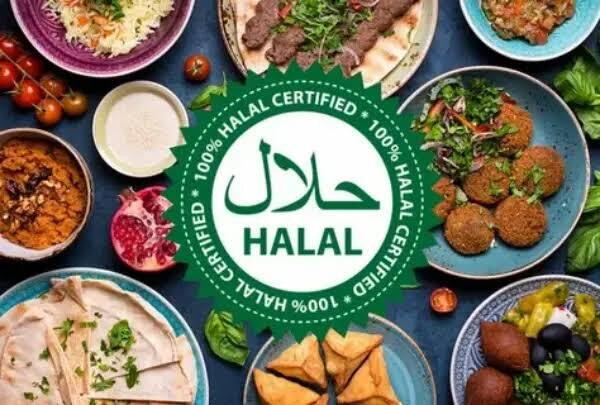
For shoppers and diners looking to verify a product's status, Codex advises checking packaging for an official "halal" designation. In Singapore, consumers can also utilize digital directories provided by MUIS to locate certified restaurants and food preparation facilities.
[Copyright (c) Global Economic Times. All Rights Reserved.]