![[등록] 2026-09-01 15:48:31](/support/_updata/banner2/tl181982910_6749.png)


(C) eap Magazin.de
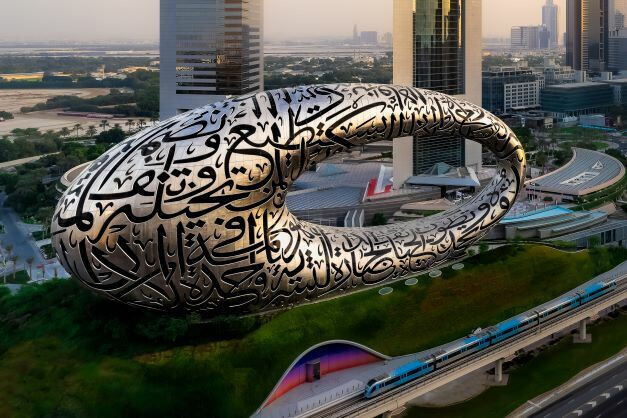
ABU DHABI – On January 30, the streets of Abu Dhabi, the capital of the United Arab Emirates (UAE), were bustling not with oil traders, but with tourists clutching cameras. They were there to capture the "masterpieces" integrated into the city’s skyline—structures designed by architectural titans like Jean Nouvel and Frank Gehry.
For a city that had little recorded history until the discovery of offshore oil in the 1960s, Abu Dhabi is now executing a masterstroke in urban transformation. By leveraging its vast "oil money," the emirate is reinventing itself as a global hub for finance, tourism, and, most notably, culture.
The Strategic Import of Culture
Abu Dhabi’s primary strategy has been the "importation of world-class content." At the heart of this ambition lies Saadiyat Cultural District, a man-made island that has become a multi-billion dollar canvas for the government. Since the project’s inception in 2006, tens of billions of dollars have been invested to reclaim land and commission Pritzker Prize-winning architects to create the world’s most unique cultural landmarks.
The crown jewel of this initiative is Louvre Abu Dhabi. Opened in 2017 as the only overseas branch of the famed French museum, the structure—designed by Jean Nouvel—is a marvel of engineering. Its massive dome, a modern interpretation of traditional Arab patterns, creates a "rain of light" that shifts with the sun’s movement.
However, the museum’s value transcends its architecture. The curation focuses on "Universal Humanity" and the history of global trade. By displaying similar artifacts from vastly different civilizations—such as "Motherhood" statues from France, Congo, and Egypt, or blue-patterned ceramics from Turkey, Italy, and China—the museum positions the Middle East as the historical and future bridge between East and West.
The cost of this prestige is astronomical. Abu Dhabi paid approximately $1.6 billion (1.9 trillion KRW) to France just for the brand name and artwork loans. Yet, the investment is paying off. Last year, the museum saw a 7% increase in visitors, reaching approximately 1.5 million people from all corners of the globe.
A Sanctuary for Coexistence
Beyond art, Abu Dhabi is tackling the "perception gap" regarding the Middle East. To dispel concerns over religious conservatism and regional instability, the emirate introduced the Abrahamic Family House.
Located in the Saadiyat District, this complex features a mosque, a Christian church, and a synagogue standing side-by-side. It is a powerful physical manifesto of religious tolerance, housing three faiths that have historically been at odds within a single enclosure. "This is the spiritual heart of Saadiyat, symbolizing Abu Dhabi’s commitment to openness," explained Saul, a guide at the site.
This pragmatic approach extends even to the city's most sacred sites. The Sheikh Zayed Grand Mosque, a masterpiece of Islamic architecture, requires visitors to pass through a modern underground shopping mall to enter. It is a quintessential example of how Abu Dhabi seamlessly blends religious tradition with capitalistic utility.
The Shift to a Non-Oil Economy
The numbers suggest that this cultural gamble is working. In 2023, Abu Dhabi’s non-oil sector surpassed 50% of its GDP for the first time. As of the second quarter of last year, that figure reached a record 56.8%.
Notably, the arts, entertainment, and recreation sectors grew by 12% year-on-year. "Our investment in the arts is no longer just a vanity project; it is functioning as a core industry," said an official from the Abu Dhabi Department of Culture and Tourism.
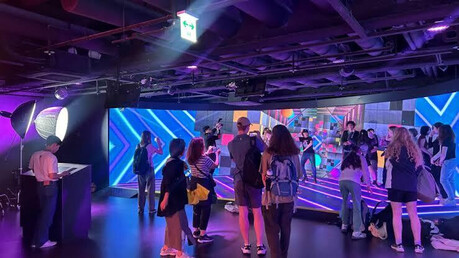
With the Guggenheim Abu Dhabi—the final masterpiece by the late Frank Gehry—scheduled for completion this year, and the recent opening of the immersive art space teamLab Phenomena, Abu Dhabi is no longer just an oil giant. It has successfully rebranded itself as a global cultural destination where history, art, and diverse faiths converge under the desert sun.
[Copyright (c) Global Economic Times. All Rights Reserved.]