PORT-AU-PRINCE — A wave of cautious optimism is sweeping through Haiti following a major military breakthrough against armed gangs, though human rights advocates warn that the aggressive tactics imported from El Salvador carry steep risks for civilians and long-term stability.
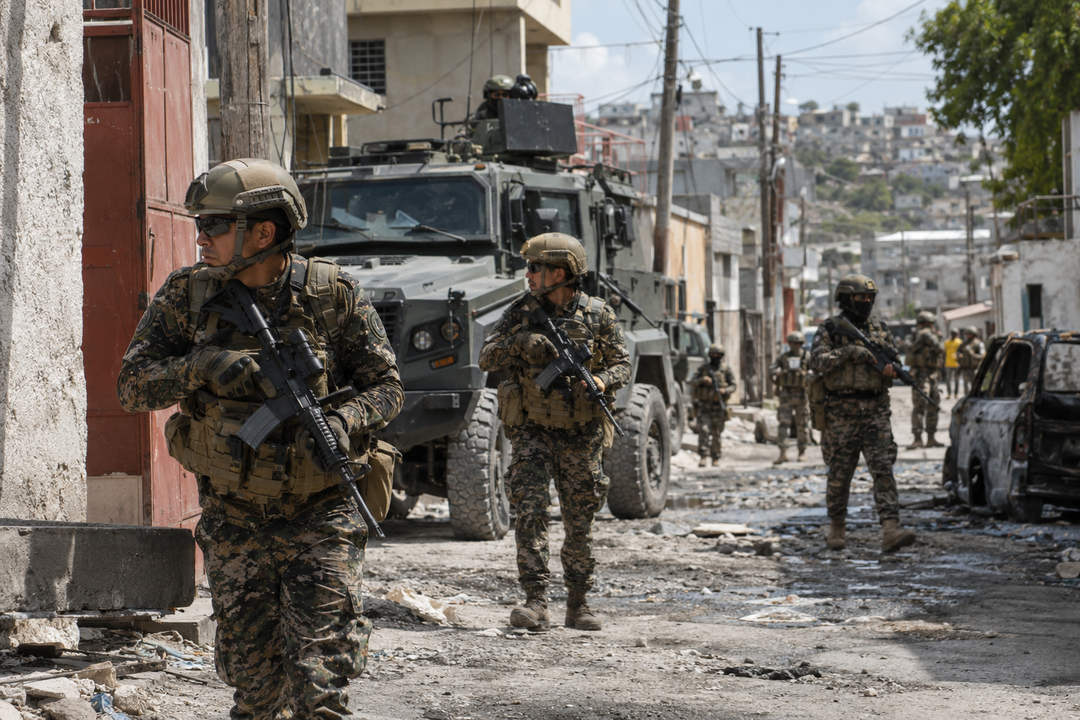
Over the past week, residents in the Haitian capital took to the streets to celebrate Salvadoran President Nayib Bukele after his deployed forces successfully recaptured the Sylvio Cator Stadium on November 12. Once a premier venue that hosted international football legends like Brazil’s Ronaldo and Roberto Carlos, the stadium had fallen under gang control in 2024 and served as a stronghold for criminal syndicates.
For locals exhausted by years of violence and displacement—which has forced roughly 1.5 million people from their homes—the liberation of the landmark has sparked rare public jubilation.
"A wind of hope is finally blowing through our country," said 55-year-old resident Boss Baton during a pro-Bukele rally, expressing relief at being able to walk freely in areas that were recently no-go zones. "Long live Bukele," he added, echoing a sentiment shared by many citizens who now view the Salvadoran leader as a "savior."
The operation comes roughly a month after Bukele deployed approximately 2,000 troops to Haiti, initially framed as a rescue mission after four Salvadoran soldiers went missing during a gang ambush. Bukele, who gained international notoriety—and high domestic approval—for drastically reducing El Salvador's homicide rate through a massive crackdown that saw over 90,000 people detained since 2022, has applied a similarly uncompromising strategy on Haitian soil.
Rising Civilian Toll and Political Motives
Despite the celebratory mood in Port-au-Prince, international observers and conflict monitors are raising alarms over collateral damage and the potential erosion of human rights. In El Salvador, Bukele’s state of exception drew heavy criticism for mass detentions without due process and hundreds of deaths inside prison facilities.
Data suggests similar patterns of indiscriminate force may be emerging in Haiti. According to the Armed Conflict Location & Event Data Project (ACLED), anti-gang offensive operations surged by 46% in the three weeks following the arrival of Salvadoran troops. However, that escalation coincided with over 100 fatalities, including at least 26 civilians, fueling fears that heavy-handed raids in densely populated neighborhoods could worsen the humanitarian crisis.
Analysts also question the underlying motives and sustainability of the intervention. Tiziano Breda, a Latin America analyst at ACLED, noted that the high-profile raids—frequently broadcast by Bukele on social media—serve to project military strength and burnish his image ahead of El Salvador’s elections scheduled for next February.
Furthermore, while Salvadoran Vice President Félix Ulloa initially insisted his country’s forces were not an "occupying army" intending to stay long-term, Bukele’s recent rhetoric suggests an expanding mission to help Haitians "reclaim their country."
Questions Over Long-Term Security
Security experts warn that tactical victories may prove fleeting without a comprehensive plan to hold cleared territory. Diego Da Rin, a Haiti analyst with the International Crisis Group, pointed out that Salvadoran forces have been raiding gang leaders' compounds without leaving behind security personnel to stabilize the neighborhoods. As a result, armed groups have reportedly returned to threaten residents once the troops depart, raising concerns that the intervention prioritizes flashy headlines over lasting peace.
[Copyright (c) Global Economic Times. All Rights Reserved.]