• 2026.03.08 (Sun)
  • All articles
  • LOGIN
  • JOIN
Global Economic Times
fashionrunwayshow2026
  • Synthesis
  • World
  • Business
  • Industry
  • ICT
  • Distribution Economy
  • Well+Being
  • Travel
  • Eco-News
  • Education
  • Korean Wave News
  • Opinion
  • Arts&Culture
  • Sports
  • People & Life
    • International Student Report
    • With Ambassador
  • Column
    • Cho Kijo Column
    • Cherry Garden Story
    • Ko Yong-chul Column
    • Kim Seul-Ong Column
    • Lee Yeon-sil Column
  • Photo News
  • New Book Guide
MENU
 
Home > Synthesis

“Long-term low-dose antiviral treatment, effective in treating shingles pain and eye disease.”

Global Economic Times / Updated : 2024-10-17 16:25:33
  • -
  • +
  • Print

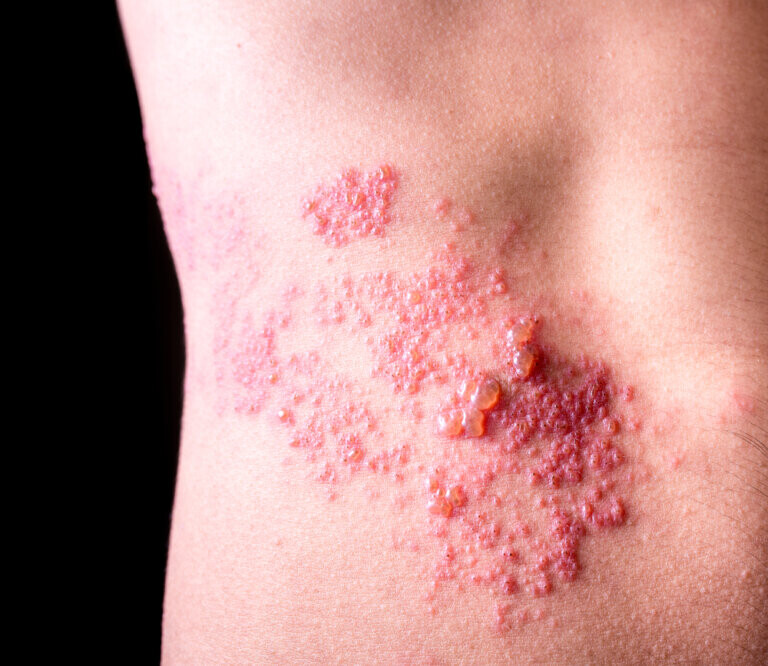
[Global Economic Times] Research has shown that long-term administration of antiviral drugs in low doses can lower the risk of developing and worsening eye diseases caused by shingles and reduce extreme pain.

Professor Elizabeth Cohen of New York University's Grossman College and Langone Health, and Professor Benny Howe Zheng of the University of Pennsylvania (UPenn) led a team that administered shingles to patients with shingles at the American Academy of Ophthalmology (AAO) annual meeting held in Chicago on the 20th (local time). It was found that administering low-dose antiviral drugs for one year can reduce not only pain but also the risk of inflammation and infection, which can damage vision.

Professor Cohen said, "The current standard treatment of administering antiviral drugs for 7 to 10 days reduces the risk of chronic eye disease, but many people still suffer from chronic eye disease." He added, "It is possible to add low-dose antiviral therapy for one year to standard treatment." “I suggest that,” he said.

Shingles is caused when the varicella-zoster virus, which causes chickenpox in children, lies dormant in nerve cells for decades and then proliferates again for unknown reasons. It mainly occurs in adults over 50 years of age and those with weakened immune systems. The virus spreads through nerve pathways, causing a painful blistering rash on the skin.

In particular, if the virus invades the forehead and eye nerves, it causes herpes zoster ophthalmicus (HZO). If the virus infects the cornea, it causes keratitis, and if it infects the inside of the eye, it causes iritis and sometimes glaucoma.

In this study, the research team divided 527 patients with herpes zoster eye disease into two groups at 95 medical centers in the United States, Canada, and New Zealand between November 2017 and January 2023. One group received 1,000 mg of antiviral medication daily for one year; A clinical trial (ZEDS) was conducted in which a placebo was administered to the control group.

As a result, patients who took the antiviral drug valacyclovir (product name Valtrex) for one year showed a 26% reduction in the risk of new or worsening eye diseases such as keratitis or iritis after 18 months compared to the placebo group.

또 항바이러스제 그룹은 위약 그룹에 비해 여러 질병이 재발할 위험이 12개월에는 30%, 18개월에는 28% 낮은 것으로 확인됐다.

항바이러스제 그룹은 18개월 후 통증 지속 시간이 위약 그룹보다 더 짧아지고 신경병증성 통증 치료제 필요성도 크게 줄어든 것으로 나타났다.

[Copyright (c) Global Economic Times. All Rights Reserved.]

Global Economic Times

Popular articles

  • Samsung TV Plus Surpasses 100 Million Monthly Active Users, Solidifying Leadership in Global FAST Market

  • Mixed U.S. Employment Data Sparks Wall Street Retreat; Fed Shifts Focus to Inflation

  • HJ Industries Lands First Mega-Container Ship Order Worth 353.2 Billion Won

I like it
Share
  • Facebook
  • X
  • Kakaotalk
  • LINE
  • BAND
  • NAVER
  • https://globaleconomictimes.kr/article/1065602665280511 Copy URL copied.
Comments >

Comments 0

Weekly Hot Issue

  • L’Oréal Korea and Naver Forge Strategic Partnership to Revolutionize AI-Driven Beauty Commerce
  • Domino’s Korea Embraces "Authentic Stateside Flavors" with New American Classic Pizza Duo
  • K-Inner Beauty Dominates Japan: Sales Surge 90% on Qoo10 Japan
  • Sempio and KFRI Join Forces to Pioneer High-Value Food Technologies
  • LG H&H Expands Japanese Footprint: Vegan Brand 'Freshian' Debuts at Biople by CosmeKitchen
  • 29CM’s '29HOME WEEK' Shatters Records: Home & Interior Sales Triple in 10 Days

Most Viewed

1
Adwa’s Echo in Korea: A Shared Story of Dignity and Freedom
2
2026, The Grand Year of Hangeul Celebration — The River of History Where Five Streams Converge
3
A New Milestone for Ukraine’s Post-War Reconstruction: The Birth of ISVP
4
Mexican currency and the powerful history behind its designs
5
Revised and Expanded Edition of ‘Failure of Negotiations with North Korea: Truth and Solutions’ Published
광고문의
임시1
임시3
임시2

Hot Issue

Hanwha Aerospace Solidifies Baltic Stronghold with $330M Defense Investment in Estonia

From $20 to $400: The Explosive "Vintage Digicam" Craze Gripping Korea’s Gen Z and Millennials

Yujin Robot Evolves Industrial Automation: Integrating Autonomous Mobility and Collaborative Robotics

SK On Slashes 37% of US Workforce Amid Global EV Slowdown

Let’s recycle the old blankets in Jeju Island’s closet instead of incinerating them.

Global Economic Times
korocamia@naver.com
CEO : LEE YEON-SIL
Publisher : KO YONG-CHUL
Registration number : Seoul, A55681
Registration Date : 2024-10-24
Youth Protection Manager: KO YONG-CHUL
Singapore Headquarters
5A Woodlands Road #11-34 The Tennery. S'677728
Korean Branch
Phone : +82(0)10 4724 5264
#304, 6 Nonhyeon-ro 111-gil, Gangnam-gu, Seoul
Copyright © Global Economic Times All Rights Reserved
  • 에이펙2025
  • APEC2025가이드북TV
  • 독도는우리땅
Search
Category
  • All articles
  • Synthesis
  • World
  • Business
  • Industry
  • ICT
  • Distribution Economy
  • Well+Being
  • Travel
  • Eco-News
  • Education
  • Korean Wave News
  • Opinion
  • Arts&Culture
  • Sports
  • People & Life 
    • 전체
    • International Student Report
    • With Ambassador
  • Column 
    • 전체
    • Cho Kijo Column
    • Cherry Garden Story
    • Ko Yong-chul Column
    • Kim Seul-Ong Column
    • Lee Yeon-sil Column
  • Photo News
  • New Book Guide
  • Multicultural News
  • Jobs & Workers