• 2026.11.23 (Mon)
  • All articles
  • LOGIN
  • JOIN
Global Economic Times
한인동포뉴스(상단)
  • Synthesis
  • World
  • Business
  • Industry
  • ICT
  • Distribution Economy
  • Well+Being
    • Pet Life
    • Halal Horizon
  • Travel
  • Eco-News
  • Education
  • Korean Wave News
  • Opinion
  • Arts&Culture
  • Sports
  • People & Life
    • International Student Report
    • With Ambassador
  • Column
    • Cho Kijo Column
    • Cherry Garden Story
    • Ko Yong-chul Column
    • Kim Bong-seon's Photo Column
    • Kim Seul-Ong Column
    • Lee Yeon-sil Column
    • Professor Lee Soo-young’s Life Essays
  • Photo News
  • New Book Guide
MENU
 
Home > Eco-News

COP31 Draws Fierce Criticism Over Deadlocked Talks and Diluted Climate Pledges

Ana Fernanda Reporter / Updated : 2026-11-22 17:30:57
  • -
  • +
  • Print

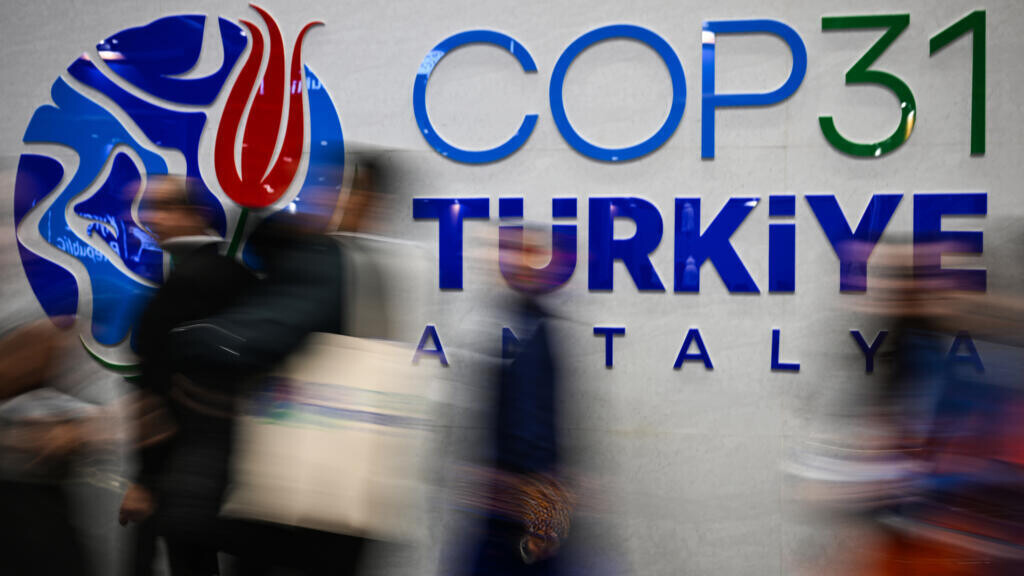
ANTALYA, Türkiye — As the 31st UN Climate Change Conference (COP31) dragged past its scheduled deadline on November 22 without a finalized consensus, frustration over the annual summit’s effectiveness has reached a boiling point, prompting critics to question the very purpose of the global gathering.

Held in the Turkish resort city of Antalya, the conference was marred by deep geopolitical divisions, leading observers to label it one of the most disappointing climate summits to date. Amid mounting cynicism, some critics have even suggested that redirecting the massive travel budgets of national delegations directly into climate funds would yield far greater impact than the talks themselves.

While negotiators managed to announce an electrification package, initiate a global stocktake process, and secure new climate finance pledges, the summit faltered on core issues. Sharp conflicts of interest prevented nations from reaching meaningful agreements on loss and damage funding, aggressive emissions cuts, and a decisive shift away from fossil fuels.

Notably, draft agreements omitted explicit commitments to accelerate the phase-out of fossil fuels and their subsidies. Furthermore, the summit’s flagship "35 by 35" initiative—aiming for 35% global electrification by 2035—was criticized for lacking binding mandates on renewable energy, effectively sidelining the crucial goal of clean electrification. Similarly, the newly launched "Antalya AI Pledge," intended to address the surging power demands of artificial intelligence, was dismissed by watchdogs as overly vague.

Experts Warn of Real-World Consequences and Local Risks

Climate scientists and policy experts in South Korea warned that diplomatic stagnation carries severe, immediate consequences, urging a shift from lofty declarations to localized action.

Oh Jae-ho, CEO of NanoWeather and professor emeritus at Pukyong National University, noted that extreme weather—from severe droughts to torrential rain—is already disrupting local economies and public safety. "COP31 underscores the bitter divide over fossil fuel reductions and adaptation financing," Oh said. "Success can no longer be measured by the grandeur of international declarations, but by how effectively national and municipal governments reduce tangible risks in vulnerable communities."

Concerns were also raised regarding the omission of polar science from the negotiation table. Lee Won-sang, a principal researcher at the Korea Polar Research Institute (KOPRI), lamented that the summit represented a step backward, leaving the 1.5°C warming threshold increasingly out of reach.

Highlighting that the cryosphere was largely overlooked in Antalya, Lee warned of direct threats to the Korean Peninsula. According to KOPRI projections, melting ice sheets in Greenland and Antarctica will drive sea-level rise off the coasts of Incheon and Busan roughly 10% higher than the global average by 2050. "For a peninsula nation, every millimeter of sea-level rise matters," Lee emphasized, calling on scientists and policymakers to translate research into urgent action.

Kug Jong-seong, a professor of Earth and environmental sciences at Seoul National University, echoed these concerns, pointing out a glaring contradiction in the summit's outcome. "The conference acknowledged the growing likelihood of breaching the 1.5°C limit, yet failed to deliver concrete emission-reduction mechanisms to prevent it," Kug said. He stressed that the ultimate severity of climate change depends on the speed of emissions cuts, adding that nations must stop merely reiterating targets and begin executing policies that minimize both the peak and duration of global warming.

[Copyright (c) Global Economic Times. All Rights Reserved.]

  • #Cherry Garden
  • #HalalFood
  • #Halal
  • #Petlife
  • #Halalhorizone
  • #Hormuz Impasse
  • #Joseon
  • #globaleconomictimes
  • #micore
Ana Fernanda Reporter

Popular articles

  • US Army Conducts Rare Temporary Burial Drills to Prepare for Worst-Case Large-Scale War Scenarios

  • Ito En Enters Non-Alcoholic Market with Hop-Infused Tea Beverages

  • China Calls to "Regulate the Speed of AI Adoption in Labor-Intensive Industries to Minimize Employment Shocks"

I like it
Share
  • Facebook
  • X
  • Kakaotalk
  • LINE
  • BAND
  • NAVER
  • https://globaleconomictimes.kr/article/1065601817822625 Copy URL copied.
Comments >

Comments 0

Weekly Hot Issue

  • Osaka Transforms into a City-Wide K-Pop Playground for the 2026 MAMA Awards
  • Rise of "Dopagaki": Japan Grapples with Youth Short-Form Video Addiction
  • Beijing Mobilizes Intelligence Apparatus in Covert Campaign to Bypass U.S. Chip Curbs
  • U.S. Holiday Travel Faces Severe Disruption Risk as Budget Standoff Threatens Government Shutdown
  • Surge in AI-Assisted Cheating Forces Global Universities to Rethink Exams
  • Swimmer Braves Burning Waters in 15km Strait of Hormuz Crossing to Call for Peace

Most Viewed

1
South Korea and Ethiopia Sign Trilateral MOU to Introduce Liquid-Based Cytology (LBC) Technology for Cervical Cancer Diagnosis
2
South Korean Burger Chain Lotteria Expands Singapore Footprint with Halal Certification and New Teriyaki Lineup
3
AI Semiconductor Stocks Plummet: Philadelphia Index Drops 5.28% and Micron Plunges 7.59% Amid Executive Shakeup and Export Restrictions
4
"Stay Out, Get Paid, or Have Police Stay With You": Shenzhen Imposes Strict Security Ahead of APEC Summit
5
AI Music Tops Melon Chart: Is the K-Pop Production Formula Changing?
체리가든 스토리
nutri huevos
로타리
동포저널

Hot Issue

Market Analysts Urge Balanced Portfolio of AI Stocks, Big Tech Bonds, and Gold Amid KOSPI Volatility

U.S. Federal Agencies Grapple with Cyber Breaches and Outages Amid AI-Driven Security Shifts

Temporary Ocean Cooling Fuels Unexpected Surge in Lake Baikal’s Water Levels, Study Finds

Fashion Runway Show 2026

Let’s recycle the old blankets in Jeju Island’s closet instead of incinerating them.

Global Economic Times
korocamia@naver.com
CEO : LEE YEON-SIL
Publisher & Editor : KO YONG-CHUL
Registration number : Seoul, A55681
Registration Date : 2024-10-24
Youth Protection Manager: KO YONG-CHUL
Singapore Headquarters
5A Woodlands Road #11-34 The Tennery. S'677728
Korean Branch
Phone : +82(0)10 4724 5264
#304, 6 Nonhyeon-ro 111-gil, Gangnam-gu, Seoul
Copyright © Global Economic Times All Rights Reserved
  • News K
  • 반달곰 프로젝트
  • 광고문의
Search
Category
  • All articles
  • Synthesis
  • World
  • Business
  • Industry
  • ICT
  • Distribution Economy
  • Well+Being 
    • 전체
    • Pet Life
    • Halal Horizon
  • Travel
  • Eco-News
  • Education
  • Korean Wave News
  • Opinion
  • Arts&Culture
  • Sports
  • People & Life 
    • 전체
    • International Student Report
    • With Ambassador
  • Column 
    • 전체
    • Cho Kijo Column
    • Cherry Garden Story
    • Ko Yong-chul Column
    • Kim Bong-seon's Photo Column
    • Kim Seul-Ong Column
    • Lee Yeon-sil Column
    • Professor Lee Soo-young’s Life Essays
  • Photo News
  • New Book Guide
  • Overseas Koreans
  • Multicultural News