![[등록] 2026-09-01 15:48:31](/support/_updata/banner2/tl181982910_6749.png)


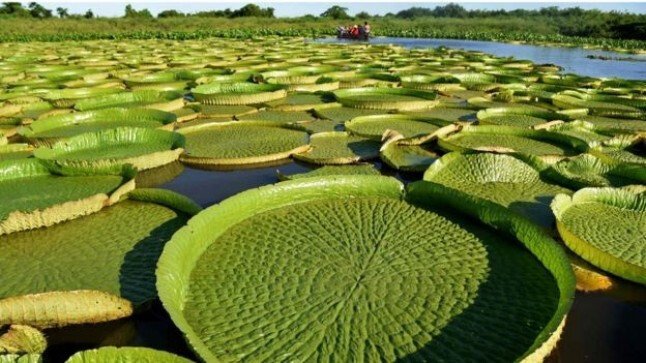
Invasive aquatic species represent a pervasive and growing threat to freshwater ecosystems across the globe. While many regions battle invaders from afar, a concerning trend reveals that several aggressive plant species, originating from the rivers and lakes of Latin America and the Caribbean, have successfully established themselves on other continents, wreaking environmental and economic havoc.
These ecological refugees, often escaping their native biological controls, form dense, suffocating mats on the water's surface, fundamentally altering the chemistry, light penetration, and biodiversity of their adopted homes. The consequences range from devastating impacts on native fish populations and tourism to significant infrastructural challenges for navigation and water management.
The Five-Plant Problem
A recent study, conducted by an international team of researchers from the University of Sassari (Italy), the National Biodiversity Future Center (NBFC, Italy), the Universidad Espíritu Santo (UEES, Ecuador), the National Institute of Biodiversity (Inabio, Ecuador), and Justus Liebig University Giessen (Germany), has spotlighted five South American aquatic plants that are rapidly colonizing aquatic habitats globally.
In their native South American range, these species rarely achieve problematic mass developments. However, outside their original ecosystems, they grow unchecked, blocking waterways, reducing biodiversity, and severely impacting human activities like fishing, recreation, and water extraction.
The five species identified are:
Egeria densa (Brazilian Waterweed)
Myriophyllum aquaticum (Parrot's Feather)
Pistia stratiotes (Water Lettuce)
Pontederia crassipes (Water Hyacinth)
Salvinia molesta (Giant Salvinia)
The Water Hyacinth (Pontederia crassipes), for instance, is notorious for forming thick, interlocking floating rafts that cover entire water bodies in regions including Europe and Africa, earning it the label of the "world's worst aquatic weed." Similarly, the Giant Salvinia (Salvinia molesta), a floating fern, is a fast-spreading menace in Asia.
Niche Flexibility Fuels Expansion
The research team, which included Vanessa Lozano, Ileana Herrera, André Grose-Stoltenberg, and Flavio Marzialetti, undertook an ambitious analysis, compiling thousands of global occurrence records across the native (South America) and invaded ranges (Europe, Africa, Asia, North America, and Australia) of these five plants. Crucially, they developed climatic models specifically tailored for freshwater environments—a significant advance over general terrestrial climate models often used in invasion studies.
The findings highlight the remarkable adaptability of these plants. The results indicate that these species are successfully invading environments that are significantly colder and drier than their native habitats, particularly in Africa and Europe. While most of the observed niche shifts occur within the theoretical limits of their native climatic tolerances, this flexibility underscores a substantial global risk. Surprisingly, in North America, the plants' invaded niches show a high degree of stability relative to their original South American climate.
A Ticking Ecological Time Bomb
The most alarming conclusion of the study is the identification of numerous geographically distinct areas globally that are climatically suitable for these species but remain uninvaded—a phenomenon known as 'unfilled niche space.' This suggests that the current global expansion is far from complete, indicating a high risk of continued, uncontrolled spread unless preemptive action is taken.
The ecological impacts of these invasions are multi-faceted and severe. By forming dense surface carpets, these plants:
Block Sunlight: The mats cut off light essential for submerged native flora, leading to their collapse.
Deplete Oxygen: The subsequent decay of high plant biomass consumes massive amounts of dissolved oxygen, leading to anoxia (lack of oxygen) which suffocates fish and other aquatic organisms.
Alter Ecosystem Function: They modify nutrient cycles, change water flow, and stabilize water temperatures in a way that favors the invaders over native communities, thus dramatically reducing local biodiversity.
Impair Human Infrastructure: Dense growth can clog irrigation pumps, hydroelectric dam intakes, and drainage systems, increasing the risk of flooding and necessitating costly removal operations. Estimates suggest the global cost of managing aquatic invasive plants has exceeded $32 billion between 1975 and 2020.
Recommendations for Global Biosecurity
The researchers emphasize that curbing this biological globalization demands a concerted global response. The primary pathways for the introduction of these plants—often the ornamental and aquarium trades—must be scrutinized, as deliberate planting and accidental escape/dumping are major mechanisms for their establishment in new regions.
The study recommends:
Targeted Monitoring: Prioritizing freshwater environments with high climatic suitability for these specific non-native species.
Focus on Niche Shifts: Increased attention to subtle changes in the plant's ecological niche between native and introduced ranges to better predict future invasion hotspots.
Controlling Propagule Flow: Strict regulation and monitoring of the export of plant fragments (propagules) both from the native range and, critically, from the currently introduced ranges, to prevent secondary global dispersal.
The five South American invaders stand as a stark example of how interconnected global commerce and a lack of effective biosecurity measures can profoundly reshape aquatic ecosystems worldwide. Preventing further spread requires robust international cooperation, stringent trade regulations, and extensive public environmental education. The fate of many global freshwater habitats may depend on the speed and effectiveness of this coordinated defense.
[Copyright (c) Global Economic Times. All Rights Reserved.]