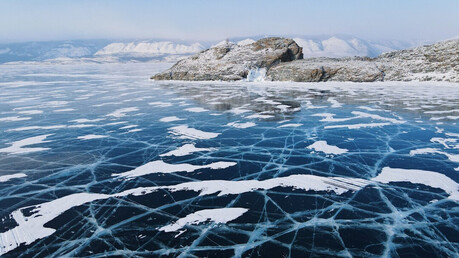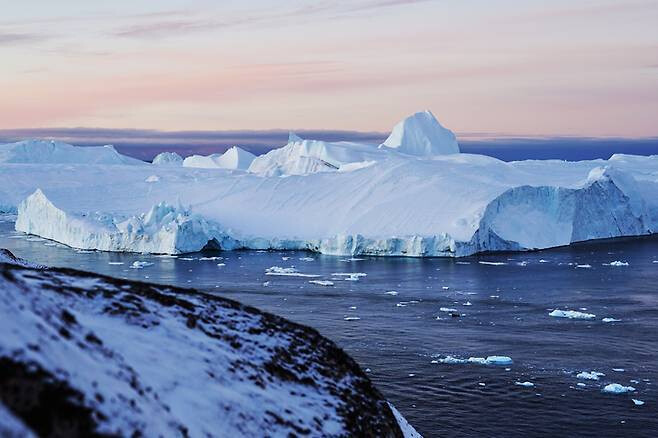
ANTALYA, Turkey — The cryosphere—the vast frozen expanse of glaciers, sea ice, snow cover, and permafrost that regulates Earth’s temperature and stores its freshwater—has reached the brink of irreversible collapse.
In a landmark paper published in Science during the 31st UN Climate Change Conference (COP31) in Antalya, a team of 30 international researchers, led by Bo Su of the Stockholm Resilience Centre and Johan Rockström of the Potsdam Institute for Climate Impact Research, introduced the concept of a "Cryosphere Safe Operating Space."
Evaluating four critical variables—land ice volume, sea ice area, snow cover, and permafrost temperature—against the stable climate baseline of the past 11,700 years (the Holocene), the scientists delivered a sobering verdict: three of the four indicators have already breached safe planetary limits. Furthermore, the fourth—land ice volume—is now locked into an unavoidable, long-term decline due to existing global warming.
Rapid Melt from the Poles to the ‘Third Pole’
Recent satellite data underscores the accelerating pace of this planetary thaw. According to the Ice Sheet Mass Balance Inter-comparison Exercise (IMBIE), Greenland is losing ice five times faster than it did in the early 1990s, while Antarctica’s ice loss has accelerated by more than 25 percent.
In March, the world’s largest iceberg, A23a—which weighed one trillion tons when it calved from Antarctica in 1986—finally disintegrated. Meanwhile, warm deep-ocean currents are eroding East Antarctica’s protective ice shelves from below, accelerating localized melting by up to tenfold. In southwestern Greenland, accumulating dust and microalgae are creating expanding "dark zones" that absorb rather than reflect sunlight, creating a vicious cycle of melting. A complete loss of the Greenland ice sheet would raise global sea levels by roughly seven meters.
High-mountain regions are faring no better. The Hindu Kush-Himalaya region, often called the "Third Pole" because it holds the largest reserve of ice outside the polar regions, lost 9 percent of its ice mass between 1990 and 2020, with the rate of loss doubling since the turn of the century. In the Swiss Alps, glaciers have shed over a third of their volume in just two decades. While temporary atmospheric shifts occasionally slow regional melting, climate scientists emphasize that the overarching trajectory remains one of steep decline.
The Illusion of ‘Overshoot’
Current carbon emission trajectories suggest that 46 to 54 percent of the world’s mountain glacier volume could vanish by 2100. Moreover, new observations of rapid "ice-cliff calving" indicate that sea levels could rise even faster than the upper-limit projections of the Intergovernmental Panel on Climate Change (IPCC).
Crucially, a joint 2026 report by the International Cryosphere Climate Initiative (ICCI) and the UN Environment Programme (UNEP) warns that "overshoot" strategies—allowing global temperatures to temporarily exceed the 1.5°C Paris Agreement threshold before cooling the planet back down—will not save the cryosphere.
"Exceeding 1.5°C risks triggering irreversible tipping points, including the collapse of the West Antarctic Ice Sheet and massive carbon and methane releases from thawing permafrost," noted lead author James Kirkham. Even if humanity successfully lowers global temperatures back down to 0.8°C above pre-industrial levels over several centuries, only about 70 percent of current glacier volume could ever be preserved.
Water Scarcity and Cascading Disasters
For billions of people, vanishing ice translates directly into existential threats to water, energy, and safety. Glaciers act as natural water towers, releasing meltwater during dry seasons. Researchers project that glaciers feeding major Asian river systems—including the Indus, Ganges, Mekong, and Yangtze—will reach "peak water" between 2040 and 2070, after which water supplies for nearly two billion people will steadily shrink, crippling agriculture and hydropower.
At the same time, warming polar regions are weakening the jet stream, leading to prolonged extreme weather events—such as severe droughts, heatwaves, and floods—across mid-latitude regions like the Korean Peninsula.
In high-altitude communities, pooling meltwater is creating unstable glacial lakes held back only by weakening permafrost and loose rock debris (moraines). Roughly 15 million people globally live within the path of potential Glacial Lake Outburst Floods (GLOFs), with populations in India, Pakistan, China, and Peru facing the highest risks.
The devastating potential of unstable mountain terrain was starkly demonstrated on August 26, when a massive rock-ice avalanche at 5,200 meters in the Langtang Lirung range along the Nepal-China border triggered a catastrophic debris flow. The disaster killed over 1,000 people, left 4,400 missing or stranded, and inflicted infrastructure damage equivalent to 10 percent of Nepal’s GDP.
Governing Ice as a ‘Planetary Commons’
To avert worst-case scenarios, scientists are calling for an urgent overhaul of global environmental governance. The authors of the Science study urge world leaders to designate the cryosphere as a "Planetary Commons" and formally recognize it as the tenth Planetary Boundary.
On the ground, researchers at the University of Cambridge advocate for "consequence-based reservoir governance"—treating high-risk glacial lakes like engineered dams by installing artificial drainage channels and automated early-warning sirens, a strategy that successfully lowered water levels at Nepal’s Imja Lake by 3.4 meters.
Mitigation must also extend beyond carbon dioxide. Curbing black carbon (soot) emissions from traditional cookstoves, agricultural burning, and diesel engines in South Asia is critical, as soot settles on snow and accelerates solar heat absorption. Coupled with cross-border satellite monitoring, financial support through the UN’s Loss and Damage Fund, and an annual 6 percent reduction in global greenhouse gas emissions, experts say humanity still has a narrow window to stabilize what remains of Earth’s frozen foundation.
[Copyright (c) Global Economic Times. All Rights Reserved.]