![[등록] 2026-09-01 15:48:31](/support/_updata/banner2/tl181982910_6749.png)


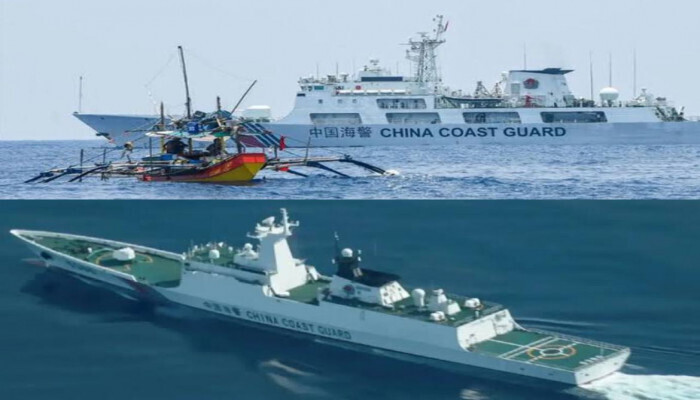
BEIJING / MANILA — Escalating maritime tensions to a dangerous peak in the volatile South China Sea, the Chinese military conducted intensive joint naval and air combat maneuvers near the contested Scarborough Shoal on Saturday, August 1, 2026. The high-stakes military exercise coincided with a fierce diplomatic broadside from Beijing, which vehemently rejected the Philippines’ recent official submission of territorial baselines and nautical charts to the United Nations, declaring Manila’s legal claims "illegal, invalid, and entirely without legal foundation."
According to an official statement released via WeChat by the Southern Theater Command of the Chinese People’s Liberation Army (PLA), joint naval and air assets executed realistic combat readiness drills in the waters and airspace surrounding Scarborough Shoal—known in China as Huangyan Dao and in the Philippines as Bajo de Masinloc. The Chinese military explicitly characterized the maneuvers as a "necessary response" to safeguard national territorial sovereignty and maritime rights against what it described as destabilizing provocative actions by "certain regional countries."
"The military drills conducted in the maritime and aerial domains surrounding Huangyan Island are a necessary measure to respond to the current situation in the South China Sea and counter regional actions that undermine peace and stability. The primary goal is to test and enhance joint combat capabilities to resolutely safeguard national territorial sovereignty and maritime rights."
— PLA Southern Theater Command Statement
Waves of Readiness Patrols and Coast Guard Interventions
Although the Southern Theater Command refrained from naming the specific nation, defense analysts and diplomatic observers unanimously point to the Philippines. The latest show of force follows a series of military and paramilitary operations surrounding the high-friction reef. Just two days prior, on July 30, Chinese military forces conducted joint combat readiness patrols in the same airspace and sea lanes, while the China Coast Guard (CCG) simultaneously executed maritime enforcement patrols.
The rapid succession of military drills underscores Beijing’s strategic doctrine of maintaining continuous physical dominance and tactical pressure over Scarborough Shoal—a triangular ring of reefs surrounding a fertile fishing lagoon situated approximately 120 nautical miles west of the main Philippine island of Luzon, and over 470 nautical miles from China’s nearest landmass of Hainan Island.
The Diplomatic Battleground at the United Nations
The immediate catalyst for China’s military posture and diplomatic hostility is Manila’s latest legal filing with the United Nations Division for Ocean Affairs and the Law of the Sea (DOALOS). In accordance with the United Nations Convention on the Law of the Sea (UNCLOS) and recent domestic legislation (the Philippine Maritime Zones Act), the Philippine government officially deposited geographic coordinates and nautical charts establishing its normal baselines, a 12-nautical-mile territorial sea, and a 24-nautical-mile contiguous zone encompassing Scarborough Shoal.
The Philippine Department of Foreign Affairs reiterated that depositing these charts is a legitimate exercise of sovereign rights under UNCLOS, aimed at clearly defining the nation's maritime boundaries and reinforcing the rules-based international order in the Indo-Pacific. Manila maintains that because Scarborough Shoal lies well within its 200-nautical-mile Exclusive Economic Zone (EEZ), the Philippines holds sovereign jurisdiction over its surrounding waters and natural resources.
Beijing’s response was immediate and uncompromising. In a late-night statement published on July 31, the Chinese Ministry of Foreign Affairs strongly condemned Manila's UN submission. Reaffirming that Huangyan Island has been China’s inherent territory since ancient times, Beijing asserted that the sovereign baselines drawn by the Philippines over Chinese territory represent a "grave violation of China’s territorial sovereignty."
"The Philippines’ attempt to establish so-called territorial baselines over China’s Huangyan Island is an illegal and invalid act that severely infringes upon China’s territorial sovereignty and maritime rights. China firmly opposes this and will never accept it... Should the Philippines continue to engage in reckless provocations, China will take resolute measures to defend its rights."
— Ministry of Foreign Affairs of the People's Republic of China
Historical Antecedents: The 2012 Standoff and 2016 Arbitral Award
The confrontation over Scarborough Shoal is deeply rooted in more than a decade of persistent maritime friction. In April 2012, a major standoff erupted when Philippine naval assets attempted to arrest Chinese fishermen operating inside the shoal's lagoon. Chinese maritime surveillance ships intervened, initiating a tense two-month standoff. Following a US-brokered agreement intended to de-escalate the crisis, Philippine vessels withdrew, but Chinese forces remained in place, taking effective control of the shoal and restricting access for Philippine fishermen ever since.
In response to China’s seizure of Scarborough Shoal and extensive island-building across the Spratly Islands, the Philippines filed a landmark arbitration case against China under UNCLOS in 2013. In July 2016, the Permanent Court of Arbitration (PCA) in The Hague issued a unanimous, legal victory for Manila:
Nine-Dash Line Invalidated: The tribunal ruled that China’s historic rights claims within the "Nine-Dash Line" have no legal effect under UNCLOS.
Traditional Fishing Rights Recognized: The tribunal declared Scarborough Shoal a high-tide feature entitled only to a 12-nautical-mile territorial sea and ruled that traditional fishermen from both the Philippines and China hold historic fishing rights within the lagoon.
Illegal Interferences Identified: The court found that China had unlawfully prevented Philippine fishermen from accessing their traditional grounds.
Despite the binding nature of the 2016 arbitral award, Beijing has steadfastly refused to accept or participate in the tribunal's proceedings, dismissing the decision as "null, void, and a piece of trash paper."
Escalating Tactics and Risk of Conflict
Over the past two years, friction in the South China Sea has intensified through hybrid "gray-zone" tactics. The China Coast Guard and maritime militia vessels have frequently deployed military-grade lasers, acoustic cannons, high-pressure water cannons, and aggressive blocking maneuvers against Philippine Coast Guard (PCG) ships and supply boats delivering provisions to local fishing communities.
This maritime dispute carries significant global consequences. Under President Ferdinand Marcos Jr., Manila has strengthened its defense alliance with the United States, expanding American access to key strategic military sites under the Enhanced Defense Cooperation Agreement (EDCA). Washington has repeatedly affirmed that its 1951 U.S.-Philippines Mutual Defense Treaty (MDT) covers armed attacks on Philippine armed forces, public vessels, or aircraft—including those of its Coast Guard—anywhere in the South China Sea.
As diplomatic progress on an ASEAN-China Code of Conduct (COC) remains stalled, Beijing’s military demonstrations and Manila’s UN legal filings indicate that Scarborough Shoal will remain a primary flashpoint for regional security and international maritime law.
[Copyright (c) Global Economic Times. All Rights Reserved.]